





The global new energy industry is growing fast with rapid capacity expansion and technology upgrades.
Electric vehicles, energy storage, wind power, photovoltaics and hydrogen systems are scaling up quickly.
As a result, upstream component makers face much stricter manufacturing requirements than before.
Key parts must meet micron-level dimensional tolerances and high mechanical strength standards.
They also need strong corrosion resistance, good fatigue performance and long service life.
Furthermore, modern new energy equipment keeps trending toward lighter, more compact designs.
Traditional machining methods can no longer keep up with these multi-dimensional demands.
Thankfully, CNC turning offers a reliable solution with its high precision and production efficiency.
It also delivers strong automation and excellent consistency in mass production runs.
For these reasons, it has become a core manufacturing process for new energy equipment.

1. Core Technical Advantages of Modern CNC Turning
Today’s CNC turning centers are far more capable than basic rotary part machines.
They combine automatic tool changers, in-line measurement and smart error compensation systems.
They also run on fully digital process control platforms for stable performance.
In a single setup, they can complete roughing, semi-finishing and finishing operations.
This one-stop approach cuts down cumulative errors from repeated part clamping.
It also reduces production lead time and boosts overall manufacturing efficiency.
The new energy sector produces many part types in large volumes with strict precision rules.
To match this need, PartsMastery has built an optimized CNC turning process system.
It enables full-process quality control and steady accuracy for all core components.
In short, it gives solid support to mass production across the new energy industry.
Its core technical value falls into three main categories:
- High precision control: It delivers micron-level dimensional and geometric tolerances. This level of accuracy fits the strict assembly needs of high-speed rotors and high-pressure seals.
- 强批处理一致性: Digital closed-loop control keeps part deviations very small across production runs. This matches the quality standards of large-scale new energy manufacturing.
- Wide scenario adaptability: Custom machining plans work for parts of different materials and shapes. It covers everything from simple standard shafts to complex irregular rotary parts.
2. Key Application Scenarios of CNC Turning in the New Energy Industry
CNC turning plays a vital role across the entire new energy industry chain.
It supports power systems, energy storage units, power generation plants and hydrogen facilities.
Each segment relies on precision turning to build reliable, high-performance equipment.
2.1 Core Component Machining for Electric Vehicles
Electric vehicles use many precision rotary parts and conductive structural components.
These parts directly affect vehicle power, driving range and operational safety.
They therefore require extremely high machining accuracy and material compatibility.

2.1.1 Drive Motor and Transmission Parts
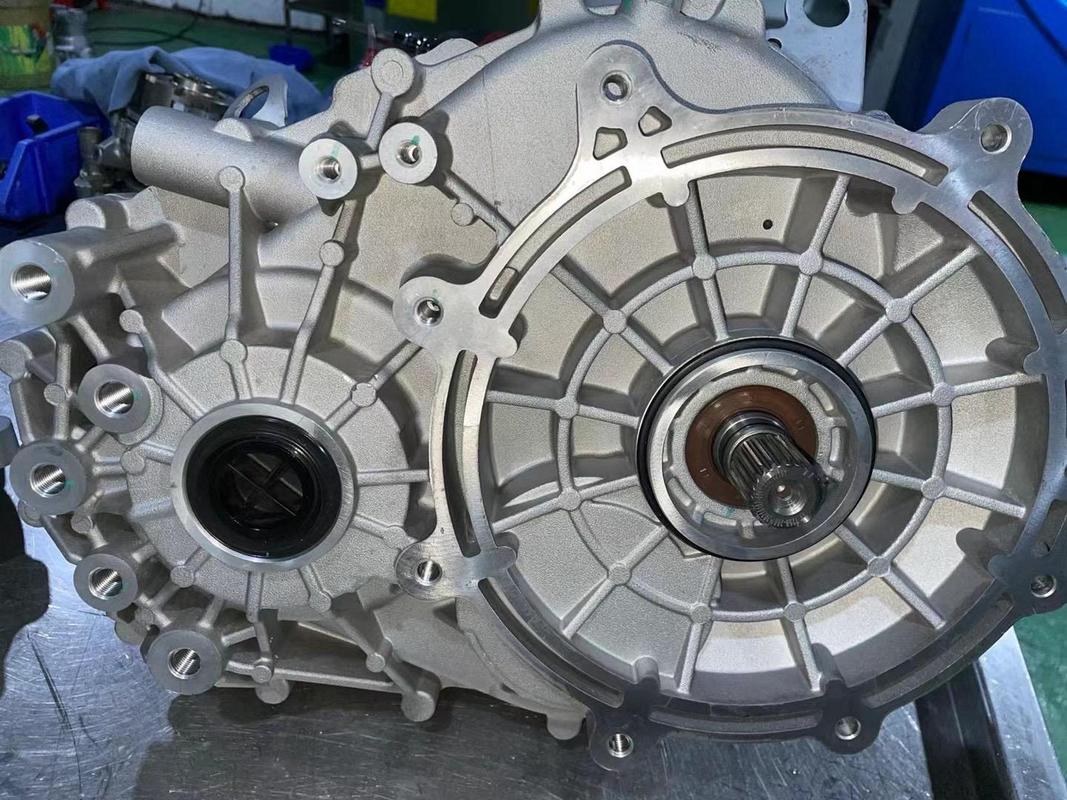
The drive motor serves as the power heart of an electric vehicle.
Its shafts, rotors, couplings and sleeves run at high speed for long periods.
They demand strict concentricity, circular runout, surface finish and dimensional accuracy.
Even tiny machining errors can increase vibration and noise during operation.
They can also reduce transmission efficiency and shorten bearing service life.
High-precision CNC turning keeps geometric accuracy and surface quality consistent.
It improves transmission fit and lowers the chance of assembly mistakes.
Ultimately, it boosts powertrain efficiency and long-term reliability for end users.
2.1.2 Battery System Precision Components
Modern battery packs include many connectors, supports, fasteners and sealing parts.
These components directly impact assembly accuracy, protection rating and thermal performance.
Lightweight design and reliable sealing are both critical design goals here.
For this reason, precision turning has become a key step in battery component production.
CNC turning produces battery connectors, terminals, sleeves and housing structures.
It also makes sealed connectors and other high-precision battery parts.
This level of quality improves assembly speed and long-term system safety.
2.2 Key Component Manufacturing for Energy Storage Systems
Residential, commercial and utility-scale energy storage projects are growing quickly.
This growth drives rising demand for precision mechanical and conductive components.
Energy storage systems run continuously for long stretches without interruption.
Their parts must deliver stable conductivity, efficient heat dissipation and structural strength.
CNC turning fully satisfies these precision manufacturing requirements.
2.2.1 Electrical Connection Assemblies
Energy storage systems use conductive connectors, mounting sleeves and precision flanges.
They also include metal fittings, sealing structures and conductive terminal parts.
Accurate dimensional control ensures tight fits and low contact resistance.
In turn, this stabilizes electrical performance across the whole system.
Precision turning also reduces assembly misalignment and long-term maintenance costs.
As a result, overall system reliability improves significantly over time.
2.2.2 Thermal Management System Parts
Energy storage systems generate heat continuously during normal operation.
Effective thermal management is therefore essential for safe, reliable performance.
Cooling circuit connectors, pipe fittings and heat transfer parts all need precision machining.
Tight dimensional control ensures proper sealing and strong heat exchange efficiency.
CNC turning produces high-precision parts for cooling and heat dissipation systems.
It helps storage units stay within an optimal temperature range at all times.
This stability also improves overall energy conversion efficiency for the system.
2.3 Component Machining for Wind and Solar Power Equipment
Wind turbines and solar facilities operate outdoors in harsh environmental conditions.
They face strong wind loads, temperature swings, high humidity and constant vibration.
Their core parts must resist corrosion, handle fatigue and stay dimensionally stable.
Naturally, this places high demands on manufacturing process reliability.
2.3.1 Wind Turbine Components
Wind turbines contain many rotary parts such as main shafts and connecting flanges.
They also include bearing fittings, connectors, hydraulic parts and structural supports.
Machining accuracy directly affects power generation efficiency and maintenance cycles.
High-precision CNC turning ensures tight geometric tolerances for large shafts and flanges.
It improves turbine energy conversion and cuts long-term maintenance frequency.
Operators also benefit from lower overall maintenance costs over the asset life cycle.
2.3.2 Photovoltaic Equipment Precision Parts
Solar power systems use support structures, fasteners, conductors and mounting hardware.
Specialized connectors also form an important part of the installation.
These parts require high dimensional consistency and strong weather resistance.
CNC turning delivers stable batch quality for all these photovoltaic components.
It improves installation accuracy and structural reliability in outdoor environments.
Over time, this durability supports consistent long-term power generation output.
2.4 Precision Part Production for Hydrogen Energy Equipment
The hydrogen energy industry is growing at a fast pace around the world.
This growth drives demand for high-pressure storage systems, fuel cells and transmission gear.
Hydrogen has very small molecules and operates under extremely high pressure.
For these reasons, sealing performance and dimensional accuracy are absolutely critical.
CNC turning has therefore become a key manufacturing process for hydrogen equipment.
2.4.1 Fuel Cell Core Components
Fuel cells have highly complex internal structures with many precision parts.
These include bipolar plate connectors, conductors, seals and structural supports.
They need excellent electrical conductivity and extremely high dimensional consistency.
High-precision CNC turning ensures tight fits inside fuel cell stacks.
It improves reaction efficiency and enhances long-term operational reliability.
2.4.2 High-Pressure Hydrogen Storage System Parts
High-pressure hydrogen storage and distribution systems need strong, reliable components.
These include valves, pipe fittings, high-pressure connectors and sealing sleeves.
Precision flanges and control components also fall into this category.
All parts must handle high pressure while maintaining a perfect seal.
CNC turning produces precision-machined parts for these high-pressure applications.
It ensures sealing reliability and structural safety under tough operating conditions.
This quality is essential for stable, long-term hydrogen system operation.
3. Turning Process Optimization for Common New Energy Materials
New energy equipment uses a wide range of advanced engineering materials.
Aluminum alloys, copper alloys and stainless steel are among the most common options.
Each material has unique cutting properties and behavior during machining.
Manufacturers must optimize parameters and tooling for each material type.
Doing so improves efficiency, reduces tool wear and keeps quality consistent.
PartsMastery has developed mature turning processes for all mainstream new energy materials.
These processes adapt easily to different material and component requirements.
3.1 Aluminum Alloy Lightweight Component Machining
Aluminum alloy is a top choice for lightweight new energy equipment design.
It offers low density, excellent thermal conductivity and good machinability.
Common applications include motor housings, battery casings and heat sinks.
It also appears in structural supports, mounting bases and precision connectors.
However, aluminum alloys tend to cause built-up edge and tool adhesion during cutting.
Optimized CNC turning processes address these issues through careful tool selection.
They also use matched cutting parameters and tailored cooling solutions.
The result is smooth surface quality, accurate dimensions and high production speed.
This approach helps new energy products become lighter and more efficient overall.
3.2 Copper Alloy and Stainless Steel Functional Component Machining
Copper alloys have outstanding electrical and thermal conductivity properties.
They are the primary choice for conductive terminals and high-pressure connectors.
Stainless steel, by contrast, offers excellent corrosion resistance and structural strength.
It is widely used for seals, precision sleeves and high-pressure structural parts.
Both materials come with specific machining challenges for production teams.
Copper alloys have high cutting viscosity, while stainless steel work-hardens easily.
Custom turning process plans help control deformation and surface quality issues.
They also ensure parts meet functional performance and reliability requirements.
In the end, this optimization extends the service life of new energy equipment.
4. Development Trends of CNC Turning in the New Energy Sector
The new energy industry is shifting toward smarter, more sustainable manufacturing.
This shift pushes precision machining technology to evolve at a faster pace.
CNC turning will gain even more capability through cross-technology integration.
It will continue to support high-quality growth across the new energy industry.
Looking ahead, several key technology trends will shape the future of CNC turning.
High-speed machines, smart inspection systems and automated loading will become standard.
Digital factory management and AI process optimization will also grow in use.
Together, these advances will improve turning efficiency, quality and intelligence.
They will help manufacturers shorten production cycles and lower total costs.
They will also make new energy products more competitive on the global market.
Most importantly, they will support the worldwide transition to clean energy.
结论
CNC turning is a mature, constantly improving precision manufacturing process.
It has become deeply embedded in every key link of the new energy supply chain.
It supports scaled growth for EVs, energy storage, wind, solar and hydrogen sectors.
As new energy equipment requirements grow stricter, precision turning will matter even more.
Customized CNC turning solutions will play a bigger role in future industry development.
PartsMastery will keep advancing precision machining technology for new energy applications.
We deliver high-precision, efficient and reliable turning solutions for equipment makers.
Our work helps clients improve product quality and strengthen market competitiveness.
Together, we will drive progress in the global clean energy transition.
作者:PartsMastery 技术团队