





定制中国模具

In the world of metal stamping and die casting, one size rarely fits all. Off-the-shelf tooling may work for generic applications, but when production demands specific geometries, tight tolerances, or unique material behaviors, Custom China Dies become indispensable. Customization allows manufacturers to optimize every aspect of the tool—from cavity design and venting to cooling channels and wear-resistant coatings—ensuring that the final die performs exactly as required for a particular part, press, and production environment.
Why Standard Dies Fall Short
Standard die sets are designed for broad compatibility. They lack the precision features needed for complex part geometries, such as undercuts, thin walls, or multi-slide actions. For high-volume production, a standard die may suffer from uneven wear, premature cracking, or inefficient material flow, leading to rejected parts and unplanned downtime. Furthermore, generic dies rarely accommodate special inserts, sensors, or automated part ejection systems that modern smart factories rely on.
This is where Custom China Dies deliver unmatched value. By tailoring every detail—die steel grade, heat treatment profile, surface finish, and even the location of screw holes and dowel pins—manufacturers can achieve higher first-pass yields, longer tool life, and lower scrap rates. Customization also supports design for manufacturability (DFM), where the die is engineered to complement the specific press tonnage, stroke speed, and feeding system of the customer’s production line.
Engineering Capabilities Behind Custom Dies
China has developed a deep pool of die engineering talent over the past three decades. Leading suppliers employ tooling engineers who are proficient in 3D CAD software (SolidWorks, UG/NX, Pro/E) and CAE simulation packages (AutoForm, Dynaform, Moldflow). These tools allow virtual tryouts before any steel is cut, predicting material flow, heat distribution, and stress points. If a simulation reveals cracking or wrinkling, the engineer modifies the die geometry digitally, saving weeks of physical trial-and-error.
The customization process begins with a thorough review of the customer’s part drawing, 3D model, or even a physical sample. The supplier then creates a DFM report that outlines die construction, parting line location, ejection method, and cooling circuit layout. For complex parts—such as automotive transmission housings or electronic connector terminals—the report may include multiple design options with cost and lead time trade-offs.
Material Selection For Custom Dies
Custom China Dies benefit from a wide range of tool steel grades, each selected for specific applications. For cold stamping of thin sheet metal, D2 or SKD11 steel offers excellent wear resistance and dimensional stability after heat treatment. For high-impact blanking operations, more tough grades like A2 or DC53 reduce the risk of chipping. In die casting applications, H13 steel is the industry standard for aluminum and magnesium molds, providing resistance to thermal fatigue and erosion.
Top custom die suppliers also offer surface treatments that extend die life. Nitriding creates a hard, wear-resistant case while maintaining a tough core. PVD coatings such as TiN or CrN reduce friction and prevent galling when stamping stainless steel or other adhesive materials. For plastic injection molds, chrome plating helps release parts more easily and improves corrosion resistance.
The Custom Design-To-Production Workflow
A typical custom die project with a Chinese supplier follows a structured workflow:
-
Requirement gathering: Customer provides part specifications, annual volume, material type, and press details.
-
Design and simulation: Engineers design the die layout and run CAE simulations. A DFM report is shared for approval.
-
Material procurement: Tool steel is sourced from certified mills, with material certificates included.
-
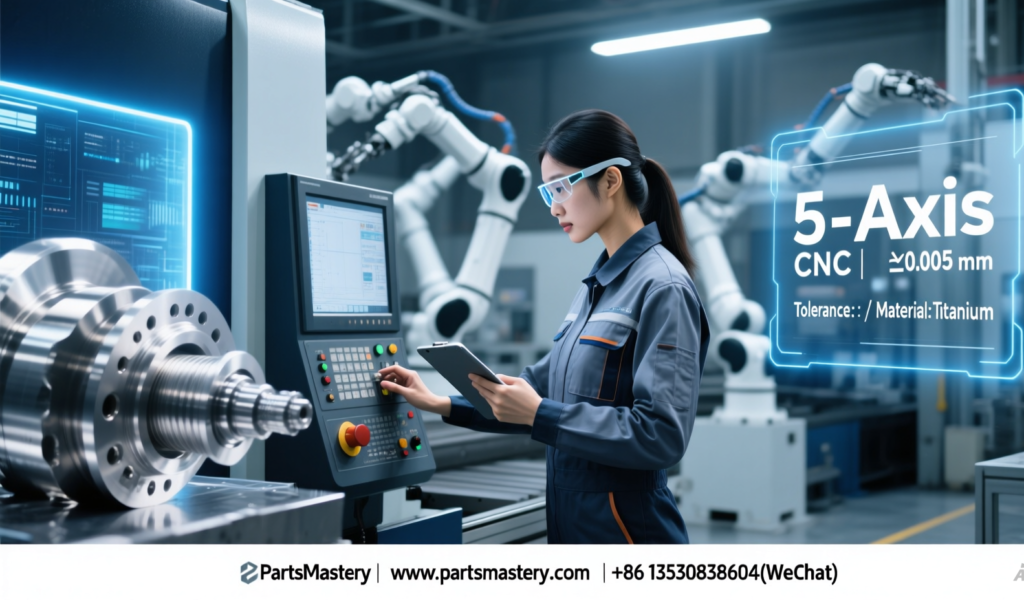
机械加工: CNC milling, turning, wire EDM, and sinker EDM shape the die components to tolerances of ±0.005 mm.
-
Heat treatment: Vacuum or atmosphere-controlled furnaces achieve target hardness (typically HRC 48–62).
-
Finishing: Grinding, polishing, and surface coating bring the die to final specifications.
-
Assembly and tryout: Die components are assembled, mounted on a tryout press, and tested with actual material.
-
Inspection: Coordinate measuring machines (CMM) verify critical dimensions. A sample run produces first articles for customer approval.
-
Adjustments: Based on sample results, minor modifications are made to the die.
-
Packaging and shipment: The die is rust-protected, crated, and shipped with its inspection report and recommended maintenance guidelines.
Throughout this process, the customer receives regular updates, photos, and measurement data. Many Chinese suppliers are willing to share screen-sharing sessions or video calls to review design details in real time.
Quality Assurance For Custom Tooling
Quality is non-negotiable when investing in Custom China Dies. Reputable suppliers follow ISO 9001 or IATF 16949 quality management systems. They use calibrated measuring tools and maintain records of every production step. A critical part of quality assurance is the tryout report, which documents part dimensions, material behavior, and any adjustments made. Some suppliers also offer a die tryout video, providing visual proof that the tool works correctly on a press.
For high-stakes custom dies—for example, safety-critical automotive components—buyers may request a source inspection. An independent third party or the buyer’s own engineer visits the factory to witness the final tryout and approve the die before shipping. Chinese custom die factories are generally accommodating to such requests, especially for long-term partners.
Cost And Lead Time Considerations
Custom China Dies typically require a higher upfront investment than standard dies, but the return on investment comes through improved production efficiency and reduced scrap. Lead times for a custom die range from 20 to 45 days depending on complexity. Complex dies with sliders, lifters, or intricate cooling circuits naturally take longer. However, many Chinese factories offer expedited options for urgent projects, including dedicated shifts and overtime machining.
结论
For manufacturers facing unique stamping or casting challenges, Custom China Dies provide the precision, durability, and process control that standard tooling cannot match. By leveraging China’s engineering expertise, advanced machining infrastructure, and flexible production workflows, buyers can obtain dies tailored exactly to their part geometry and production environment. Whether you need a single complex die or multiple identical tools for high-volume lines, customization ensures that your tooling works as hard as you do.
PartsMastery – Your Trusted Die Casting and Stamping Mold Partner
Contact: +86 13530838604(微信)