



China OEM Tooling Maker: Your Strategic Partner for End‑to‑End Manufacturing

In the world of industrial production, tooling is not merely a cost center—it is the foundation upon which product quality, manufacturing speed, and long‑term profitability are built. For companies looking to scale production without building their own mold shops, partnering with a China OEM Tooling Maker offers a complete solution: from design engineering and mold fabrication to production parts, assembly, and even packaging. This “one‑stop” approach reduces supply chain complexity, shortens time‑to‑market, and leverages China’s unmatched ecosystem of precision manufacturing.
What Makes an OEM Tooling Maker Different?
A standard tooling maker builds molds based on customer designs. An OEM Tooling Maker, however, goes several steps further. “OEM” stands for Original Equipment Manufacturer—meaning the supplier takes ownership of producing finished components or sub‑assemblies using the tooling they create. In practice, this means:
-
Design responsibility: The OEM tooling maker often participates in product design optimization, ensuring the part is manufacturable (DFM) and that the mold design maximizes productivity.
-
Tool fabrication: The mold is engineered, machined, heat‑treated, and tested in‑house.
-
Production molding: Using the newly built mold, the supplier runs large‑scale production of plastic or metal parts.
-
Secondary operations: De‑gating, polishing, pad printing, laser marking, ultrasonic welding, assembly, and packaging can be included.
-
Quality & logistics: Full inspection, certification, and direct shipment to the customer’s warehouse or assembly line.
This integrated model transforms a simple tool purchase into a full manufacturing partnership. For international buyers, working with a China OEM Tooling Maker means dealing with one vendor instead of multiple (mold designer, mold maker, injection molder, finishing house, and logistics provider). The result is lower overhead, faster communication, and greater accountability.
Why China Leads in OEM Tooling
China’s manufacturing infrastructure is uniquely suited to OEM tooling. Several factors converge to make Chinese suppliers the preferred choice for thousands of global brands:
-
Integrated industrial clusters: In regions like the Pearl River Delta (Dongguan, Shenzhen) and the Yangtze River Delta (Ningbo, Suzhou), mold makers, injection molders, metal stampers, surface treatment shops, and assembly lines all operate within a few kilometers. An OEM tooling maker can walk a prototype from steel block to finished product without long transit delays.
-
Cost‑effective labor & overhead: While labor rates in China have risen, they remain significantly lower than in Europe, North America, or Japan. More importantly, the density of supporting industries reduces logistics and transaction costs. A single OEM supplier can deliver a fully assembled product at a landed cost that is often 30–50% less than a Western equivalent.
-
Experienced engineering workforce: China produces hundreds of thousands of engineering graduates annually. Many tooling makers have in‑house teams of mold flow analysts, CNC programmers, and quality engineers with years of experience serving automotive, medical, electronics, and appliance customers. This depth of talent enables rapid problem‑solving during the OEM process.
-
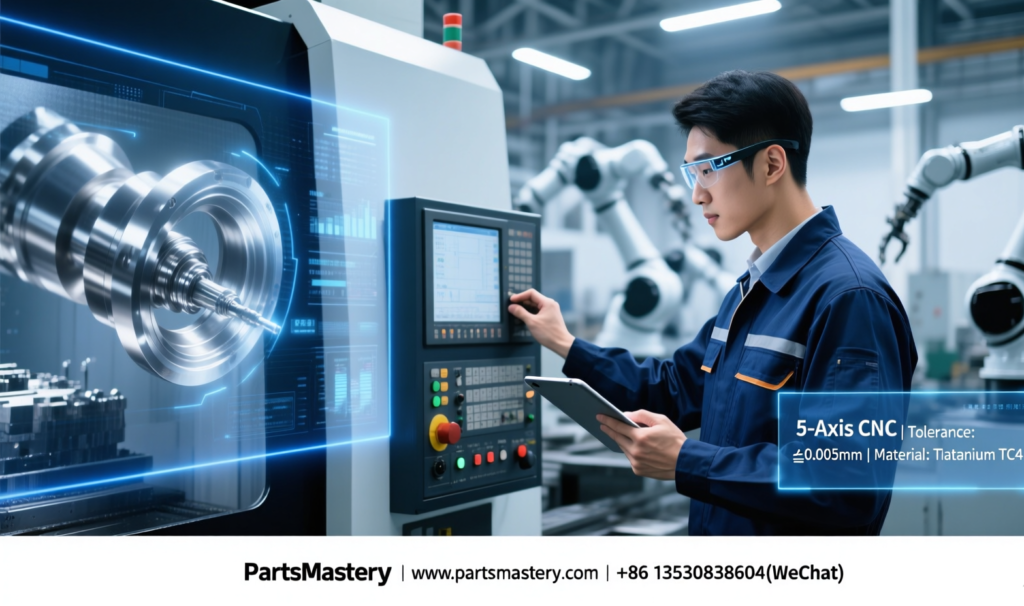
Advanced machine tools: Leading Chinese OEM tooling factories have invested in high‑speed 5‑axis CNC machines, wire EDM (Electrical Discharge Machining) with ±0.002 mm accuracy, CMM (Coordinate Measuring Machines), and automated injection molding cells with robotic part removal. These capabilities rival those of any global competitor.
The OEM Tooling Workflow with a Chinese Partner
A typical project with a China OEM Tooling Maker follows a structured, transparent path:
Phase 1 – Concept & DFM
You provide concept drawings, 3D CAD files, or even physical samples. The supplier performs a Design for Manufacturing (DFM) analysis, identifying potential issues such as inconsistent wall thickness, insufficient draft angles, or hard‑to‑fill geometries. A detailed DFM report with suggested modifications is sent for your approval.
Phase 2 – Tooling Design & Simulation
Once the part design is finalized, the mold is designed in 3D (UG/NX, SolidWorks, Cimatron). Mold flow simulation predicts filling behavior, air traps, weld lines, and cooling uniformity. The cooling channel layout is optimized to reduce cycle time. The customer approves the final mold design before steel is cut.
Phase 3 – Mold Fabrication
Steel (P20, 718H, S136, H13, etc.) is cut, rough‑machined, heat‑treated, and finished. EDM or wire EDM creates intricate details. The mold is assembled, and ejection, sliding, and cooling systems are tested. Quality control checkpoints include dimensional inspection, hardness testing, and surface finish verification.
Phase 4 – Sample Molding & Approval
The finished mold is mounted on an injection molding machine (or die casting press) at the supplier’s factory. First articles (T1 samples) are produced and measured. Adjustments—venting, polish, ejector pin lengths—are made as needed. Approved samples, along with a full First Article Inspection (FAI) report, are sent to you for sign‑off.
Phase 5 – Production Run
Upon sample approval, the supplier begins mass production. For OEM projects, this can range from a few thousand to millions of parts per year. Production parameters (temperature, pressure, injection speed) are recorded to ensure repeatability. Statistical Process Control (SPC) charts may be used for critical dimensions.
Phase 6 – Secondary Operations & Assembly
Depending on your needs, the OEM tooling maker can provide:
-
Pad printing or laser engraving for logos and serial numbers.
-
Ultrasonic welding for joining two plastic parts.
-
Insert molding for threaded metal inserts or contacts.
-
Overmolding for soft‑touch grips.
-
Sub‑assembly of multiple components (e.g., assembling a housing with a circuit board and battery contacts).
-
Packaging in custom boxes or blister packs with barcode labeling.
Phase 7 – Shipment & After‑Sales Support
Completed products are inspected, packed into export cartons or pallets, and shipped via air or sea freight. Many Chinese OEM tooling makers offer warranty coverage for the mold (typically one year or 500,000 cycles) and ongoing spare parts (ejector pins, hot runner components). Some even maintain local service centers or agents in Europe or North America.
Industries That Benefit from China OEM Tooling
Virtually any industry that uses injection‑molded or die‑cast components can leverage a China OEM Tooling Maker. The most common sectors include:
-
汽车 – Interior trim panels, lighting housings, fuse boxes, HVAC vents, battery enclosures (for EVs). OEM suppliers often hold IATF 16949 certification.
-
医疗设备 – Syringe bodies, IV connectors, inhalers, surgical instrument handles, diagnostic cassettes. ISO 13485 and cleanroom manufacturing are standard requirements.
-
消费电子产品 – Smartphone cases, earbud charging cases, laptop bezels, smartwatch bodies. Here, cosmetic quality and tight tolerances are paramount.
-
Household Appliances – Coffee machine water tanks, vacuum cleaner attachments, blender jars, washing machine detergent drawers. High‑cavity molds and high‑volume production are typical.
-
Power Tools – Drill housings, gear casings, battery packs, switch enclosures. Engineering plastics (Nylon + GF) require hardened tool steel and robust ejection.
-
Industrial Equipment – Pump housings, valve bodies, sensor enclosures, junction boxes. These components often need chemical resistance and dimensional stability over a wide temperature range.
Quality Assurance in OEM Tooling
Trust is the currency of OEM partnerships. A professional China OEM Tooling Maker will provide comprehensive quality documentation:
-
材料证书 – Mill test reports for steel (e.g., AISI P20, 718H, S136, H13) and plastics (e.g., ABS, PC, Nylon66, PEEK).
-
Heat Treatment Records – Time/temperature profiles and hardness (HRC) measurements for cavity, core, and sliders.
-
坐标测量机检测报告 – Full dimensional check of the mold and of sample parts, often with 100% of critical dimensions measured.
-
Mold Flow Analysis Report – Simulation results showing fill pattern, pressure drop, cooling efficiency, and predicted warpage.
-
Production Trial Report – Process parameters, cycle time, part weight consistency, and short‑run defect analysis.
Many OEM tooling makers also offer third‑party inspections (by SGS, TÜV, or Bureau Veritas) at the buyer’s request. This provides an extra layer of confidence before shipment.
Cost Advantages of an Integrated OEM Approach
When you engage a China OEM Tooling Maker for both mold making and production, the economics improve dramatically:
-
No tooling transfer costs – The mold is built and stays in the same factory where production runs occur. There is no shipping or setup cost to move the tool to another molder.
-
Shared engineering resources – The same team that designs the mold also optimizes the production process. This reduces iteration cycles and avoids miscommunication between separate mold maker and molder.
-
Volume pricing – Because the supplier earns both tooling and production revenue, they may offer more competitive mold pricing, especially when you commit to a minimum annual part volume.
-
Lean inventory management – The supplier can produce parts on a just‑in‑time basis, storing finished goods in their warehouse until you issue a release order. This reduces your inventory carrying costs.
Challenges and How to Mitigate Them
Working with an overseas OEM tooling maker is not without risks. However, proactive steps can minimize issues:
-
Intellectual Property (IP) Protection – Sign a non‑disclosure agreement (NDA) before sharing any drawings. Consider filing a design patent in China for truly novel products. Work with suppliers known for IP compliance.
-
Communication Barriers – Choose suppliers with fluent English‑speaking project managers. Use clear technical drawings (GD&T) and schedule regular video calls to review progress. A sourcing partner like PartsMastery can bridge any gaps.
-
Quality Consistency Over Time – Require a Control Plan (per IATF 16949) that defines sampling frequency, measurement methods, and reaction plans for out‑of‑spec conditions. Request production samples periodically after the first batch.
-
Geographic Distance – Plan for a longer lead time for mold modifications (e.g., adding extra venting or changing gate location). A good practice is to order spare cores or cavities at the time of mold build, so future changes are faster.
The Future of China OEM Tooling
China’s tooling industry is evolving rapidly. Smart factories with real‑time production monitoring, predictive maintenance, and automated quality inspection are becoming common. Additive manufacturing (metal 3D printing) allows conformal cooling channels that were impossible with traditional machining—reducing cycle times by 20–40%. At the same time, Chinese OEM tooling makers are expanding their value‑added services, such as in‑mold labeling (IML), insert film molding, and assembly of electronic components directly onto molded parts.
For global buyers, this means the scope of what a China OEM Tooling Maker can deliver will only grow. It is no longer just about low‑cost molds; it is about a complete manufacturing solution that accelerates time‑to‑market and reduces total cost of ownership.
结论
Choosing the right China OEM Tooling Maker is a strategic decision that affects product quality, supply chain efficiency, and ultimately, your brand’s reputation. By partnering with an integrated supplier that handles design, tooling, mass production, and even assembly, you eliminate multiple handoffs and gain a single point of accountability. China’s unparalleled manufacturing ecosystem—skilled engineers, advanced machinery, dense supply clusters, and cost advantages—makes it the ideal source for OEM tooling. Whether you are launching a new product or optimizing an existing line, a capable Chinese OEM tooling partner can help you manufacture smarter.
Ready to Elevate Your Manufacturing with OEM Tooling?
PartsMastery connects you with trusted China OEM Tooling Maker factories that deliver integrated solutions from design to finished product.
网站: https://partsmastery.com
电话/微信: +86 13530838604
PartsMastery – Your end‑to‑end partner for precision OEM tooling and manufacturing in China.