



• 首页
  • -
  • 博客
  • -
  • OEM Tooling Maker: Your Trusted Partner for Custom Manufacturing Solutions

目录

OEM Tooling Maker: Your Trusted Partner for Custom Manufacturing Solutions

OEM Tooling Maker: Your Trusted Partner for Custom Manufacturing Solutions


OEM Tooling Maker
OEM Tooling Maker

In today’s competitive industrial landscape, original equipment manufacturers (OEMs) face constant pressure to deliver high‑quality products faster, at lower cost, and with greater consistency. Behind every successful OEM product—whether an automotive component, a medical device, or a consumer electronics part—lies precision tooling that makes mass production possible. An experienced OEM tooling maker bridges the gap between your product design and reliable, repeatable manufacturing.

This guide explains what OEM tooling makers do, why they are essential to your supply chain, how to select the right partner, and how their services drive operational excellence.

What Is an OEM Tooling Maker?

An OEM tooling maker is a specialized manufacturer that designs, develops, and produces tooling exclusively for original equipment manufacturers. Unlike general tooling suppliers who sell standard products off the shelf, an OEM tooling maker works directly with you—the equipment brand owner—to create custom molds, dies, jigs, fixtures, cutting tools, and other production tooling that match your specific product specifications.

The “OEM” relationship means the tooling maker typically operates under your brand’s quality standards, confidentiality agreements, and production schedules. The tools they produce are used to manufacture your final products, whether those products are sold directly to consumers or as components to other manufacturers.

Key outputs from an OEM tooling maker include:

  • Injection molds for plastic parts (automotive interiors, medical housings, electronic enclosures)

  • Stamping dies for metal components (brackets, connectors, structural parts)

  • Precision cutting tools (end mills, drills, reamers) for machining your OEM parts

  • Assembly fixtures and gauges that ensure consistent assembly quality

  • Die‑cast tooling for aluminum, zinc, and magnesium parts

  • Progressive dies for high‑volume metal stamping

By partnering with a dedicated OEM tooling maker, you gain a manufacturing extension of your own engineering team—one that focuses entirely on making your production efficient, accurate, and scalable.

Why OEMs Need a Dedicated Tooling Partner

Many OEMs initially try to manage tooling internally or purchase from generic suppliers. While that approach may work for very simple parts, it often leads to hidden costs and quality risks. A professional OEM tooling maker brings distinct advantages:

1. Design for Manufacturability (DFM) Expertise

Your product designers know the final function of the part, but they may not fully understand how that part will be molded, stamped, or machined in high volume. An experienced OEM tooling maker provides DFM feedback early in the design stage, suggesting modifications to draft angles, wall thicknesses, radii, and parting lines that prevent defects such as sink marks, warpage, or flash. Catching these issues before tooling is cut saves months of rework and thousands of dollars.

2. Perfect Alignment with Your Production Schedule

OEM production timelines are unforgiving. A delay in tooling delivery pushes back product launches, causes inventory shortages, and damages customer relationships. A dedicated OEM tooling maker prioritizes your projects, provides realistic lead times, and communicates proactively when challenges arise. They understand that your success depends on their reliability.

3. Consistent Quality Across Millions of Cycles

OEM parts are produced in large volumes—often hundreds of thousands or millions of units. Tooling must withstand millions of cycles without degrading part quality. Professional OEM tooling makers use premium materials (e.g., H13, S7, D2 tool steels, solid carbide), apply appropriate heat treatment and coatings, and build safety margins into their designs. They also maintain detailed inspection records and provide first‑article reports for your approval.

4. Intellectual Property Protection

When you work with an OEM tooling maker, the tooling is typically owned by you (the OEM) and dedicated to your products. Reputable suppliers sign non‑disclosure agreements (NDAs) and keep your designs confidential. They will not use your tooling to produce parts for your competitors or sell your designs to third parties.

5. Long‑Term Maintenance and Support

Tooling wears out, needs repair, or sometimes requires modification due to engineering changes. An OEM tooling maker offers maintenance services, spare parts, and refurbishment. They keep your tooling’s CAD data and manufacturing history on file, enabling fast turnaround when you need adjustments or duplicate tools.

The OEM Tooling Development Process

A typical project with an OEM tooling maker follows these structured phases:

Phase 1 – Requirements and Design Review

You provide part drawings, 3D models, material specifications, annual volume forecasts, and quality standards. The tooling maker reviews the design for manufacturability and proposes tooling concepts. This phase includes selecting steel grades, cooling/channel layouts (for molds), or stripper/bender designs (for dies).

Phase 2 – Tool Design and Simulation

Using CAD/CAM/CAE software, the OEM tooling maker creates detailed tool designs. For molds, they run mold flow analysis to predict fill patterns, weld lines, air traps, and cooling efficiency. For dies, they simulate forming, springback, and stress distribution. The design is shared with you for approval.

Phase 3 – Tool Manufacturing

The tool is machined using CNC mills, EDM, wire EDM, grinding, and heat treatment. Skilled toolmakers assemble and fit the components. Quality checks are performed at every stage, with critical dimensions verified by CMM.

Phase 4 – Sampling and Optimization

The first parts are produced on your production machine (or a representative press). The OEM tooling maker measures part dimensions, checks for defects, and fine‑tunes the tool—adjusting venting, cooling, or shut‑offs as needed. This “tryout” process continues until parts meet all specifications.

Phase 5 – Validation and Handover

The tooling maker provides full documentation: final CAD files, inspection reports, material certificates, recommended process parameters (temperature, pressure, cycle time), and maintenance instructions. Upon your acceptance, the tool is shipped or transferred to your production floor.

Selecting the Right OEM Tooling Maker

Choosing an OEM tooling maker is a strategic decision. Evaluate potential partners on these criteria:

  • Industry experience – Do they have a proven track record in your sector (automotive, medical, electronics, aerospace)? Each industry has unique standards (e.g., IATF 16949 for automotive, ISO 13485 for medical).

  • In‑house capabilities – Can they perform CNC machining, EDM, heat treatment, surface grinding, and inspection under one roof? Outsourcing critical steps introduces quality and schedule risks.

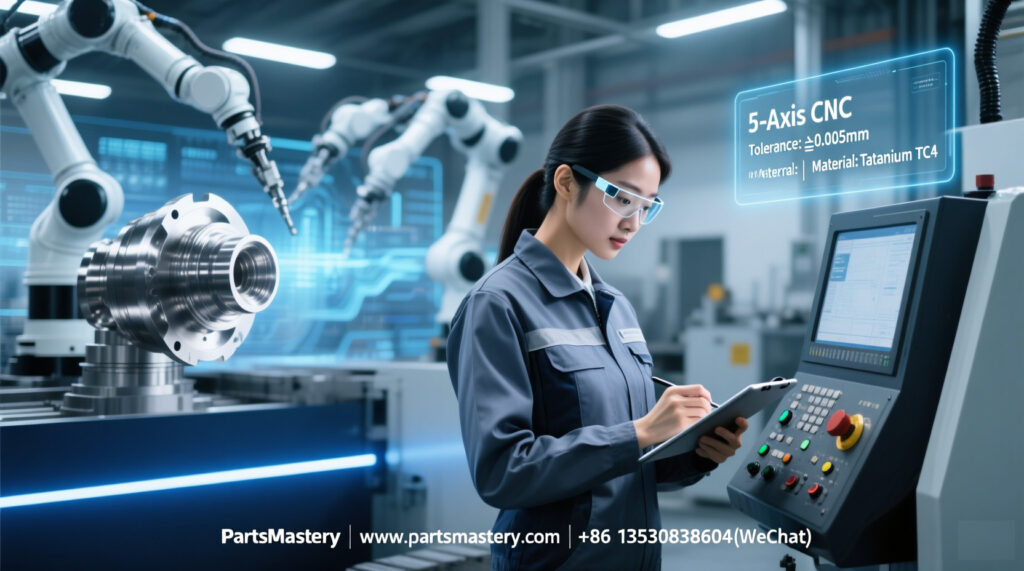
  • Equipment modernity – 5‑axis machining centers, high‑speed milling, wire EDM with sub‑micron accuracy, and CMMs indicate a serious OEM tooling maker.

  • Quality certifications – ISO 9001:2015 is baseline; AS9100D, IATF 16949, or ISO 13485 add confidence for regulated industries.

  • Communication and project management – Your tooling maker should provide regular updates, a single point of contact, and English‑fluent engineers if you are sourcing internationally.

  • References and case studies – Ask for examples of similar tools they have built, including cycle life performance and customer feedback.

OEM Tooling Cost Considerations

Pricing for OEM tooling varies widely based on complexity, size, material, and required tolerances. As a rough guide:

  • Simple single‑cavity mold or small die: $3,000 – $10,000

  • Multi‑cavity mold or medium progressive die: $10,000 – $50,000

  • Complex high‑cavitation mold or large transfer die: $50,000 – $200,000+

  • Precision cutting tool custom geometry: $50 – $500 per tool (plus NRE)

While the upfront cost may seem high, remember that this tooling enables mass production. The cost per part quickly becomes minimal when amortized over millions of units. Also, a well‑built tool from a skilled OEM tooling maker lasts longer and requires less maintenance, providing a lower total cost of ownership.

Common Mistakes OEMs Make with Tooling Sourcing

Avoid these pitfalls when working with an OEM tooling maker:

  • Starting too late – Tooling development takes time. Begin your tooling partner search early, ideally during final product design.

  • Choosing solely on price – The cheapest quote often leads to inferior steel, poor heat treatment, loose tolerances, and early tool failure.

  • Not sharing full production context – Your tooling maker needs to know your press type, cycle time targets, automation, and secondary operations. Hidden constraints cause mismatched designs.

  • Skipping the tryout phase – Always run sample parts and measure them thoroughly before accepting the tool. Fixing issues after the tool is on your shop floor is far more expensive.

  • Ignoring maintenance requirements – Plan for regular sharpening, cleaning, and inspection of your tooling. A preventive maintenance schedule extends tool life significantly.

The Future of OEM Tooling

Technology continues to reshape how OEM tooling makers work. Three trends are particularly impactful:

Additive manufacturing (3D printing) now produces conformal cooling channels in molds that are impossible to machine. These channels reduce cycle times by 30‑50% and improve part quality.

Smart tooling with sensors embedded in molds or dies provides real‑time data on temperature, pressure, and wear. This enables predictive maintenance and process optimization.

Digital twins allow the OEM tooling maker and your production team to simulate the entire molding or stamping process virtually, reducing physical tryouts and accelerating time‑to‑market.

结论

Your product’s quality, cost, and production reliability depend fundamentally on the tooling that makes it. A dedicated OEM tooling maker brings deep engineering expertise, robust quality systems, and a commitment to your long‑term success that general suppliers cannot match. By selecting the right partner, you reduce time‑to‑market, lower per‑part costs, and gain a trusted ally in your manufacturing journey.

PartsMastery is an experienced OEM tooling maker serving customers across automotive, medical, electronics, and general industrial sectors. With ISO 9001:2015 certified processes, in‑house CNC machining, EDM, heat treatment, and CMM inspection, we deliver custom molds, dies, fixtures, and cutting tools that meet the most demanding specifications. Our engineers provide DFM support, clear communication in English, and full documentation with every tool. We respect your intellectual property and production schedules.

Ready to move your product from design to reliable mass production? Contact PartsMastery today:

📞 +86 13530838604(微信) – Send your part drawings and volume requirements. Let us quote your next OEM tooling project and show you the difference a dedicated partner makes.

联系我们

    您所在的行业 *

    上传 2D/3D 图纸

    上传文件,立即获得报价(请附上任何格式的二维 CAD 图纸和三维 CAD 模型,包括 STEP、IGES、DWG、PDF、STL、ZIP 等)。.

    最大文件大小:20MB

    项目详情(请包括:部件名称/数量/材料/颜色/表面处理)