





Mold Factories

In the world of modern manufacturing, mold factories serve as the backbone of mass production across countless industries. From automotive components and medical devices to consumer electronics and household appliances, high-quality molds determine the precision, durability, and cost-effectiveness of finished products. Understanding what makes a reliable mold factory—and how to navigate the complexities of mold design, fabrication, and maintenance—is essential for businesses seeking to bring their products to market efficiently.
What Are Mold Factories?
Mold factories are specialized facilities that design, engineer, and produce molds—custom tools used to shape materials such as plastics, metals, ceramics, or composites through processes like injection molding, compression molding, blow molding, or die casting. Among these, plastic injection molds are the most common, accounting for a significant share of global manufacturing output. A typical mold factory houses advanced CNC machining centers, electrical discharge machines (EDM), wire cutting equipment, precision grinding machines, and coordinate measuring machines (CMM) for quality control.
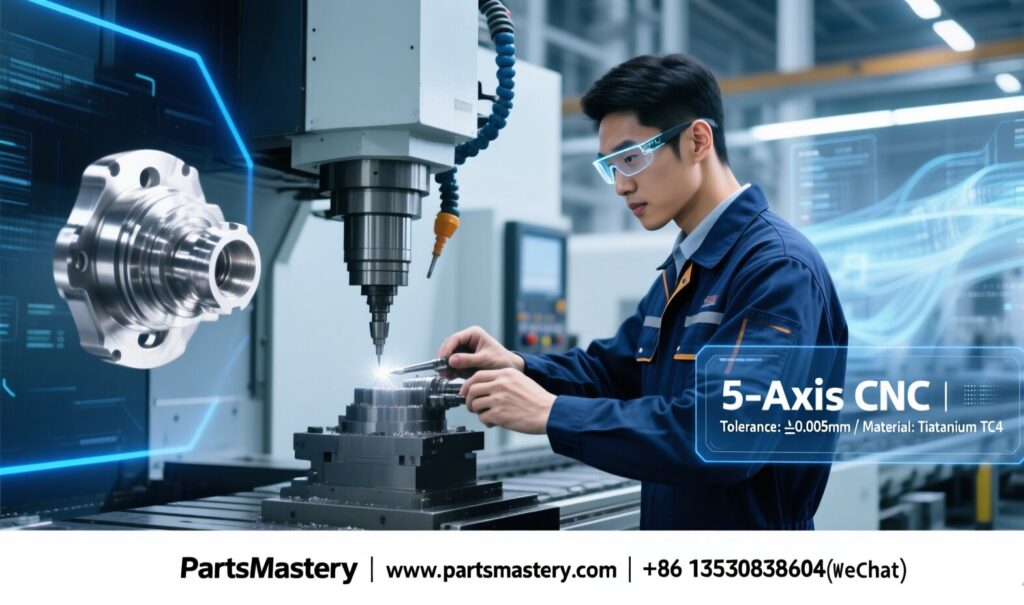
The complexity of modern molds has transformed these factories into high-tech engineering hubs. Today, leading mold factories employ computer-aided design (CAD) and computer-aided manufacturing (CAM) software, simulate material flow using mold flow analysis, and apply automation to achieve tolerances as tight as ±0.005mm. This level of precision directly impacts part consistency, cycle times, and tool longevity.
Key Considerations When Choosing a Mold Factory
Selecting the right mold factory is a strategic decision that influences product quality, lead times, and long-term production costs. Here are critical factors to evaluate:
1. Engineering and Design Capabilities
A competent mold factory does more than cut steel; it partners with clients to optimize part design for manufacturability. Look for factories with in-house design teams that can perform design for manufacturing (DFM) reviews, suggest gate locations, cooling channel layouts, and ejection mechanisms. Their ability to predict and resolve issues like sink marks, weld lines, or warpage through simulation software is invaluable.
2. Machine Tool Precision and Capacity
The factory’s equipment inventory tells you a lot. High-speed CNC milling machines (with spindle speeds above 20,000 rpm), sinker and wire EDM, and precision surface grinders are essential for complex geometries. Also check for large-capacity machines if your parts exceed standard dimensions. A well-equipped mold factory will have a range of clamping tonnages for mold trials, from small 50-ton presses to 2,000-ton machines for automotive parts.
3. Material Selection and Heat Treatment
Mold steel quality determines tool life. Common grades include P20 (for low-volume production), H13 and D2 (for high-wear applications), and stainless steel like S136 for medical or food-contact parts. Reputable mold factories source certified tool steels and apply appropriate heat treatment—vacuum hardening, nitriding, or cryogenic processing—to achieve uniform hardness and dimensional stability.
4. Quality Management Systems
ISO 9001:2015 certification is the baseline. For demanding industries, look for IATF 16949 (automotive), ISO 13485 (medical devices), or AS9100 (aerospace). A robust quality system includes in-process inspections, final CMM reports, and mold trial documentation with sample parts measured against the original CAD data. Many advanced factories also offer Moldflow analysis reports and steel certificates.
5. Lead Time and Project Management
Standard mold fabrication for a medium-complexity injection mold takes 4 to 8 weeks from design approval to first samples. Complex family molds or multi-cavity hot runner systems may require 12 weeks or more. The best mold factories provide a detailed project timeline, regular progress photos or videos, and clear communication channels. Delays often occur at the electrode machining or EDM stage, so ask about their electrode automation and EDM capacity.
Types of Molds Produced by Mold Factories
Different applications demand different mold configurations:
-
Two-plate molds – Simplest design, suitable for most parts with gates on the parting line.
-
Three-plate molds – Allow pinpoint gating and automatic runner separation for high-cosmetic parts.
-
Hot runner molds – Eliminate runner waste, reduce cycle time, and improve part consistency. Require precise temperature control.
-
Stack molds – Double the cavity count without increasing clamping tonnage, ideal for high-volume, thin-walled parts like containers.
-
Insert molds – Overmold metal or other substrates; used for threaded inserts, electrical contacts, or tool handles.
-
Unscrewing molds – Incorporate rack-and-pinion or hydraulic mechanisms to form internal or external threads.
-
Rubber and silicone molds – Operate at lower pressures and temperatures, often used for seals, gaskets, and medical components.
Advanced Technologies in Modern Mold Factories
The mold-making industry is rapidly adopting Industry 4.0 principles. Conformal cooling—where cooling channels follow the part contour using 3D-printed mold inserts—can reduce cycle times by 20–40% while improving dimensional stability. Sensor-equipped smart molds monitor cavity pressure, temperature, and flow front velocity in real time, feeding data back to production managers. Some mold factories now offer additive manufacturing for prototyping complex core/cavity details before committing to hardened steel.
Another trend is modular mold bases. Standardized components allow faster replacement of wear parts and easier maintenance. For clients with multiple similar parts, a modular system reduces initial investment and spare parts inventory.
Common Pitfalls to Avoid
Even experienced procurement professionals can run into trouble when working with overseas mold factories. Here are red flags:
-
No mold flow analysis – Without simulation, you risk short shots, burns, or excessive warpage.
-
Vague steel certification – Ask for material test reports; generic “tool steel” often means low-grade P20 with unknown composition.
-
No trial run with your material – A factory that skips or rushes the mold trial may deliver a tool that fails with your specific resin.
-
Missing spare parts package – Wear parts like ejector pins, core pins, and heaters should be included. Reputable factories provide a list of recommended spares.
-
Unclear ownership of design files – Ensure your contract states that the CAD data, tool drawings, and any modifications belong to you.
Why PartsMastery Stands Out in Mold Manufacturing
At PartsMastery, we understand that a mold is not just a tool—it is an asset that defines your production efficiency and product quality. Our mold factory integrates German-engineered CNC machines, Japanese EDM units, and Swiss coordinate measuring equipment to deliver molds that exceed industry standards. From concept to production, our engineers work alongside your team, providing DFM feedback within 24 hours and real-time updates via our digital project portal.
We specialize in high-cavitation hot runner molds for medical disposables, wear-resistant inserts for automotive under-hood components, and precision two-plate molds for consumer electronics. Every mold undergoes a 15-point quality checklist, including hardness testing, ejection force measurement, and 100% dimensional inspection of critical features. Our heat treatment partner provides ISO-certified vacuum hardening with decarb-free surfaces.
For clients seeking long-term partnerships, we offer mold maintenance services, spare parts stocking, and cycle time optimization studies. We have helped companies reduce injection molding cycle times by up to 28% through conformal cooling retrofits and flow path balancing.
When you choose PartsMastery, you gain a transparent partner. We provide detailed tooling proposals with steel grade certificates, Moldflow analysis results, and a clear breakdown of costs—no hidden charges for design changes or rush shipping. Our typical lead time for a single-cavity prototype mold is 15 working days; for production-grade multi-cavity molds, 6 weeks.
Whether you are launching a new medical device, scaling up automotive parts production, or optimizing an existing consumer product, the right mold factory makes all the difference. Invest time in evaluating capabilities, ask for sample parts and reference customers, and prioritize communication and quality over the lowest upfront price.
Contact PartsMastery today to discuss your next mold project. Our engineering team is ready to review your part drawings, recommend the most efficient tooling strategy, and deliver molds that keep your production running smoothly for millions of cycles.
PartsMastery – Precision molds, reliable performance, and engineering excellence.
*Call or message: +86 13530838604 (WeChat)*