





A Deep Dive into Injection Molding Tooling

In the realm of high-volume manufacturing, the difference between a product that succeeds and one that fails often comes down to one critical factor: the quality of the injection molding tooling. This is not hyperbole. The tool—commonly referred to as the mold—is the single most significant capital investment in the production cycle. It dictates cycle time, part quality, material efficiency, and ultimately, the profitability of the entire operation.
在 PartsMastery, we view injection molding tooling as more than just a steel cavity. It is a precision-engineered system that demands meticulous design, advanced material science, and expert craftsmanship. Whether you are producing medical devices requiring micron-level accuracy or automotive components demanding structural integrity, the tooling is where your product’s journey truly begins.
Understanding Injection Molding Tooling: Beyond the Basics
The term injection molding tooling encompasses the entire assembly of components that work together to shape molten polymer into a finished part. While the concept may sound straightforward, modern tooling is a feat of engineering complexity. A typical production mold consists of dozens, sometimes hundreds, of individual components, each machined to tolerances measured in thousandths of a millimeter.
The primary functions of any tooling system are fourfold:
-
Cavity Formation: Creating the precise geometry of the desired part.
-
Material Flow: Guiding molten plastic from the injection unit to the cavity through runners and gates.
-
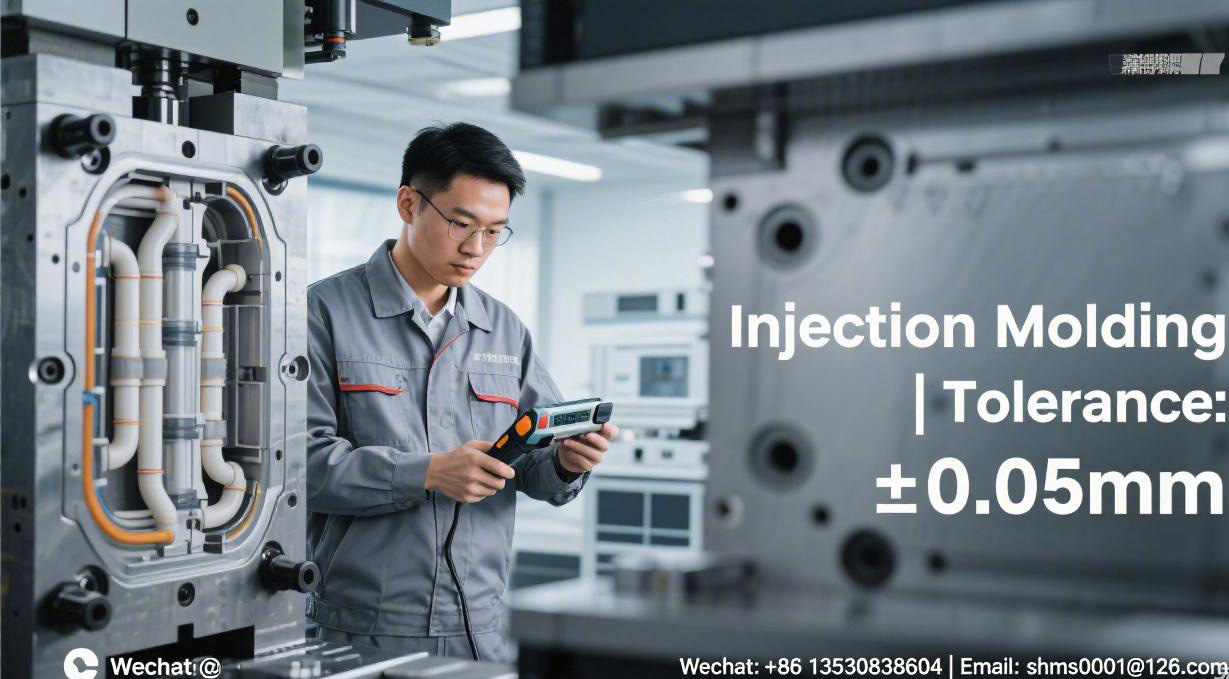
Thermal Regulation: Managing heat extraction through cooling channels to ensure rapid solidification.
-
Part Ejection: Safely removing the finished component without deformation or damage.
When these four functions are executed with precision, the result is a tool that produces consistent, defect-free parts for millions of cycles. When they are compromised, manufacturers face warpage, sink marks, flash, and costly production delays.
The Critical Choice: Tool Steel Selection
One of the most consequential decisions in injection molding tooling is the selection of the base material. The choice determines the tool’s lifespan, the achievable surface finish, and the types of resins it can process.
For high-volume production—typically defined as 500,000 cycles or more—hardened tool steels such as H13, S7, or Stavax are the industry standard. These materials undergo heat treatment to achieve hardness levels exceeding 50 HRC (Rockwell Hardness Scale), providing exceptional wear resistance against abrasive fillers like glass fiber or mineral reinforcements. Hardened steel tools can reliably produce millions of parts while maintaining dimensional stability.
For mid-volume production runs, P20 pre-hardened steel offers an excellent balance. It is easier to machine than fully hardened steel and still provides sufficient durability for runs ranging from 100,000 to 500,000 cycles. For prototype validation or low-volume production (under 50,000 cycles), aluminum tooling presents a compelling alternative. Aluminum offers superior thermal conductivity—meaning faster cooling and shorter cycle times—at a significantly lower initial cost, though with a shorter operational lifespan.
在 PartsMastery, we guide clients through this selection process with a focus on total cost of ownership. A cheap tool that fails prematurely is far more expensive than a high-quality tool designed for the specific demands of the project.
Precision Machining: Where Art Meets Engineering
The creation of injection molding tooling requires a suite of advanced manufacturing technologies. The modern tool shop is equipped with:
-
5-Axis CNC Machining: Enables the creation of complex geometries in a single setup, improving accuracy and reducing lead times.
-
EDM (Electrical Discharge Machining): Essential for creating sharp internal corners, deep ribs, and intricate details that cannot be reached by conventional cutting tools. Sinker EDM and wire EDM are both critical for high-precision tooling.
-
High-Speed Milling: Allows for superior surface finishes that often eliminate the need for manual polishing, resulting in faster delivery and more consistent parting lines.
Each of these processes requires skilled machinists and programmers who understand not only how to cut steel but also how the tool will behave under the extreme pressures and temperatures of the injection molding process.
The Unseen Hero: Thermal Management
Perhaps the most overlooked aspect of injection molding tooling is the cooling system. Cooling typically accounts for 60% to 80% of the total cycle time. A poorly designed cooling layout leads to longer cycles, uneven shrinkage, warpage, and residual stresses within the part.
Conventional cooling relies on straight-line channels drilled through the mold plates. While effective for simple geometries, this approach often falls short for complex parts. This is where conformal cooling has revolutionized the industry. Using additive manufacturing (metal 3D printing), cooling channels can follow the exact contour of the cavity surface. The benefits are substantial:
-
Uniform temperature distribution across the part
-
Reduction in cycle times by 20% to 40%
-
Elimination of hot spots that cause sink marks and warpage
-
Improved part quality and dimensional stability
在 PartsMastery, we leverage advanced flow simulation software during the design phase to optimize cooling layouts before any metal is cut. This predictive approach ensures that your tooling delivers maximum efficiency from the first shot.
Avoiding Common Tooling Pitfalls
Even with advanced technology, injection molding tooling projects can encounter challenges. Awareness of common issues can help manufacturers make informed decisions:
-
Insufficient Venting: Trapped air during injection causes burn marks, incomplete fills, and increased internal stress. Proper venting design—typically 0.0005 to 0.001 inches deep along the parting line—is essential.
-
Inadequate Gate Design: Gate location and size determine how material flows into the cavity. Poor gate placement can result in weld lines at critical stress points or cosmetic defects on visible surfaces.
-
Improper Draft Angles: Parts without adequate draft (taper) can be difficult to eject, leading to scratches, deformation, or damage to the tooling itself.
-
Worn Ejection Systems: Ejector pins, sleeves, and return pins are wear components that require periodic maintenance. Neglecting these leads to part deformation and eventual tool failure.
A trusted tooling partner anticipates these issues during the design review phase, ensuring that the final tool is robust, maintainable, and optimized for the intended production environment.
The PartsMastery Difference
In a global marketplace flooded with tooling suppliers, PartsMastery stands apart through an unwavering commitment to quality, transparency, and partnership. We do not simply build tools; we engineer solutions that align with our clients’ production goals, quality standards, and budget constraints.
Our process begins with a comprehensive design for manufacturability (DFM) review. We analyze part geometry, material selection, tolerance requirements, and anticipated annual volumes to recommend the optimal tooling configuration. Throughout production, we employ rigorous inspection protocols—including CMM (Coordinate Measuring Machine) validation—to ensure every dimension meets the approved specifications.
Moreover, we recognize that tooling is not a one-time transaction. We provide ongoing support, including maintenance recommendations, spare parts provisioning, and troubleshooting assistance to maximize the lifespan of your investment.
The Future of Injection Molding Tooling
As manufacturing evolves, so too does injection molding tooling. We are witnessing significant advancements in:
-
Smart Tooling: Embedded sensors that monitor temperature, pressure, and flow in real-time, enabling predictive maintenance and closed-loop process control.
-
Sustainable Manufacturing: Tooling designed specifically for bio-based polymers and recycled materials, which often have different flow characteristics than virgin resins.
-
Rapid Tooling: Accelerated lead times through hybrid manufacturing approaches that combine additive and subtractive processes.
在 PartsMastery, we are committed to staying at the forefront of these innovations, ensuring that our clients benefit from the latest advancements in tooling technology.
结论
The quality of your injection molding tooling directly determines the success of your production operation. It influences every downstream factor: cycle time, scrap rate, part quality, and ultimately, your bottom line. Investing in high-quality tooling is not an expense—it is a strategic decision that yields returns for years to come.
With PartsMastery, you gain a partner dedicated to precision, reliability, and continuous improvement. From initial design through production support, we deliver tooling solutions that empower your business to compete with confidence.
Ready to build the foundation for your next success?
Contact PartsMastery today to discuss your tooling requirements.
📞 电话/微信: +86 13530838604
📧 Email: shms0001@126.com
🌐 Website: www.partsmastery.com