






Dans le domaine de la conception industrielle et de la fabrication de composants, les conditions de fonctionnement à haute température constituent toujours un défi majeur lors du choix des matériaux. Les plastiques à usage général ont tendance à ramollir, à se déformer et à subir une forte baisse de leur résistance mécanique lorsqu'ils sont exposés à une chaleur prolongée, ce qui ne permet pas de répondre aux exigences de stabilité des composants de précision. Si les métaux offrent une excellente résistance à la chaleur, ils présentent toutefois des inconvénients majeurs : poids élevé, difficulté de mise en forme, risque élevé de corrosion et coûts élevés.
Les plastiques techniques résistants à la chaleur ont été développés pour combler cette lacune. Ils conservent leur résistance structurelle, leur précision dimensionnelle et leur fiabilité fonctionnelle à des températures supérieures à 100 °C, tout en conservant les avantages inhérents aux plastiques : légèreté, résistance à la corrosion et facilité d'usinage. Aujourd'hui, ils sont devenus un matériau incontournable dans les secteurs de l'automobile, de l'aérospatiale, du médical, de l'électronique et des équipements industriels.
1. Que sont les plastiques techniques résistants à la chaleur ?
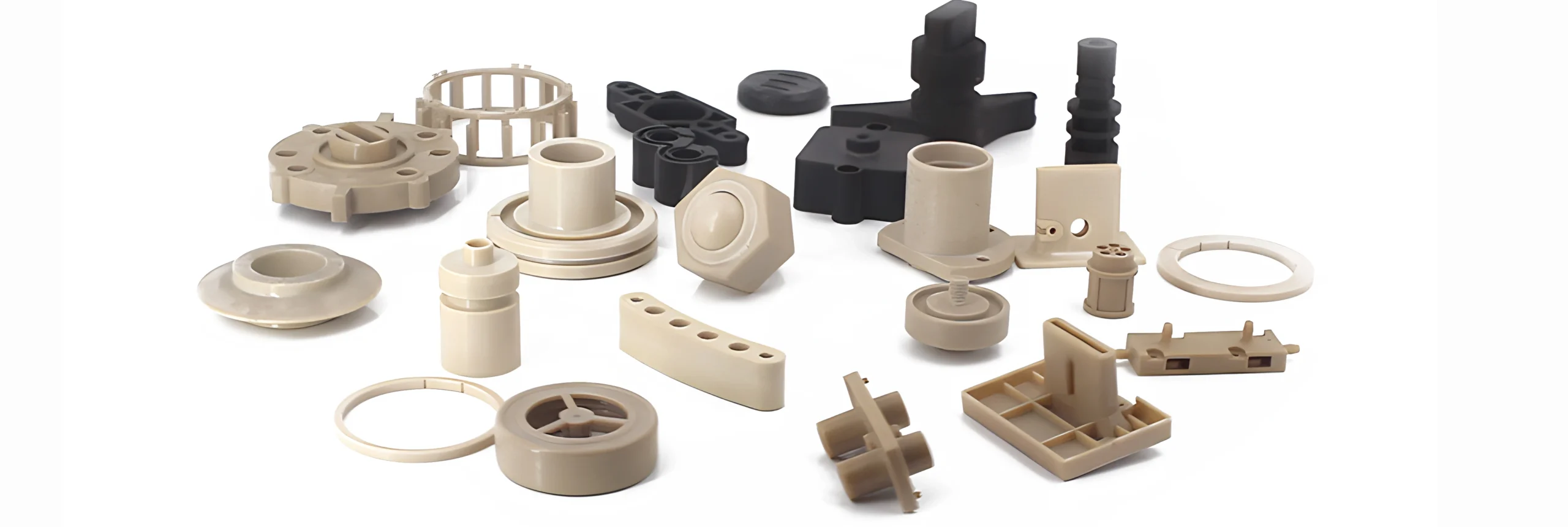
Les plastiques résistants à la chaleur font partie de la catégorie des plastiques techniques haute performance. Leur caractéristique principale est leur capacité à conserver leurs principales propriétés mécaniques, électriques et chimiques lors d'une exposition prolongée à des températures élevées, sans présenter les phénomènes de ramollissement, de fluage ou de fissuration que l'on observe couramment chez les plastiques standard.
Il n'existe pas de seuil de température universel pour la classification, mais les matériaux dont la température d'utilisation continue est supérieure à 100 °C sont généralement classés comme résistants à la chaleur. Les grades spéciaux haut de gamme peuvent fonctionner en continu à des températures supérieures à 250 °C et résister à des pics de température de courte durée dépassant les 300 °C. Leur stabilité thermique accrue provient de structures moléculaires rigides comportant des cycles aromatiques et des structures hétérocycliques, qui améliorent également leur résistance au vieillissement à long terme.
2. 6 indicateurs clés pour évaluer la résistance à la chaleur des plastiques
La résistance à la chaleur des plastiques n'est pas définie par une seule valeur, mais par un ensemble d'indicateurs de performance. Selon les conditions d'utilisation, certains paramètres doivent être privilégiés par rapport à d'autres, et les ingénieurs doivent évaluer les matériaux de manière globale, en se basant sur des cas d'utilisation concrets.
2.1 Température d'utilisation en continu (CUT)
Il s'agit du critère principal pour le choix d'un plastique résistant à la chaleur. Il désigne la température maximale à laquelle un matériau peut fonctionner à long terme sans dégradation critique de ses propriétés mécaniques ou électriques. Les plastiques résistants à la chaleur disponibles dans le commerce présentent des valeurs CUT comprises entre 120 °C et 260 °C, et ce paramètre détermine directement l'aptitude d'un matériau à être utilisé dans des applications à haute température prolongée.
2.2 Température de déformation sous l'effet de la chaleur (HDT)
Le test HDT permet de mesurer la résistance d'un matériau à la déformation sous l'effet combiné d'une température élevée et d'une charge mécanique. Certains matériaux restent stables à haute température lorsqu'ils ne sont pas soumis à une charge, mais se déforment ou perdent leur précision dimensionnelle lorsqu'ils sont soumis à une pression, à une force de serrage ou à une contrainte mécanique. Pour les assemblages de précision, les joints d'étanchéité et les pièces structurelles porteuses, le test HDT est souvent plus pertinent que la simple résistance à la température.
2.3 Température de transition vitreuse (Tg) et point de fusion
La Tg désigne la température à laquelle les plastiques amorphes passent d'un état vitreux rigide à un état souple et caoutchouteux, avec une baisse notable de leur rigidité. Pour les plastiques semi-cristallins, le point de fusion correspond à la température à laquelle la structure cristalline fond. Ces deux paramètres définissent la limite supérieure de température d'un matériau et fournissent des données essentielles pour le réglage des températures de transformation.
2.4 Stabilité mécanique à haute température
Un plastique thermorésistant véritablement hautement performant doit conserver sa résistance à la traction, sa rigidité et sa résistance aux chocs à des températures élevées. De nombreux matériaux présentent une excellente résistance à température ambiante, mais se dégradent rapidement à mesure que la température augmente. Pour les engrenages, les bagues, les supports et autres composants soumis à des charges, le maintien de la résistance à la température de fonctionnement constitue un critère de sélection essentiel.
2.5 Résistance aux produits chimiques et aux milieux
Les environnements à haute température s'accompagnent souvent d'une exposition à des huiles, des carburants, des solvants, des produits de nettoyage ou de la vapeur. Les plastiques haut de gamme résistants à la chaleur doivent rester stables lorsqu'ils sont exposés à la fois à la chaleur et aux agents chimiques, sans subir de corrosion, de gonflement ni de dégradation. Il s'agit là d'une exigence essentielle pour les vannes de pompes, les joints d'étanchéité et les composants destinés à la manipulation des fluides.
2.6 Résistance à l'usure et au fluage
Soumises à des températures élevées prolongées et à des charges soutenues, de nombreuses matières plastiques subissent une déformation lente et permanente appelée « fluage », qui peut à terme entraîner un mauvais ajustement des pièces ou des fuites au niveau des joints. Pour les pièces soumises à des mouvements de glissement, à des rotations ou à des charges prolongées, la résistance à l'usure à haute température et la résistance au fluage sont essentielles pour garantir une durée de vie fiable.
3. Les 7 principaux types de plastiques résistants à la chaleur
Les plastiques techniques résistants à la chaleur disponibles aujourd'hui sur le marché couvrent une large gamme de niveaux de performance et de gammes de prix, chacun étant optimisé pour des cas d'utilisation spécifiques.
3.1 PEEK (polyéther-éther-cétone)
Le PEEK est le plastique technique semi-cristallin haute performance le plus polyvalent, avec une température d'utilisation continue d'environ 250 °C et une excellente résistance aux pics thermiques de courte durée. Il allie une résistance mécanique élevée, une résistance chimique exceptionnelle, une excellente résistance à l'usure et au fluage, une stabilité dimensionnelle hors du commun et une biocompatibilité. C'est le matériau de choix pour les composants de précision dans l'aérospatiale, les implants médicaux et les équipements industriels haut de gamme. Sa principale limite réside dans le coût élevé de sa matière première ; il n'est donc généralement prescrit que pour des applications exigeantes.
3.2 PEI (polyétherimide)
Le PEI, mieux connu sous le nom de marque Ultem, est un plastique amorphe résistant à la chaleur, présentant une température d'utilisation continue comprise entre 170 et 180 °C, d'excellentes propriétés ignifuges, une bonne isolation électrique, une grande stabilité dimensionnelle et une transparence naturelle. Il offre un meilleur rapport qualité-prix que le PEEK et est plus facile à usiner. Il est largement utilisé dans les connecteurs électroniques, les composants médicaux stérilisables, les intérieurs d'avions, les gabarits d'usinage et les boîtiers de précision, ce qui en fait le choix privilégié pour les composants isolants destinés à des températures élevées.
3.3 PTFE (polytétrafluoroéthylène)
Communément appelé « Téflon », le PTFE présente une température d'utilisation continue de 260 °C, une résistance chimique exceptionnelle et l'un des coefficients de frottement les plus faibles parmi tous les plastiques. Il est largement utilisé pour les joints d'étanchéité, les garnitures, les revêtements, les composants coulissants et les pièces en contact avec des fluides. Cependant, le PTFE présente une résistance mécanique relativement faible et est sujet à la déformation sous charge ; c'est pourquoi les applications structurelles nécessitent généralement des grades chargés ou renforcés.
3.4 PPS (sulfure de polyphénylène)
Le PPS est un plastique semi-cristallin résistant à la chaleur, dont la température d'utilisation continue est d'environ 200 °C. Il offre une bonne résistance à la chaleur, une excellente résistance chimique, une ignifugation intrinsèque, une faible absorption d'humidité et une grande stabilité dimensionnelle. Il s'agit d'une option très économique pour les composants sous le capot des véhicules, les pièces électroniques et électriques, les composants de pompes et de vannes industrielles, ainsi que les connecteurs, constituant une alternative de milieu de gamme aux plastiques spécialisés plus onéreux.
3.5 PAI (polyamide-imide)
Le PAI est l'un des plastiques thermorésistants les plus performants disponibles sur le marché, avec une température d'utilisation continue pouvant atteindre 270 °C. Il conserve une rigidité extrêmement élevée, une excellente résistance à l'usure et une résistance exceptionnelle au fluage à des températures élevées, ainsi qu'une stabilité dimensionnelle hors du commun. Il est utilisé pour les paliers soumis à de fortes charges, les patins d'usure, les pièces structurelles de précision pour l'aérospatiale et les joints haute pression fonctionnant dans des conditions extrêmes. Ses inconvénients comprennent un coût élevé du matériau et des exigences de mise en œuvre plus strictes.
3.6 PPSU (polyphénylsulfone)
Le PPSU est un plastique amorphe résistant à la chaleur, dont la température d'utilisation continue est d'environ 180 °C. Il se distingue par une excellente résistance à l'hydrolyse et à la stérilisation à la vapeur, associées à une bonne résistance aux chocs et à une bonne biocompatibilité. C'est le matériau de choix pour les composants d'instruments chirurgicaux réutilisables, les boîtiers de dispositifs médicaux stérilisables, les pièces en contact avec les aliments et les composants destinés au traitement de l'eau, surpassant la plupart des autres plastiques dans les environnements chauds et humides.
3.7 Nylon résistant aux hautes températures
Les nylons haute température sont des grades de polyamide modifiés présentant des performances thermiques améliorées. Renforcés par de la fibre de verre ou d’autres charges, ils permettent d’atteindre des températures d’utilisation en continu comprises entre 120 et 150 °C, tout en conservant la bonne ténacité, la résistance à l’usure et l’aptitude à la mise en œuvre du nylon standard, et ce à un coût bien inférieur à celui des plastiques spéciaux haute performance. Ils sont couramment utilisés pour les composants automobiles, les boîtiers électroniques, les supports et les pièces structurelles industrielles en général. Leur principale limite réside dans une absorption d’humidité plus élevée, qui peut affecter la précision dimensionnelle.
4. Tableau comparatif des performances des plastiques résistants à la chaleur
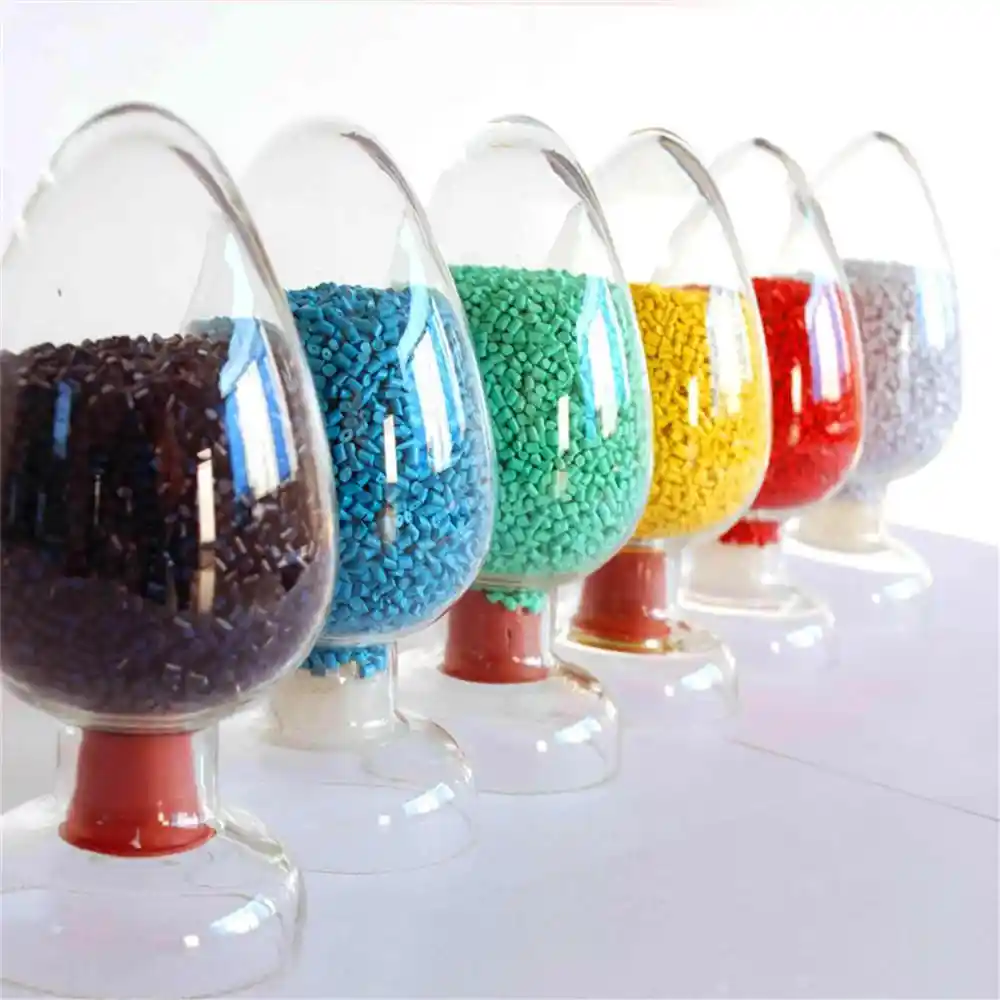
Afin de faciliter la sélection rapide des matériaux, le tableau ci-dessous résume les principaux indicateurs de performance des 7 principaux plastiques résistants à la chaleur. Le choix final du matériau doit toujours être validé en fonction des conditions d'exploitation spécifiques.
| Matériau | Température en fonctionnement continu | Résistance mécanique | Résistance chimique | Difficulté d'usinage | Niveau de coût | Applications typiques |
|---|---|---|---|---|---|---|
| PEEK | 250 °C (très élevé) | Très élevé | Excellent | Modéré (nécessite un contrôle de la température) | Très élevé | Pièces de précision haut de gamme, secteur médical, aérospatiale |
| PEI | 180 °C (température élevée) | Haut | Bien | Faible (facile à usiner) | Haut | Connecteurs, isolateurs, pièces médicales stérilisables |
| PTFE | 260 °C (très élevé) | Relativement faible | Excellent | Modéré (sujet à la déformation) | Moyen-élevé | Joints, garnitures, pièces coulissantes à faible frottement |
| PPS | 200 °C (Élevée) | Moyen-élevé | Excellent | Faible | Moyen-élevé | Pièces automobiles, pompes et vannes, électronique |
| PAI | 270 °C (très élevé) | Extrêmement élevé | Bien | Élevé (contrôle rigoureux des processus) | Très élevé | Roulements à forte charge, pièces d'usure, structures aérospatiales |
| PPSU | 180 °C (température élevée) | Moyen-élevé | Bon (résistance exceptionnelle à l'hydrolyse) | Faible | Haut | Pièces stérilisables à usage médical, composants destinés à entrer en contact avec les aliments |
| Nylon haute température | 120–150 °C (moyen-élevé) | Moyen-élevé | Modéré | Faible | Moyen | Supports pour l'automobile, pièces structurelles pour l'industrie en général |
5. Principaux avantages des plastiques résistants à la chaleur
L'adoption croissante des plastiques résistants à la chaleur dans tous les secteurs industriels s'explique par leur combinaison unique de performances thermiques et des avantages inhérents aux plastiques, ce qui permet de résoudre de nombreux défis techniques que les matériaux traditionnels ne peuvent pas relever de manière rentable.
5.1 Remplacement par des métaux légers pour réduire la consommation d'énergie
Les plastiques résistants à la chaleur ont une densité équivalente à environ la moitié de celle de l'aluminium et à environ un cinquième de celle de l'acier. Le remplacement des composants métalliques par du plastique permet de réduire considérablement le poids global des pièces. Dans les secteurs de l'automobile, de l'aérospatiale, de la robotique et des appareils portables, la réduction du poids se traduit directement par une baisse de la consommation d'énergie, une plus grande autonomie des batteries, une meilleure mobilité et une manipulation plus aisée lors de l'assemblage.
5.2 Excellente stabilité dimensionnelle pour les applications de précision
Les plastiques haute performance résistants à la chaleur présentent de faibles coefficients de dilatation thermique et une absorption d'humidité minimale, ce qui leur permet de conserver des tolérances dimensionnelles strictes malgré les variations de température et d'humidité. Pour les assemblages de précision, les interfaces d'étanchéité et les mécanismes coulissants, cette stabilité dimensionnelle est essentielle pour garantir des performances fiables et constantes tout au long de la durée de vie de la pièce.
5.3 Large résistance à la corrosion chimique
La plupart des plastiques thermorésistants offrent une excellente résistance aux huiles, aux carburants, aux solvants, aux acides, aux bases et aux fluides industriels. Contrairement aux métaux, ils ne rouillent pas, ne s'oxydent pas et ne se corrodent pas dans des environnements chimiques agressifs. Dans les secteurs de la transformation chimique, du pétrole et du gaz, des systèmes d'alimentation en carburant automobile et du traitement de l'eau, ils prolongent la durée de vie des composants et réduisent les coûts de maintenance.
5.4 Propriétés d'isolation électrique naturelles
La quasi-totalité des plastiques résistants à la chaleur offrent une excellente isolation électrique, conservant des propriétés diélectriques stables même à des températures élevées, dans des conditions d'humidité élevée et dans des environnements poussiéreux. Ils constituent le matériau de choix pour les connecteurs électroniques, les blocs isolants, les boîtiers de capteurs et les supports de circuits imprimés, améliorant ainsi la sécurité et la durée de vie des équipements électriques.
5.5 Grande liberté de conception pour des fonctionnalités intégrées
Par rapport à l'usinage des métaux, les plastiques permettent d'obtenir des géométries bien plus complexes. Les ingénieurs peuvent intégrer des nervures, des filetages, des parois minces, des assemblages par encliquetage, des sections isolantes et des structures légères dans une seule pièce, ce qui réduit le nombre de pièces, les étapes d'assemblage et le coût global du produit.
5.6 Une fabrication flexible pour tous les volumes de production
Les plastiques résistants à la chaleur sont compatibles avec un large éventail de procédés de fabrication. L'usinage CNC permet le prototypage en petites séries et la fabrication de pièces de précision sur mesure, tandis que le moulage par injection permet une production en grande série à moindre coût. Cette flexibilité permet aux fabricants de valider rapidement leurs conceptions et de passer sans difficulté de la phase de développement à la production à grande échelle.
6. Limites et considérations relatives à l'application
Les plastiques résistants à la chaleur ne constituent pas une solution universelle. Leurs performances ont des limites bien définies, et les idées reçues concernant leurs capacités peuvent entraîner une défaillance prématurée des pièces si elles ne sont pas prises en compte lors de la sélection.
6.1 Coût des matériaux plus élevé que celui des plastiques standard
Les plastiques spéciaux résistants à la chaleur, notamment le PEEK et le PAI, sont nettement plus onéreux que les plastiques standard tels que l'ABS, le nylon ou le POM. Le choix de plastiques résistants aux hautes températures pour des pièces simples, soumises à de faibles charges et ne présentant aucune exigence thermique, entraîne des coûts supplémentaires inutiles sans apporter d'avantage fonctionnel. Le choix du matériau doit toujours être adapté aux conditions réelles d'utilisation.
6.2 Exigences de traitement plus strictes
Les plastiques résistants à la chaleur présentent des points de fusion plus élevés et une plus grande rigidité que les plastiques standard, ce qui rend leur mise en œuvre plus complexe. L'usinage CNC nécessite des outils tranchants spécialement conçus, des températures de coupe contrôlées et une évacuation adéquate des copeaux afin d'éviter les bavures, les contraintes résiduelles et les écarts dimensionnels. Pour le moulage par injection, un contrôle rigoureux du séchage du matériau, de la température du moule, de la température de fusion et de la vitesse de refroidissement est nécessaire pour prévenir le gauchissement, la fissuration sous contrainte et les défauts de surface.
6.3 Risque de fluage sous une charge élevée à long terme
Même les plastiques haute performance résistants à la chaleur peuvent subir une déformation par fluage lent lorsqu'ils sont soumis à une charge élevée prolongée à des températures élevées. Pour les supports porteurs, les joints haute pression et les pièces structurelles soumises à des contraintes permanentes, la résistance au fluage à haute température doit être évaluée avec autant de soin que la résistance mécanique à l'état brut. Se fier uniquement aux données de résistance à température ambiante peut entraîner, à terme, des défaillances inattendues au niveau de l'ajustement.
6.4 La résistance chimique dépend du matériau
La résistance à la chaleur n'est pas synonyme de résistance chimique universelle. Les différents plastiques résistants à la chaleur présentent des profils de compatibilité très variés. Par exemple, le PEEK offre une excellente résistance chimique générale, mais ne convient pas aux acides fortement oxydants tels que l'acide sulfurique ou l'acide nitrique concentrés. Vérifiez toujours la compatibilité avec le produit chimique précis, la concentration et la température auxquels la pièce sera exposée avant de choisir définitivement le matériau.
6.5 Les pièces de précision nécessitent une conception minutieuse des tolérances
Toutes les matières plastiques se dilatent et se contractent sous l'effet des variations de température. Les parois minces, les angles vifs, les grandes surfaces planes et les épaisseurs de paroi irrégulières augmentent le risque de déformation due à l'usinage ou à la chaleur. Une conception optimale des pièces implique une épaisseur de paroi uniforme, des rayons d'angle généreux, des éléments de dissipation des contraintes et des jeux de dilatation thermique appropriés afin de garantir la précision dimensionnelle à la température de fonctionnement.
7. Procédés de fabrication courants des plastiques résistants à la chaleur
Le procédé de fabrication optimal dépend du volume de production, de la géométrie des pièces, des exigences en matière de tolérances et des spécifications relatives à l'état de surface. Le choix du procédé approprié garantit à la fois les performances des pièces et la rentabilité.
7.1 Usinage CNC
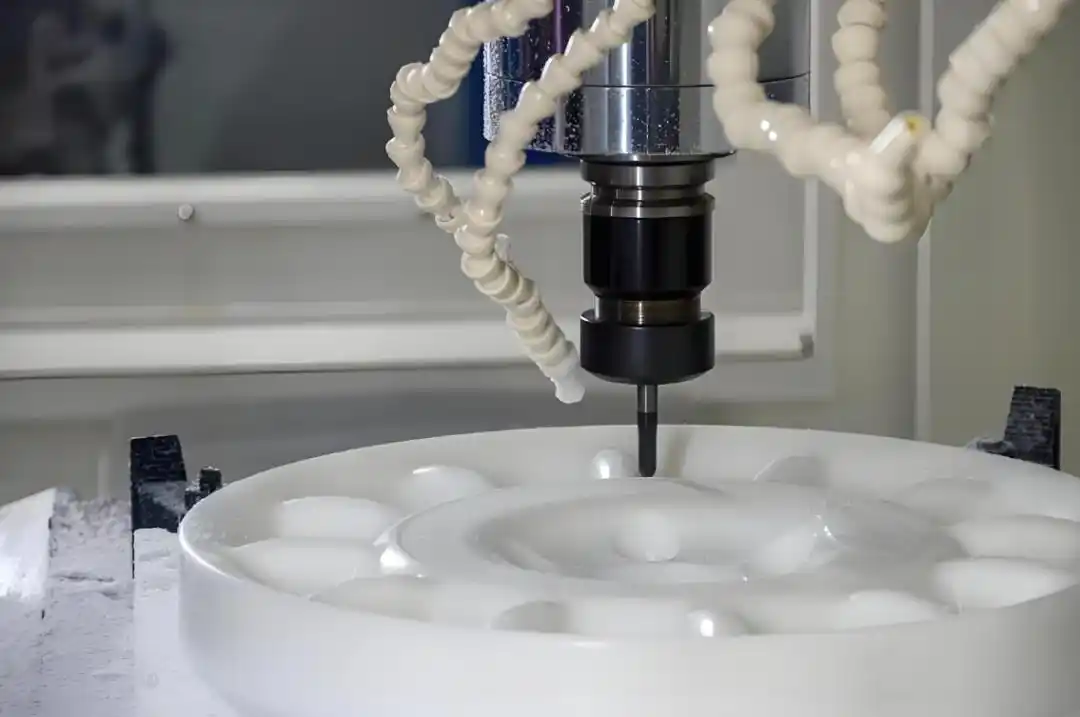
Le fraisage et le tournage CNC constituent les méthodes d’usinage de précision les plus courantes pour les plastiques résistants à la chaleur ; elles sont compatibles avec la quasi-totalité des matériaux résistants à la chaleur. Elles sont idéales pour le prototypage, les pièces sur mesure et les composants de précision en petites séries. L’usinage CNC permet d’atteindre des tolérances extrêmement serrées et de réaliser des formes complexes telles que des filetages, des micro-perçages et des surfaces courbes. Le degré de difficulté varie selon le matériau : le PEI, le PPS, le PPSU et le nylon haute température sont relativement faciles à usiner, tandis que le PEEK et le PAI nécessitent un outillage spécialisé et un contrôle précis des paramètres, et que le PTFE requiert un serrage minutieux pour éviter toute déformation.
7.2 Moulage par injection
Le moulage par injection est le procédé privilégié pour la production en séries moyennes à élevées. Il permet de fabriquer des pièces aux géométries complexes et d’une grande uniformité à un faible coût unitaire, et est largement utilisé pour les connecteurs, les boîtiers, les composants automobiles et les pièces médicales. Le moulage par injection de plastiques résistants à la chaleur nécessite des équipements et un contrôle des processus plus sophistiqués que pour les plastiques standard, avec des paramètres stricts concernant le préséchage du matériau, la température du cylindre, la température du moule et le cycle de refroidissement, afin d'éviter des défauts tels que le gauchissement, les contraintes internes et les imperfections de surface.
7.3 Impression 3D industrielle
Certains plastiques haute performance résistants à la chaleur, notamment le PEEK, le PEI, le PPSU et les nylons renforcés pour hautes températures, sont compatibles avec les procédés d’impression 3D industrielle tels que le FDM et le SLS. L'impression 3D est idéale pour les structures légères et complexes, l'outillage et les montages sur mesure, ainsi que pour la production de pièces en petites séries pour lesquelles la fabrication d'outillages serait trop coûteuse ou trop longue. L'impression 3D à haute température nécessite un équipement spécialisé doté de chambres chauffées et de buses haute température ; un mauvais contrôle du processus entraîne un gauchissement, une délamination et une précision dimensionnelle insuffisante.
7.4 Moulage par extrusion
L'extrusion est principalement utilisée pour fabriquer des produits semi-finis en plastique résistants à la chaleur : barres, plaques, tubes et profilés. Ces matériaux semi-finis sont ensuite transformés en pièces finies par usinage CNC. La stabilité du processus d'extrusion a une incidence directe sur les contraintes internes, la qualité de surface et l'uniformité dimensionnelle de la matière première, ce qui influe à son tour sur la qualité des opérations d'usinage de précision qui suivent.
7.5 Moulage par compression
Le moulage par compression est utilisé pour certaines matières plastiques haute performance difficiles à transformer, en particulier pour les pièces à parois épaisses, les géométries simples et les grades de matériaux spéciaux. Il est couramment utilisé pour la fabrication de plaques, de billettes, de joints d'étanchéité et de composants soumis à l'usure. Ce procédé utilise la chaleur et la pression pour former le matériau dans un moule. Bien qu'il soit plus lent que le moulage par injection, il s'avère souvent plus pratique pour certaines matières plastiques techniques, les matériaux renforcés et les pièces qui seront ensuite usinées à partir d'ébauches moulées.
8. 5 façons d'améliorer la résistance à la chaleur des plastiques
Lorsqu'un matériau standard ne répond pas tout à fait aux exigences d'une application en matière de résistance à la chaleur, il existe plusieurs moyens d'améliorer ses performances à haute température sans pour autant devoir recourir immédiatement à un plastique spécialisé beaucoup plus coûteux.
8.1 Choisir une résine de base plus performante
Il s'agit de l'approche la plus directe et la plus fiable. Si le nylon standard ne suffit pas, optez pour du nylon haute température ; si le nylon haute température ne suffit pas, passez au PPS, puis au PEEK ou au PAI pour les conditions les plus exigeantes. Basez toujours votre choix sur la température de fonctionnement continue à long terme, en prévoyant une marge de sécurité appropriée, plutôt que sur la seule température de pointe à court terme.
8.2 Renforcement à l'aide de fibre de verre ou de fibre de carbone
L'ajout de charges en fibre de verre ou en fibre de carbone améliore considérablement la température de déformation sous charge (HDT), la rigidité à haute température, la résistance au fluage et la stabilité dimensionnelle. Par exemple, le PPS chargé de verre peut présenter une température de déformation sous charge (HDT) bien supérieure à 260 °C, contre environ 100 °C pour la résine non chargée. En contrepartie, on observe une usure accrue des outils lors de l'usinage et une résistance aux chocs légèrement réduite.
8.3 Ajout de charges et d'additifs thermostabilisants
Des charges minérales, des poudres céramiques, des retardateurs de flamme et des stabilisateurs thermiques peuvent être incorporés à la résine afin d'améliorer la résistance à la chaleur, la résistance au feu et la stabilité thermique, ce qui permet de limiter la dégradation des performances à des températures élevées. Cette approche est largement utilisée dans les grades destinés au moulage par injection, ce qui permet d'élaborer des formulations sur mesure afin de trouver le juste équilibre entre performances et coût pour des applications spécifiques.
8.4 Optimisation de la conception structurelle des pièces
Une conception intelligente peut réduire considérablement le risque de déformation à haute température. L'ajout de nervures de renfort dans les zones soumises à des charges augmente la rigidité structurelle ; des rayons généreux éliminent les concentrations de contraintes ; une épaisseur de paroi uniforme réduit la dilatation thermique différentielle ; et des joints de dilatation thermique correctement conçus empêchent tout grippage ou blocage à la température de fonctionnement. Pour les pièces usinées par CNC, éviter les parois extrêmement fines et les angles internes aigus permet également de réduire les déformations liées aux contraintes.
8.5 Contrôler rigoureusement les paramètres du processus de fabrication
La qualité de la mise en œuvre a une incidence directe sur les performances finales en matière de résistance à la chaleur. Même le plastique le plus performant présentera une défaillance prématurée si une mise en œuvre inadéquate entraîne des contraintes internes résiduelles élevées. Pour l'usinage CNC, contrôlez les paramètres de coupe et les températures, et envisagez un recuit de détente pour les pièces critiques. Pour les pièces moulées, optimisez le séchage, la température du moule et les paramètres de refroidissement afin de minimiser les contraintes internes.
9. Principaux secteurs d'application et cas d'utilisation
Grâce aux progrès réalisés dans le domaine des matériaux et des technologies de transformation, les plastiques résistants à la chaleur ont dépassé le cadre des applications aérospatiales de niche pour s'étendre à un large éventail de secteurs industriels.
9.1 Construction automobile
Parmi les applications courantes, on peut citer les boîtiers de capteurs sous le capot, les connecteurs électriques, les supports de fixation du moteur, les composants de pompes et de vannes, les raccords des circuits hydrauliques et les pièces du système de refroidissement. Le PPS, le nylon haute température et le PEEK résistent à la chaleur du compartiment moteur, à la corrosion due au carburant et à l'huile, et permettent de réduire le poids du véhicule, contribuant ainsi à l'amélioration du rendement énergétique et aux tendances en matière d'électrification.
9.2 Équipements industriels
Largement utilisés pour les composants de vannes, les pièces de pompes, les joints d'étanchéité, les bagues, les patins d'usure, les blocs isolants, les dispositifs de fixation d'outillage et les composants de convoyeurs. Ces pièces sont souvent soumises à la fois à des contraintes de frottement, de pression, d'exposition aux produits chimiques et de chaleur. Le PEEK, le PTFE, le PPS et le PAI prolongent la durée de vie et réduisent les temps d'arrêt liés à la maintenance des équipements par rapport aux alternatives métalliques.
9.3 Médecine et santé
Utilisés pour les composants d'instruments chirurgicaux réutilisables, les boîtiers de dispositifs médicaux, les pièces destinées à la manipulation de fluides, les instruments dentaires et les composants implantables. Le PPSU, le PEI et le PEEK résistent à des cycles répétés de stérilisation à la vapeur en autoclave et à la désinfection chimique ; certaines nuances offrent une biocompatibilité éprouvée pour une utilisation à long terme en implantologie.
9.4 Aérospatiale et défense
Utilisés dans les composants d'intérieur des avions, les supports structurels, les fixations à encliquetage, les ensembles isolants, les connecteurs et les composants satellitaires. Les plastiques résistants à la chaleur offrent un rapport résistance/poids élevé, une résistance au feu et une stabilité à des températures extrêmes, ce qui permet de réduire le poids des avions, d'améliorer le rendement énergétique et de respecter les normes strictes de fiabilité et de sécurité du secteur aérospatial.
9.5 Électronique et électricité
On les retrouve dans les connecteurs, les prises, les blocs isolants, les supports de circuits imprimés, les boîtiers de capteurs, les composants d'isolation des moteurs et les dispositifs de fixation utilisés dans la fabrication de semi-conducteurs. Le PEI, le PPS et le PPSU garantissent une isolation électrique stable et une précision dimensionnelle à proximité des composants électroniques générateurs de chaleur, ce qui améliore la sécurité et la durée de vie des appareils.
9.6 Pétrole et gaz
Utilisés pour les joints d'étanchéité d'outils de fond de puits, les sièges de vannes, les composants de pompes, les boîtiers de capteurs, l'isolation électrique et les revêtements de conduites. Ces applications impliquent des températures élevées, des pressions élevées et des milieux chimiques agressifs. Le PEEK, le PTFE et le PAI offrent la stabilité thermique et chimique requise pour un fonctionnement fiable à long terme dans les environnements difficiles, tant en fond de puits qu'en surface.
9.7 Produits de grande consommation et appareils électroménagers
Utilisés dans la fabrication de composants résistants à la chaleur pour les machines à café, les cuiseurs à riz, les friteuses à air chaud et d'autres appareils de cuisine, ainsi que pour les poignées d'appareils électroménagers, les capots de protection et les récipients réutilisables destinés à la conservation des aliments. Les plastiques résistants à la chaleur améliorent la sécurité, la durabilité et l'esthétique des produits, tout en respectant les normes strictes en matière de sécurité alimentaire.
10. Processus de sélection des matériaux en 6 étapes
Pour choisir le plastique thermorésistant le plus adapté, il ne suffit pas de se limiter à l'évaluation des températures nominales. Une approche systématique, axée sur l'application, permet d'obtenir le meilleur compromis entre performances, fiabilité et coût.
10.1 Définir les exigences en matière de température de fonctionnement
Commencez par déterminer à la fois la température de fonctionnement continue à long terme et la température maximale de pointe à court terme auxquelles la pièce sera soumise. Utilisez la température continue comme critère de sélection principal, en prévoyant une marge de sécurité de 10 à 20 °C. Évitez de surdimensionner la pièce en vous basant sur des températures de pointe exceptionnelles, mais ne sous-dimensionnez jamais la pièce pour les conditions de fonctionnement normales.
10.2 Évaluation des conditions de charge mécanique
Définissez le type de charge (traction, compression, flexion, choc), son amplitude et sa durée, et précisez s'il s'agit de charges statiques ou cycliques/de fatigue. Privilégiez les matériaux dont la résistance à haute température et la résistance au fluage ont fait leurs preuves pour les applications soumises à des charges. Adaptez la résistance du matériau aux charges réelles d'exploitation, et non pas uniquement aux spécifications à température ambiante.
10.3 Vérifier l'exposition aux produits chimiques et aux facteurs environnementaux
Énumérez tous les fluides, produits chimiques et conditions environnementales auxquels la pièce sera exposée : huiles, carburants, solvants, acides, bases, vapeur, agents nettoyants, exposition aux UV et taux d'humidité. Vérifiez la compatibilité des matériaux à la température de fonctionnement réelle, car la résistance chimique diminue souvent à mesure que la température augmente.
10.4 Évaluation des exigences en matière d'usure et de frottement
Pour les applications de glissement, de rotation ou d'étanchéité, précisez le matériau de la surface d'appui, la vitesse de glissement, la pression de contact et si une lubrification sera utilisée. Les applications à faible frottement privilégient généralement les matériaux à base de PTFE, tandis que les applications à forte charge et à forte usure sont mieux adaptées au PAI ou au PEEK. Les applications standard peuvent souvent utiliser du PPS renforcé ou du nylon haute température à moindre coût.
10.5 Adaptation au processus de fabrication
Choisissez une nuance de matériau compatible avec le procédé de fabrication prévu, en fonction du volume de production, de la complexité des pièces et des exigences en matière de tolérances. L'usinage CNC est particulièrement adapté aux prototypes et aux pièces de précision produites en petites séries ; le moulage par injection est quant à lui idéal pour la production en grande série. Assurez-vous que la nuance de matériau est conçue pour le procédé que vous avez choisi afin d'éviter toute difficulté d'usinage et tout problème de performance.
10.6 Équilibre entre performances et coût total
Parmi l'ensemble des matériaux répondant à toutes les exigences techniques, choisissez l'option la plus rentable. Dans de nombreuses applications à usage général, le PPS, le PEI ou le nylon haute température offrent des performances suffisantes pour un coût bien inférieur à celui du PEEK ou du PAI. Pour les pièces produites en grande série, tenez également compte des coûts de transformation, du taux de rebut et des coûts liés aux opérations secondaires, et pas uniquement du prix de la matière première.
11. Foire aux questions
11.1 Quel est le plastique le plus résistant à la chaleur ?
En termes de température d'utilisation continue pure, le polyimide (PI) figure parmi les plastiques techniques commerciaux les plus résistants à la chaleur, avec une durée de vie à long terme supérieure à 300 °C. Cependant, le PI est extrêmement difficile à mettre en œuvre et son coût est prohibitif pour la plupart des applications. Pour les pièces haute performance pratiques, usinables et rentables, le PEEK et le PAI constituent la norme industrielle, offrant le meilleur compromis entre résistance thermique, performances mécaniques, facilité d'usinage et disponibilité.
11.2 Tous les plastiques résistants à la chaleur peuvent-ils être usinés par CNC ?
Presque tous les plastiques résistants à la chaleur peuvent être usinés par CNC, mais la difficulté d’usinage varie considérablement. Le PEI, le PPS, le PPSU et le nylon haute température sont relativement faciles à usiner avec un outillage standard pour plastiques. Le PEEK et le PAI sont plus durs et plus abrasifs ; ils nécessitent donc des outils tranchants et performants, ainsi qu’un contrôle précis de la vitesse et de l’avance. Le PTFE est tendre et a tendance à se déformer sous l’effet de la force de serrage ; il nécessite donc un dispositif de fixation spécial et des outils tranchants pour obtenir des coupes nettes et aux cotes précises.
11.3 Les plastiques résistants à la chaleur peuvent-ils remplacer entièrement les pièces métalliques ?
Il n’existe pas de réponse universelle : tout dépend de l’application. Pour les applications à charges moyennes et faibles où la réduction du poids, la résistance à la corrosion ou l’isolation électrique sont prioritaires, les plastiques résistants à la chaleur surpassent souvent les métaux tout en offrant un poids et un coût réduits. En revanche, pour les charges extrêmement élevées, les températures ultra-élevées ou les conditions de chocs sévères, les métaux offrent toujours une résistance et une rigidité inégalées. Dans de nombreuses conceptions modernes, la solution optimale consiste en un assemblage hybride plastique-métal qui tire parti des atouts des deux matériaux.
Conclusion
Les plastiques résistants à la chaleur constituent un facteur clé du progrès des matériaux industriels modernes, mettant fin au compromis historique entre la légèreté des plastiques et leurs performances à haute température. Ils permettent aux ingénieurs de réduire le poids, d'intégrer des fonctionnalités, d'améliorer la résistance à la corrosion et de diminuer les coûts dans des applications où le métal était autrefois la seule option possible.
Pour choisir le bon matériau, il ne suffit pas de se limiter aux seules valeurs de résistance thermique. En évaluant de manière globale la température, la charge, l'environnement chimique, l'usure, le processus de fabrication et le coût, les ingénieurs peuvent identifier le plastique thermorésistant le mieux adapté à leur application spécifique, garantissant ainsi des performances fiables au coût total le plus bas.