





Fabricant d'outils sur mesure : Des solutions de précision pour vos besoins de fabrication uniques
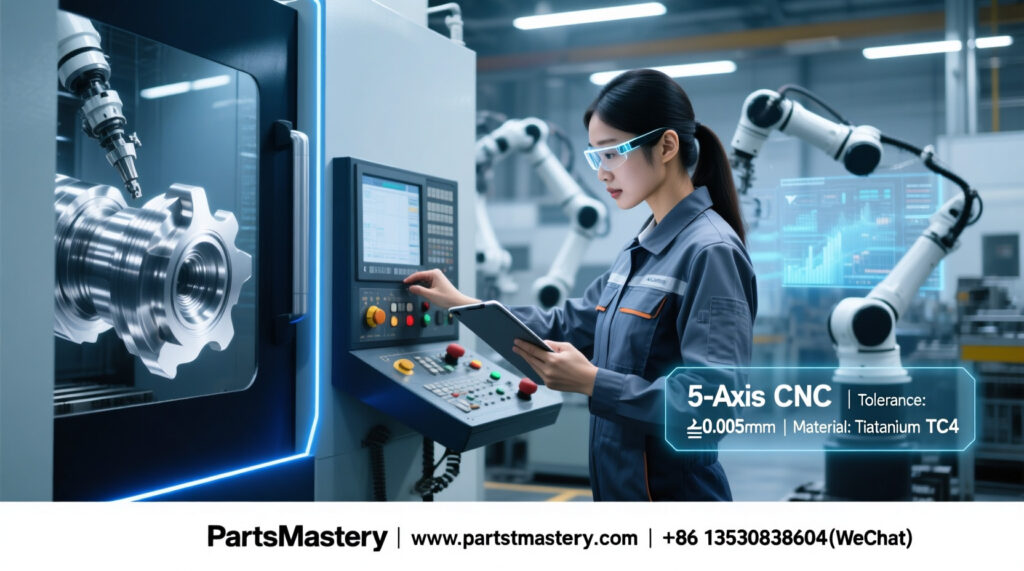
Dans le domaine de la production industrielle, les outillages standard disponibles dans le commerce s’avèrent souvent insuffisants. Chaque opération de fabrication présente une combinaison qui lui est propre de matériaux, de capacités des machines, de géométries des pièces, de volumes de production et d'exigences de qualité. Lorsque les outils standard ne permettent pas d'atteindre la durée de vie, l'état de surface, le temps de cycle ou la précision dimensionnelle requis, un fabricant d'outillage sur mesure devient non seulement un fournisseur, mais aussi un partenaire stratégique.
Ce guide vous présente tout ce que vous devez savoir sur la fabrication d'outillages sur mesure : en quoi cela consiste, pourquoi c'est important, comment le processus fonctionne et comment choisir le partenaire adapté à vos applications spécifiques.
Qu'est-ce qu'un fabricant d'outillage sur mesure ?
Un fabricant d'outillage sur mesure est un fabricant spécialisé qui conçoit et produit des outils adaptés aux spécifications précises d'un client. Contrairement aux outils standard fabriqués en série, destinés à un large éventail d'applications générales, les outils sur mesure sont conçus pour un processus, un matériau ou une machine spécifiques.
Les outillages sur mesure peuvent inclure :
-
Fraises à géométries non standard (hélice variable, espacement inégal des cannelures, rayons d'angle spéciaux)
-
Forets étagés et outils combinés permettant d'effectuer plusieurs opérations en un seul passage
-
Outils de formage pour profils complexes non disponibles dans les catalogues
-
Ensembles de moules et de matrices sur mesure présentant des formes de cavités uniques ou des canaux de refroidissement conformes
-
Gabarits et dispositifs de fixation spéciaux conçus pour une pièce ou une machine CNC particulière
-
Revêtements sur mesure et types de substrats optimisés pour le matériau spécifique de votre pièce
L'objectif de tout fabricant d'outillage sur mesure est d'éliminer les compromis inhérents aux produits standard, en fournissant des outils qui optimisent la productivité, la qualité et la rentabilité au sein de votre environnement de production spécifique.
Pourquoi privilégier l'outillage sur mesure plutôt que les produits standard ?
De nombreux fabricants hésitent à se lancer dans la fabrication d’outillage sur mesure, craignant que cela ne soit coûteux ou chronophage. En réalité, le retour sur investissement généré par des outils sur mesure bien conçus dépasse souvent largement les coûts initiaux. Voici les raisons les plus convaincantes de faire appel à un fabricant d’outillage sur mesure :
1. Une durée de vie des outils considérablement améliorée
Les outils standard sont conçus pour offrir des performances “ suffisantes ” sur une large gamme de matériaux et dans diverses conditions. Un fabricant d’outils sur mesure peut analyser le matériau spécifique de votre pièce (dureté, abrasivité, composition chimique) ainsi que les capacités de votre machine (vitesse de broche, puissance, rigidité) afin de sélectionner la nuance de carbure, le revêtement et la géométrie optimaux. Les clients font régulièrement état d’une amélioration de la durée de vie des outils de 200% à 500% après être passés à des outils correctement personnalisés.
2. Réduction des temps de cycle
Un outil sur mesure peut regrouper plusieurs opérations qui nécessitaient auparavant plusieurs changements d'outils. Par exemple, un foret étagé qui pré-centre, perce et chanfreine en un seul mouvement remplace trois outils distincts. Un fabricant d'outillage sur mesure peut également optimiser la conception des goujures et les angles d'hélice pour une évacuation plus rapide des copeaux, ce qui permet d'utiliser des vitesses d'avance plus élevées sans risquer de casser l'outil ni d'obtenir un mauvais état de surface.
3. Finition de surface et qualité des pièces exceptionnelles
Lorsque les outils standard laissent des traces de vibrations, des bavures ou des finitions inégales, le problème réside souvent dans une inadéquation entre la géométrie de l’outil et les caractéristiques spécifiques de votre pièce. Un fabricant d’outillage sur mesure peut concevoir des fraises à pas variable qui éliminent les vibrations harmoniques, ou des outils de formage dotés d’une micro-géométrie adaptée à la rugosité de surface (Ra) requise. Il en résulte des pièces répondant à des spécifications plus strictes, sans nécessiter d’opérations de finition secondaires.
4. Coût unitaire réduit
Même si un outillage sur mesure peut présenter un prix unitaire initial plus élevé qu’un outillage standard, le coût par pièce produite diminue souvent de manière significative. Une durée de vie plus longue de l’outillage se traduit par moins de changements d’outillage et moins de temps d’arrêt. Des temps de cycle plus courts augmentent le rendement horaire. La réduction des rebuts et des retouches améliore le rendement. Lorsqu’un fabricant d’outillage sur mesure vous aide à bénéficier simultanément de tous ces avantages, les coûts globaux de fabrication diminuent.
5. Résoudre des problèmes que les outils classiques ne permettent pas de traiter
Certaines applications ne disposent d’aucune solution standard. L’usinage de parois minces, les cavités profondes, les alliages exotiques, les micro-détails et les alésages à diamètres multiples nécessitent souvent des géométries et des revêtements qui n’existent tout simplement pas dans les catalogues. Dans ces cas-là, faire appel à un fabricant d’outillage sur mesure est la seule solution viable.
Le processus de fabrication d'outillages sur mesure : du concept à la production
La collaboration avec un fabricant professionnel d'outillage sur mesure s'inscrit dans un processus d'ingénierie structuré. Comprendre ce processus vous aide à vous préparer et garantit des résultats positifs.
Étape 1 : Analyse de l'application et recueil des besoins
Le processus commence par une discussion approfondie de vos défis en matière de fabrication. Préparez-vous à nous faire part des éléments suivants :
-
Matériau de la pièce (nuance, dureté, état après traitement thermique)
-
Dessin de pièce ou modèle CAO (mettant en évidence les caractéristiques essentielles, les tolérances et les exigences en matière de finition de surface)
-
Caractéristiques techniques de la machine (type de broche, régime maximal, puissance, pression du liquide de refroidissement, limites du changeur d'outils)
-
Volume de production (prototype, petite série ou production en grande série)
-
Performances actuelles de l'outillage (durée de vie des outils, modes de défaillance, temps de cycle, problèmes de qualité)
Un fabricant d'outillage sur mesure expérimenté vous posera également des questions sur d'éventuelles contraintes, telles que le budget, les délais de livraison ou les types de supports déjà utilisés.
Étape 2 : Conception préliminaire et analyse technique
À partir de vos indications, les ingénieurs du fabricant élaborent une première ébauche de l'outillage. Celle-ci comprend généralement :
-
Choix du matériau de base (carbure à grains fins, acier rapide, PCD, etc.)
-
Détermination du type et de l'épaisseur du revêtement
-
Définition de tous les paramètres géométriques (nombre de rainures, angle d'hélice, angles de coupe, angles de dépouille, préparation des arêtes)
-
Pour les matrices et les moules, analyse du comportement de remplissage, de refroidissement ou de formage à l'aide de la simulation CAE
La plupart des fabricants d'outillage sur mesure réputés vous fourniront un dessin 2D préliminaire et un modèle 3D pour validation avant de procéder à l'usinage du métal.
Étape 3 : Prototypage et production du premier article
Pour les outillages sur mesure complexes ou de grande valeur, l'étape suivante consiste à fabriquer un ou plusieurs prototypes. Cela vous permet de tester l'outillage dans votre environnement de production réel. Le fabricant d'outillage sur mesure peut vous demander de réaliser des essais contrôlés et de lui renvoyer les outillages utilisés pour qu'il les inspecte. Ce cycle de retour d'expérience est essentiel pour affiner la conception.
Étape 4 : Tests, validation et itération
Une fois le prototypage terminé, vous évaluez l'outil sur mesure par rapport à vos critères de réussite : durée de vie de l'outil (nombre de pièces ou de minutes d'usinage), mesures de l'état de surface, stabilité dimensionnelle de vos pièces, temps de cycle et mode de défaillance. Si les résultats ne sont pas à la hauteur, le fabricant d’outillage sur mesure modifiera la conception et produira un deuxième prototype. Ce processus itératif se poursuit jusqu’à ce que les performances répondent aux attentes ou les dépassent.
Étape 5 : Production en série et contrôle qualité
Une fois la conception finalisée, le fabricant passe à la production à grande échelle. Chaque outil sur mesure est soumis à un contrôle rigoureux — souvent un contrôle dimensionnel 100% réalisé à l’aide d’une machine à mesurer tridimensionnelle (CMM) ou d’un système de mesure optique — et se voit attribuer un numéro de série ou un code de lot unique à des fins de traçabilité. Le fabricant d'outillage sur mesure doit vous fournir un rapport d'inspection du premier article (FAIR) ainsi que les certificats de matériaux pour vos archives.
Compétences clés à rechercher chez un fabricant d'outillage sur mesure
Tous les fabricants d'outillage ne sont pas également bien équipés pour réaliser des travaux sur mesure. Lorsque vous évaluez des partenaires potentiels, veillez à ce qu'ils disposent des capacités essentielles suivantes :
Rectification et fraisage CNC en interne – Les rectifieuses CNC à 5 axes de marques telles qu’ANCA, Walter ou Rollomatic permettent d’obtenir des géométries complexes avec des tolérances serrées. L’externalisation des opérations de rectification entraîne des retards et des risques liés à la qualité.
Installations de revêtement – La réalisation en interne de revêtements par PVD (dépôt physique en phase vapeur) et CVD (dépôt chimique en phase vapeur) permet au fabricant de contrôler l’adhérence, l’épaisseur et la composition du revêtement. De nombreux outils sur mesure nécessitent des revêtements spécialisés, tels que l’AlCrN pour les alliages résistant aux hautes températures ou le diamant pour les composites.
Métrologie avancée – Un fabricant d'outillage sur mesure bien équipé disposera de machines à mesurer tridimensionnelles (CMM), de systèmes de mesure laser, d'appareils de mesure de la rugosité de surface et de comparateurs optiques. Sans ces équipements, il ne pourra pas vérifier que votre outillage sur mesure respecte les tolérances spécifiées.
Équipe d'ingénieurs dotée d'une expérience pratique – Privilégiez les fabricants qui emploient des ingénieurs possédant une expérience pratique de l'usinage, et pas seulement des opérateurs CAO. Ceux-ci doivent maîtriser la formation des copeaux, les forces de coupe, la dynamique des vibrations et les stratégies de refroidissement.
Disposition à produire de petits lots – Un véritable fabricant d'outillages sur mesure n'impose pas de commande minimale de 500 pièces. De nombreux projets sur mesure commencent par la fabrication de 5 ou 10 outils à des fins d'essai. Si un fournisseur exige d'emblée des volumes importants, il s'agit probablement d'un fabricant de produits standard, et non d'un véritable fabricant sur mesure.
Dans quels cas le recours à des outillages sur mesure s'avère-t-il le plus judicieux ?
Même si un fabricant d’outillage sur mesure peut résoudre de nombreux problèmes, les outils sur mesure ne constituent pas toujours la solution idéale. C’est dans les cas suivants qu’ils offrent la plus grande valeur ajoutée :
-
Production à grande échelle – Les économies réalisées par pièce grâce à l'allongement de la durée de vie des outils et à la réduction des temps de cycle se multiplient sur des dizaines de milliers, voire des millions de pièces.
-
Matériaux difficiles à travailler – Le titane, l'Inconel, l'acier trempé, les matériaux composites et la céramique nécessitent souvent des géométries de bord et des revêtements sur mesure.
-
Tolérances serrées – Lorsque les outils standard ne permettent pas d'obtenir une précision constante de ±0,01 mm ou mieux.
-
Caractéristiques spécifiques de la pièce – Des nervures profondes, des parois minces, des trous non circulaires ou des contours 3D complexes auxquels aucun outil standard ne correspond.
-
Cycles de production prolongés avec usinage sans surveillance – Si vous exploitez une production sans surveillance, il est essentiel de pouvoir compter sur une durée de vie prévisible et prolongée des outils ; les outils sur mesure offrent cette fiabilité.
Coût et délais de fabrication types pour l'outillage sur mesure
Les outils sur mesure coûtent plus cher que les outils standard, mais la différence de prix est souvent bien moins importante qu'on ne le pense. Une fraise en carbure monobloc standard peut coûter entre $25 et $50, tandis qu’une version sur mesure comparable, dotée d’une géométrie optimisée, coûte entre $60 et $120. Le retour sur investissement provient de l’augmentation de la durée de vie de l’outil et de la productivité.
Les délais de fabrication varient en fonction de la complexité du projet et de la charge de travail du fabricant. Les prototypes peuvent être livrés sous 7 à 15 jours ; la fabrication en série d'outillages sur mesure nécessite généralement entre 3 et 6 semaines. Certains fabricants d'outillages proposent un service accéléré pour répondre aux besoins urgents.
Pour les grands projets sur mesure — tels qu’un moule d’injection ou une matrice d’emboutissage progressive —, les coûts varient de quelques milliers à plusieurs dizaines de milliers de dollars, avec des délais de fabrication compris entre 4 et 10 semaines. Cependant, ces outils permettent la production en série de vos pièces, de sorte que le coût amorti par pièce est minime.
Comment collaborer efficacement avec votre fabricant d'outillage sur mesure
Pour obtenir les meilleurs résultats possibles dans le cadre d'un projet d'outillage sur mesure, suivez ces bonnes pratiques éprouvées :
-
Partagez autant de données que possible – Ne cachez pas vos paramètres d'usinage ni vos problèmes de qualité. Plus le concepteur d'outils en sait, meilleure sera la solution.
-
Utiliser des conditions réelles de production pour les tests – Testez vos prototypes sur mesure sur la même machine, avec le même liquide de refroidissement et les mêmes dispositifs de fixation que ceux utilisés pour votre production courante.
-
Renvoyer les outils défectueux pour analyse – Un outil sur mesure cassé ou usé recèle des indices précieux. Confiez-le au fabricant afin qu’il l’examine au microscope pour identifier les mécanismes à l’origine de la défaillance.
-
Donnez votre avis en toute sincérité – Si la durée de vie de l'outil s'améliore mais que le temps de cycle reste trop long, signalez-le. C'est par itération que l'on parvient à la conception optimale.
-
Prendre en compte les besoins futurs – Une fois que vous disposez d'un outil sur mesure qui fonctionne bien, demandez au fabricant de conserver le programme CNC et les données d'inspection afin que les commandes ultérieures puissent être traitées rapidement et de manière cohérente.
Conclusion
Un fabricant spécialisé dans l'outillage sur mesure comble le fossé entre les outils standard produits en série et vos besoins de fabrication spécifiques. En investissant dans des géométries, des nuances de substrat, des revêtements et des conceptions sur mesure, vous gagnez en productivité, améliorez la qualité et réduisez le coût unitaire. L'effort initial consacré à la définition des exigences, au prototypage et aux essais porte ses fruits au fil des années, garantissant une production fiable.
PartsMastery est spécialisée dans la fourniture de ce type de solutions d'outillage sur mesure. Grâce à nos centres de rectification CNC internes, à nos lignes de revêtement PVD, à notre système qualité certifié ISO 9001:2015 et à une équipe d’ingénieurs d’application parlant couramment l’anglais, nous concevons et fabriquons des fraises, forets, alésoirs, outils de formage, moules, matrices et dispositifs de fixation sur mesure, adaptés à vos besoins spécifiques. Que vous usiniez de l’acier, de l’aluminium, du titane, des composites ou des alliages rares, nous travaillerons en étroite collaboration avec vous pour créer l’outil idéal pour votre application. Nous acceptons volontiers les petites commandes de prototypes et proposons des tarifs compétitifs pour les volumes de production.
📞 Contactez PartsMastery dès aujourd'hui au +86 13530838604 (WeChat) pour discuter de vos besoins en matière d'outillage sur mesure. Envoyez-nous les plans de vos pièces et la description de vos défis, et laissez-nous vous montrer comment un fabricant d'outillage sur mesure peut transformer vos opérations d'usinage.