





Moules chinois sur mesure
Dans le domaine de la fabrication de précision, il n'existe guère de solution universelle. Que vous fabriquiez des composants complexes pour dispositifs médicaux, des pièces automobiles résistantes ou des boîtiers pour appareils électroniques grand public, la qualité de votre produit final dépend avant tout du moule qui lui donne sa forme. C'est là qu'intervient le concept d'un moule sur mesure fabriqué en Chine devient indispensable. La Chine est passée du statut de pôle de fabrication à bas coût à celui de leader mondial dans le domaine de l'outillage sur mesure, offrant une combinaison inégalée d'expertise technique, de polyvalence des matériaux et de rentabilité. Pour les entreprises à la recherche de solutions sur mesure qui répondent parfaitement à leurs spécifications techniques, se procurer un moule sur mesure en Chine n'est plus seulement une option : c'est un avantage stratégique.
Pourquoi choisir un moule sur mesure plutôt qu'un outillage standard ?
Les moules standard sont conçus pour des applications génériques. Ils obligent souvent les fabricants à faire des compromis sur la géométrie, l'épaisseur des parois, les mécanismes d'éjection ou la disposition des canaux de refroidissement. Ces compromis peuvent entraîner des temps de cycle plus longs, des taux de rebut plus élevés et une qualité de pièce inférieure. Un moule sur mesure fabriqué en Chine, en revanche, est entièrement conçu pour répondre aux exigences spécifiques de votre produit. Chaque cavité, chaque évacuation et chaque canal de refroidissement est positionné avec précision pour optimiser l'écoulement du matériau, réduire le gauchissement et accélérer les cycles de production.
L'outillage sur mesure favorise également l'innovation. Si votre produit comporte des contre-dépouilles complexes, des charnières actives ou des composants multimatières, un moule standard ne peut tout simplement pas offrir les fonctionnalités requises. Les fabricants de moules chinois possèdent une vaste expérience dans la conception d'outillages complexes et de haute précision adaptés aux techniques avancées de moulage par injection, notamment le surmoulage, le moulage par insertion et les moules familiaux permettant de produire plusieurs pièces en une seule opération. En investissant dans une solution sur mesure, vous bénéficiez d'un contrôle total sur votre processus de fabrication et la qualité de vos produits.
Les compétences techniques à l'origine de la fabrication de moules sur mesure en Chine
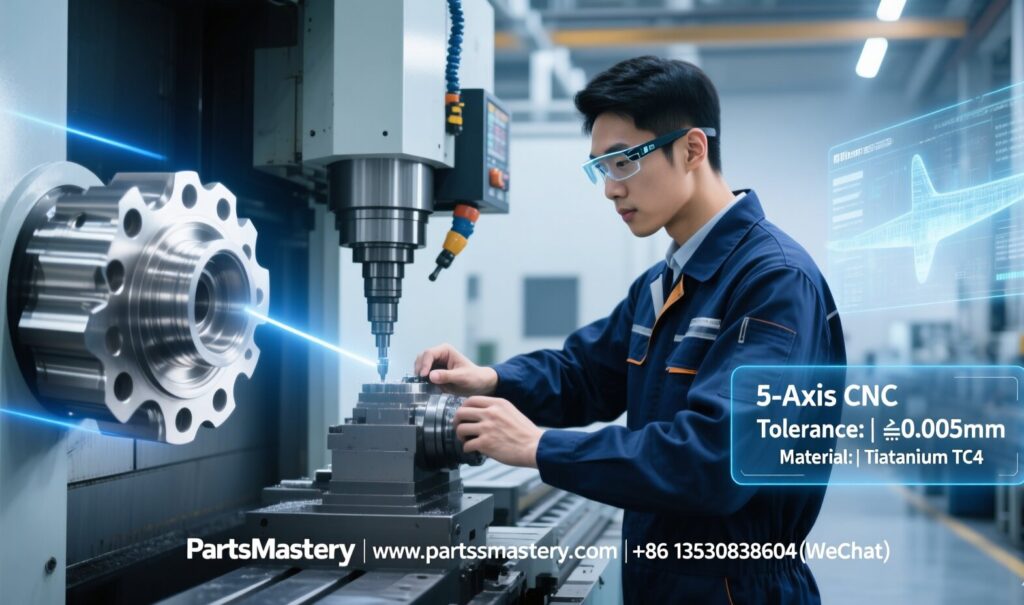
L'une des idées reçues les plus courantes concernant l'industrie manufacturière chinoise est qu'elle privilégie le volume au détriment de la précision. En réalité, les principaux fabricants de moules du pays ont massivement investi dans des machines de pointe et des outils de conception numérique. Les centres d'usinage CNC à cinq axes, l'électroérosion par enfonçage et par fil, ainsi que les équipements de fraisage à grande vitesse sont désormais la norme dans les usines d'outillage chinoises modernes. Ces machines permettent d'atteindre des tolérances aussi strictes que ±0,01 mm, rivalisant avec ou dépassant ce qui est disponible en Europe ou en Amérique du Nord.
L'écosystème logiciel revêt une importance tout aussi grande. Les fournisseurs de premier plan utilisent des plateformes de CAO/FAO/IAO telles que UG (Unigraphics/NX), SolidWorks, Pro/E (Creo) et Moldflow pour la simulation. Avant toute découpe de l'acier, les ingénieurs effectuent une analyse des flux afin de prédire les schémas de remplissage, les poches d'air, les lignes de soudure et le comportement thermique. Cette validation numérique permet aux concepteurs d'identifier les défauts potentiels et de modifier l'emplacement des points d'injection ou la disposition des canaux de refroidissement, le tout sans découper le moindre morceau de métal. Il en résulte une approche « juste du premier coup » qui réduit les itérations coûteuses et raccourcit les délais de production.
Choix des matériaux et durabilité
La qualité d'un moule sur mesure fabriqué en Chine dépend entièrement de celle de l'acier ou de l'aluminium utilisé pour sa fabrication. Les fabricants réputés proposent une large gamme de matériaux d'outillage adaptés à votre volume de production et au type de résine utilisé. Pour les prototypes ou les petites séries (généralement moins de 10 000 moulages), les aciers pré-trempés comme le P20 ou les alliages d'aluminium tels que le 7075 constituent une solution économique permettant des temps d'usinage plus courts. Pour la production à grand volume dépassant 100 000 moulages, des aciers trempés comme le H13 (SKD61), le S7 ou l'acier inoxydable (S136) sont recommandés. Ces matériaux résistent à des pressions de serrage élevées, aux charges abrasives (par exemple, la fibre de verre) et aux résines corrosives (par exemple, le PVC ou les grades ignifuges).
Les fabricants de moules chinois accordent également une grande attention aux procédés de traitement thermique, notamment le durcissement sous vide, la nitruration et le revêtement par dépôt physique en phase vapeur (PVD). Ces traitements améliorent la dureté de surface, réduisent les frottements et protègent contre l'usure. Lorsque vous commandez un moule sur mesure en Chine, vous pouvez spécifier non seulement le matériau de base, mais aussi la finition de surface — allant d'une finition SPI (Society of the Plastics Industry) standard à des finitions optiques ultrabrillantes ou à des surfaces texturées obtenues par moulage ou gravure chimique.
Le processus de développement de moules sur mesure
Comprendre le déroulement habituel du processus permet aux acheteurs de collaborer efficacement avec les fournisseurs chinois. Le processus commence généralement par une revue détaillée de la conception. Vous fournissez un fichier CAO 3D (au format STP, IGES ou X_T) ainsi qu'un dessin 2D précisant les cotes critiques, les tolérances, l'emplacement des points d'injection et les méthodes d'éjection. Le mouliste effectue ensuite une analyse de la conception pour la fabricabilité (DFM), qui met en évidence les problèmes potentiels tels que des angles de dépouille insuffisants, des angles vifs susceptibles de provoquer une concentration de contraintes ou des éléments difficiles à éjecter. Un rapport DFM vous est soumis pour approbation avant le début de l'outillage.
Une fois le projet approuvé, le fournisseur procède à l'approvisionnement en acier, à l'ébauche CNC, au traitement thermique (si nécessaire) et à l'usinage de finition. Les électrodes sont découpées pour les procédés d'électroérosion, puis s'ensuit l'assemblage du noyau, de la cavité, des glissières, des poussoirs et des broches d'éjection. Une fois assemblé, le moule est monté sur une presse à injection pour la production d'échantillons. Des essais de moulage sont effectués à l'aide de la résine que vous avez spécifiée (ou d'un équivalent proche), puis les échantillons sont mesurés et inspectés. Des ajustements — tels que des modifications des évents ou un polissage — sont effectués si nécessaire. Enfin, le moule est testé pour vérifier qu'il est prêt pour la production, et la documentation, comprenant les rapports dimensionnels, les certificats de matériaux et les instructions d'entretien, est livrée avec l'outillage.
Contrôle et assurance qualité
Les fournisseurs chinois de moules sur mesure fiables appliquent des systèmes rigoureux de gestion de la qualité. La certification ISO 9001:2015 est la norme, et les ateliers les plus avancés sont également certifiés IATF 16949 pour les applications automobiles ou ISO 13485 pour les dispositifs médicaux. Des contrôles en cours de fabrication sont effectués à chaque étape critique : vérification des matières premières, contrôles d'usinage en cours de fabrication, contrôle du premier article (FAI) et mesure dimensionnelle finale à l'aide de machines à mesurer tridimensionnelles (CMM) ou de comparateurs optiques.
Pour les acheteurs orientés vers l'exportation, il est possible d'organiser des inspections par des organismes tiers tels que SGS, TÜV ou Intertek afin de vérifier la qualité des moules avant l'expédition. De nombreux fournisseurs chinois proposent également des vidéos de démonstration des moules ou la diffusion en direct du processus d'échantillonnage, garantissant ainsi transparence et tranquillité d'esprit.
Considérations relatives aux coûts et aux délais
Le coût reste le principal facteur incitant à faire appel à la fabrication de moules sur mesure en Chine, mais ce n’est pas le seul. Un moule sur mesure fabriqué en Chine coûte généralement entre 30 % et 50 % moins cher qu’un moule comparable provenant d’Europe ou des États-Unis, avec des délais de fabrication allant de 20 à 40 jours ouvrables selon la complexité. Les moules simples à deux plaques comportant peu de cavités peuvent être réalisés en 25 jours, tandis que les moules à glissières multiples, à canaux chauds ou à dévissage peuvent nécessiter 45 jours ou plus. Accélérer le processus peut nuire à la qualité ; il est donc judicieux de prévoir des délais réalistes dans votre calendrier de lancement de produit.
Le transport et la logistique sont simples : la plupart des moules sont exportés par fret maritime dans des caisses en bois traitées conformément à la norme NIMP 15. Le fret aérien est également disponible pour les projets urgents. Des fournisseurs de confiance fournissent une documentation claire comprenant la facture commerciale, la liste de colisage, le connaissement et, parfois, un certificat d'enregistrement du moule pour le dédouanement.
Choisir le bon partenaire pour la fabrication de moules sur mesure
La réussite dans la recherche de moules sur mesure dépend fortement du choix des partenaires. Recherchez des fabricants ayant fait leurs preuves dans votre secteur d'activité. Demandez des études de cas, des échantillons de moules ou des références d'anciens clients. La communication est essentielle : les fournisseurs parlant couramment l'anglais (ou disposant d'équipes commerciales internationales dédiées) peuvent réduire considérablement les malentendus. Le temps de réponse, la profondeur des réponses aux questions techniques et la volonté de partager des commentaires sur la conception pour la fabrication (DFM) sont de solides indicateurs de professionnalisme.
Il convient également de se pencher dès le début sur la protection de la propriété intellectuelle. Signez un accord de confidentialité (NDA) avant de partager des plans sensibles. Certains fournisseurs proposent également des contrats de propriété des moules stipulant que l'outillage reste votre propriété ; il est alors stocké dans leurs locaux pour la production ou vous est expédié sur simple demande.
Conclusion
Pour les entreprises qui recherchent précision, durabilité et liberté de conception, un moule sur mesure fabriqué en Chine représente la filière de fabrication idéale. L'industrie chinoise du moulage s'est développée pour former un écosystème sophistiqué, capable de fournir des outillages de classe mondiale pour pratiquement toutes les applications. De l'analyse initiale de la conception pour la fabrication (DFM) à l'échantillonnage final et à la livraison, les fabricants de moules chinois offrent une combinaison parfaite de compétences techniques, de prix compétitifs et d'orientation client.
PartsMastery est spécialisée dans la mise en relation d'acheteurs internationaux avec des solutions de moulage sur mesure de premier ordre provenant de Chine. Grâce à sa connaissance approfondie du secteur et à son engagement en faveur de la qualité, PartsMastery veille à ce que votre projet d'outillage sur mesure soit réalisé selon les normes les plus strictes. Que vous ayez besoin d'un simple moule prototype ou d'un outil de production à grande échelle, PartsMastery est là pour vous aider.
Téléphone / WeChat : +86 13530838604
Site web : https://partsmastery.com