






Fabricant d'outils
Mot clé cible : Fabricant d'outillage
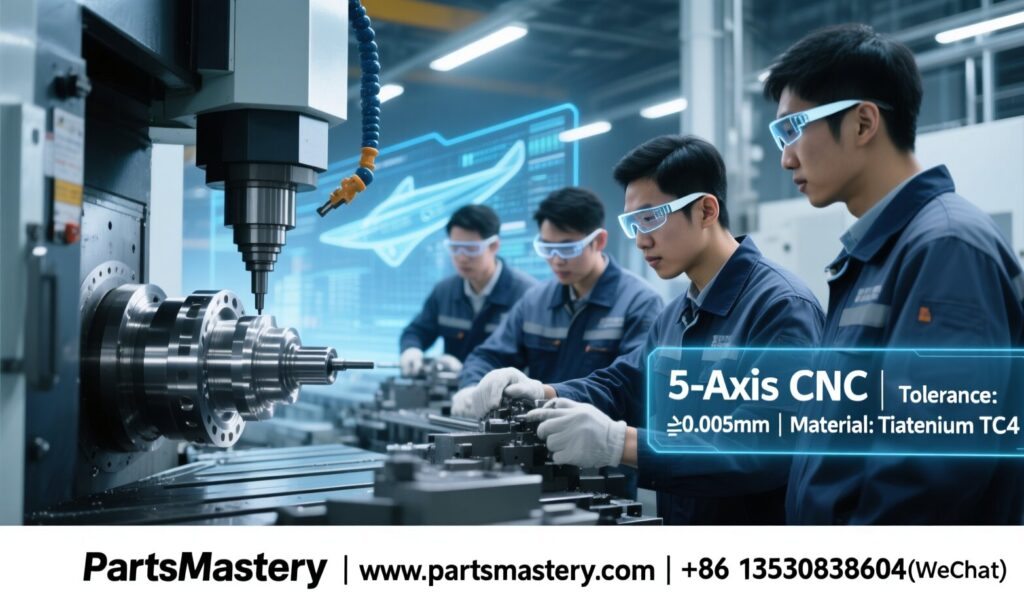
L'avantage de la précision : pourquoi un fabricant d'outillage professionnel est la clé du succès dans le secteur de la fabrication
Dans l'industrie manufacturière moderne, la précision n'est pas un luxe : c'est le fondement même de la fiabilité, de la reproductibilité et de la rentabilité. Derrière chaque pièce métallique parfaitement emboutie, chaque composant en plastique moulé sans défaut et chaque chaîne de montage hautement performante se cache un héros souvent méconnu : le fabricant d'outillage. Alors que de nombreuses entreprises se concentrent sur la conception du produit final ou la rapidité d'assemblage, celles qui maîtrisent véritablement l'excellence industrielle savent que la qualité de l'outillage détermine tous les résultats en aval. Chez PartsMastery, nous avons passé des années à perfectionner l'art et la science de l'outillage, transformant des idées brutes en solutions prêtes à la production qui dépassent toutes les attentes.
En quoi consiste exactement le métier de fabricant d'outillage ?
Un outilleur est bien plus qu’un simple opérateur de machines-outils ou qu’un découpeur. Ce métier allie l’ingénierie mécanique, la science des matériaux et un savoir-faire artisanal au micromètre près pour créer les outils, les matrices, les gabarits, les montages et les moules qui permettent la production en série. Sans un outillage conçu avec précision, même les machines CNC ou les presses à injection les plus avancées ne peuvent pas produire des pièces homogènes. Le travail du fabricant d'outillage a un impact direct sur la précision dimensionnelle, l'état de surface, la durée du cycle de production et la durée de vie de l'outil.
Dans des secteurs allant de l’automobile et de l’aérospatiale aux dispositifs médicaux et à l’électronique grand public, l’outillage est le garant discret des normes de qualité. Une seule matrice d’emboutissage mal conçue peut gâcher des milliers de pièces avant même que l’on ne remarque la dérive. Un moule d’injection légèrement mal aligné peut générer des bavures, des creux ou des déformations qui transforment un produit haut de gamme en rebut. C’est pourquoi les fabricants expérimentés s’associent à un outilleur spécialisé qui maîtrise non seulement la géométrie, mais aussi le comportement des matériaux, la dilatation thermique, la résistance à l’usure et la dynamique de lubrification.
Les coûts cachés d'un outillage de mauvaise qualité
De nombreuses entreprises commettent l'erreur de considérer l'outillage comme un produit de base, c'est-à-dire comme un élément à se procurer au prix le plus bas possible. Cette approche se retourne invariablement contre elles. Les outillages de mauvaise qualité s'usent plus rapidement, nécessitent des retouches fréquentes et introduisent des variations imprévisibles dans la production. Chaque changement d'outil ou recalibrage imprévu interrompt la chaîne de montage, ce qui fait grimper les coûts de main-d'œuvre et retarde les délais de livraison.
De plus, un outillage de mauvaise qualité nuit à la réputation du produit final. Un filetage irrégulier, des arêtes rugueuses ou des alésages hors tolérance entraînent des réclamations de la part des clients et des demandes de garantie. À long terme, les économies réalisées grâce à un outillage bon marché sont largement dépassées par les coûts liés au contrôle qualité, aux retouches, aux retours de produits et aux pertes de chiffre d’affaires. Un fabricant d’outillage professionnel prévient ces problèmes à la source, en fournissant des outils qui conservent leur précision pendant des millions de cycles.
Les matériaux, ça compte : la palette de l'outilleur
L'une des premières décisions qu'un outilleur expérimenté doit prendre concerne le choix des matériaux. Ce choix dépend du volume de production, du matériau de la pièce à usiner, de la température de fonctionnement et de l'état de surface requis. Parmi les matériaux couramment utilisés pour l'outillage, on trouve les aciers à outils (tels que le D2, l'A2 ou le M2), le carbure, les métaux en poudre, la céramique et même des polymères avancés pour les outils à faible volume ou les outils sacrificiels.
Pour les applications soumises à une forte abrasion, telles que l’estampage d’aciers avancés à haute résistance (AHSS), un fabricant d’outillage peut prescrire des revêtements en carbure de vanadium ou en carbonitrure de titane afin de prolonger la durée de vie des matrices. Pour le moulage par injection de nylon renforcé de verre, le fabricant d’outillage doit concevoir des outils résistants à l’usure tout en conservant des surfaces de cavité polies permettant une éjection aisée des pièces. L’approche de PartsMastery consiste à analyser l’environnement de production spécifique de chaque client — type de presse, liquide de refroidissement, lubrification, vitesse de cycle et durée de vie prévue de l’outil — avant de recommander un matériau et un protocole de traitement thermique.
De la conception au premier article : le processus de travail du fabricant d'outillage
La création d'outillage prêt pour la production est un processus en plusieurs étapes qui exige à la fois une expertise logicielle et un savoir-faire manuel. Elle commence généralement par un modèle CAO 3D de la pièce finie. Le fabricant d'outillage conçoit ensuite la géométrie de l'outil à partir de cette pièce, en prévoyant des tolérances pour le retrait (lors du moulage), des angles de dépouille pour l'éjection et des bandes d'usure pour garantir la longévité de l'outil.
Les fabricants d'outillage modernes s'appuient sur la fabrication assistée par ordinateur (FAO) et l'usinage CNC, mais l'intervention humaine reste indispensable pour obtenir les meilleurs résultats. Après l'usinage de dégrossissage, l'outil subit un traitement thermique afin d'atteindre la dureté visée (souvent comprise entre 58 et 62 HRC pour les matrices d'estampage). Viennent ensuite la rectification de précision, l’électroérosion (EDM) pour les détails fins et le polissage à la main des surfaces critiques. Enfin, le fabricant d’outillage procède à une inspection du premier article, en produisant des pièces échantillons qui sont mesurées par rapport au modèle CAO d’origine. Ce n’est que lorsque toutes les cotes se situent dans les tolérances que l’outil passe en production.
Le rôle des tolérances et de l'état de surface
Dans le domaine de l'outillage, chaque micromètre compte. Un outilleur professionnel respecte systématiquement des tolérances de ±0,005 mm, voire meilleures, pour les caractéristiques critiques. L'état de surface revêt une importance tout aussi grande : une face de matrice rugueuse augmente le frottement, accélère l'usure et transfère des défauts à la pièce à usiner. Un outillage de haute qualité permet d'obtenir des états de surface inférieurs à Ra 0,4 µm sur les surfaces de formage, ce qui réduit le recours à un polissage ou à un revêtement secondaire.
Pour les moules d'injection plastique, le fabricant d'outillage doit également tenir compte de l'évacuation des gaz et du refroidissement. Une mauvaise ventilation entraîne des traces de brûlure et un remplissage incomplet. Un refroidissement inefficace allonge les temps de cycle et provoque une déformation de la pièce. Un fabricant d'outillage expérimenté conçoit des canaux de refroidissement conformes qui épousent le contour de la pièce, réduisant ainsi les temps de cycle de 20 à 40% tout en améliorant la stabilité dimensionnelle.
Pourquoi faire appel à un fabricant d'outillage spécialisé plutôt qu'à un atelier d'usinage généraliste ?
Les ateliers d'usinage généralistes excellent dans la fabrication de pièces uniques ou de petites séries, mais ils disposent rarement des connaissances spécialisées requises pour l'outillage destiné à la production en grande série. Un fabricant d'outillage spécialisé raisonne en termes de centaines de milliers, voire de millions de cycles. Il comprend comment la géométrie de l'outil évolue sous l'effet de charges répétées, comment les cycles thermiques affectent les jeux, et sait intégrer les intervalles de maintenance directement dans la conception de l'outil.
De plus, un véritable fabricant d'outillage assure un accompagnement continu : réaffûtage, réapplication de revêtements, réparation des parties endommagées, voire rétro-ingénierie d'outils obsolètes lorsque les plans d'origine ont été perdus. Cette relation à long terme garantit la stabilité de votre chaîne de production malgré les variations entre les lots de matériaux ou les changements d'équipes d'opérateurs.
Applications concrètes de l'outillage de précision
L'influence d'un fabricant d'outillage qualifié se retrouve dans pratiquement tous les produits manufacturés. Dans l'industrie automobile, l'outillage sert à estamper les panneaux de carrosserie, les supports de châssis et les joints de moteur. Dans le domaine de l'électronique, le micro-outillage permet de produire des connecteurs, des boîtiers de blindage et des supports de carte SIM. Les fabricants de dispositifs médicaux s'appuient sur un outillage compatible avec les normes de stérilité pour la fabrication de seringues, de manches chirurgicaux et de composants implantables. Même les biens de consommation courante, tels que les bouchons de bouteille, les fermetures à glissière et les manches de rasoirs, dépendent d'un outillage de haute qualité pour garantir des performances constantes.
Chaque application présente des défis spécifiques. Par exemple, l'emboutissage des alliages de cuivre nécessite des jeux différents de ceux requis pour l'emboutissage de l'acier inoxydable. Le moulage du caoutchouc de silicone liquide (LSR) exige des systèmes à canaux froids et un contrôle précis du débit de matière. Un fabricant d'outillage polyvalent adapte son approche au matériau, au volume et aux objectifs de qualité de chaque projet.
Innovation dans le domaine de l'outillage : revêtements, simulation et automatisation
Le domaine de l'outillage est loin d'être statique. Les revêtements avancés par dépôt physique en phase vapeur (PVD), tels que l'AlTiN ou le CrN, peuvent doubler, voire tripler la durée de vie des outils en réduisant les frottements et en résistant à l'usure adhésive. La simulation informatique par analyse par éléments finis (FEA) permet à un fabricant d’outillage de prévoir les concentrations de contraintes, les gradients thermiques et l’écoulement du matériau avant même de découper la première pièce d’acier. L’automatisation de la conception des outils — notamment la modélisation paramétrique et la conception basée sur des règles — réduit les délais de fabrication et élimine les erreurs manuelles.
PartsMastery reste à la pointe de ces innovations, en testant sans cesse de nouveaux revêtements et de nouvelles méthodes de simulation. Cependant, nous ne perdons jamais de vue les principes fondamentaux : une géométrie précise, des matériaux adaptés et un contrôle qualité rigoureux.
Comment évaluer un partenaire potentiel dans le domaine de la fabrication d'outillage
Lorsque vous choisissez un fabricant d'outillage, ne vous limitez pas au tarif horaire ou au délai de livraison annoncé. Demandez des échantillons de pièces et évaluez leur uniformité. Renseignez-vous sur les équipements de contrôle : utilisent-ils des machines à mesurer tridimensionnelles (MMT), des comparateurs optiques et des rugosimètres ? Vérifiez les certificats des matériaux et les registres de traitement thermique. Enfin, discutez du service après-vente : sont-ils en mesure de réparer ou de modifier l'outil après 100 000 cycles de fonctionnement ?
Un fabricant d'outillage fiable se fera un plaisir de répondre à ces questions, car elles montrent que vous privilégiez la qualité plutôt que les raccourcis. Chez PartsMastery, nous fournissons une documentation complète pour chaque outil que nous livrons, comprenant notamment les certificats de matériaux, les registres de traitement thermique, les rapports d'inspection du premier article et les calendriers d'entretien recommandés.
Conclusion : l'outillage, un investissement stratégique
Considérer l'outillage comme un achat ponctuel revient à sous-estimer son rôle au sein de votre écosystème de production. Un outillage de haute qualité, fabriqué par un outilleur expérimenté, permet de réduire les rebuts, d'augmenter le temps de fonctionnement, d'améliorer la régularité des produits et de prolonger la durée de vie de vos presses et de vos moules. Il s'agit d'un investissement stratégique qui porte ses fruits chaque jour où votre chaîne de production fonctionne.
Que vous lanciez un nouveau produit, que vous rééquipiez une gamme existante ou que vous soyez confronté à des problèmes de qualité irrégulière avec votre outillage actuel, choisir le bon partenaire fait toute la différence. Pour les fabricants qui exigent précision, durabilité et réactivité, PartsMastery est prêt à répondre à vos attentes. Contactez-nous pour discuter de votre prochain projet d'outillage et découvrez la différence qu'apporte une expertise dédiée.
Pour toute question ou discussion technique, n'hésitez pas à nous contacter via :
PartsMastery
Téléphone / WeChat : +86 13530838604