






Moule en caoutchouc : Le guide complet du moulage par compression, par transfert et par injection
Mot-clé : Moule en caoutchouc
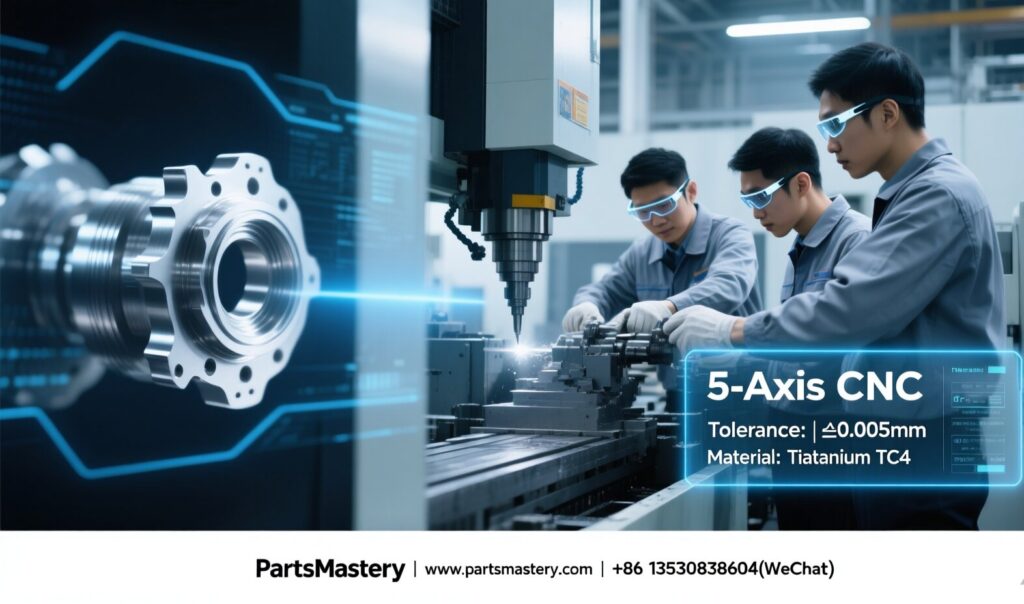
Contrairement aux thermoplastiques qui fondent et s'écoulent, le caoutchouc nécessite une approche fondamentalement différente en matière d'outillage. A moule en caoutchouc doit résister à des pressions de serrage plus élevées, à des températures de fusion plus basses et au comportement particulier des élastomères non vulcanisés. À PartsMastery, Nous concevons et fabriquons des produits de précision moule en caoutchouc outils pour le moulage par compression, le moulage par transfert et le moulage par injection du caoutchouc naturel, du silicone, de l'EPDM, du néoprène et d'autres élastomères.
Ce guide complet explique ce qu'est un moule en caoutchouc à savoir en quoi cela diffère des moules d'injection plastique, quels sont les principes de conception essentiels, et comment choisir le matériau et la géométrie adaptés à votre application.
1. Qu'est-ce qu'un moule en caoutchouc ?
A moule en caoutchouc est un procédé qui permet de transformer des mélanges de caoutchouc non vulcanisés en pièces élastomères finies par l'application de chaleur et de pression. Contrairement au moulage par injection plastique, où le polymère fond et s'écoule facilement, le caoutchouc se présente au départ sous la forme d'un matériau visqueux, semblable à du mastic. Le moule en caoutchouc Il faut injecter ce matériau dans des moules, le maintenir sous pression pendant le durcissement (vulcanisation), puis démouler la pièce flexible ainsi obtenue.
Les procédés de moulage du caoutchouc s'effectuent à des températures plus basses (150-200 °C) que ceux des thermoplastiques (200-300 °C), mais à des pressions nettement plus élevées (jusqu'à 3 000 PSI à la surface du moule). A moule en caoutchouc doivent être suffisamment résistantes pour supporter ces contraintes tout en conservant des dimensions de cavité précises, car les pièces en caoutchouc servent souvent de joints d'étanchéité, de garnitures ou d'amortisseurs de vibrations, où des tolérances de ±0,1 mm sont essentielles.
2. Types de procédés de moulage du caoutchouc
La conception de votre moule en caoutchouc Cela dépend fortement du procédé de moulage que vous utilisez :
Moulage par compression :
Le plus simple moule en caoutchouc configuration. Une “ pastille ” de caoutchouc non vulcanisé, préalablement pesée, est placée directement dans l'ouverture moule en caoutchouc cavité. Le moule se ferme, la chaleur et la pression permettent le durcissement du caoutchouc, puis la pièce finie est démoulée. Compression moule en caoutchouc Ces outils ne comportent ni canaux d'alimentation ni carottes : le gaspillage est minime. Applications courantes : joints d'étanchéité, tapis, joints simples.
Moulage par transfert :
A moule en caoutchouc avec un récipient et un piston séparés. Le caoutchouc non vulcanisé est placé dans le récipient au-dessus de la cavité. Lorsque le moule en caoutchouc lorsque le moule se ferme, le piston refoule le caoutchouc à travers les canaux d'injection et les canaux de distribution vers la cavité. Transfert moule en caoutchouc Ces outils permettent de réaliser des géométries plus complexes que les moules à compression, notamment des pièces comportant des inserts métalliques. Applications typiques : connecteurs électriques, composants encapsulés.
Moulage par injection :
Le plus avancé moule en caoutchouc configuration. Le moule en caoutchouc est monté sur une presse à injection qui alimente et chauffe le caoutchouc à l'aide d'une vis avant de l'injecter sous haute pression dans le moule fermé. Injection moule en caoutchouc Ces machines sont dotées de systèmes de canaux complexes, de plusieurs cavités et d'un contrôle précis de la température. Applications typiques : joints automobiles à grand volume, joints toriques, composants médicaux.
3. Matériaux utilisés dans les moules en caoutchouc
Les moule en caoutchouc doit résister à des cycles répétés de chauffage et de refroidissement ainsi qu'à l'attaque chimique des agents de durcissement :
Acier à outils P-20 (30-36 HRC) :
Les plus courants moule en caoutchouc matériau destiné aux élastomères à usage général (caoutchouc naturel, SBR, EPDM). Le P-20 est pré-durci, se travaille facilement et résiste à l'usure causée par les mélanges de caoutchouc abrasifs.
Acier à outils H-13 (46-52 HRC) :
Pour les gros volumes moule en caoutchouc applications (plus de 500 000 cycles) ou le moulage de composés abrasifs tels que le silicone renforcé de verre. Le H-13 résiste à la fissuration thermique et conserve ses détails nets plus longtemps que le P-20.
Acier inoxydable (420, 17-4 PH) :
Pour moule en caoutchouc les applications impliquant des silicones vulcanisés au peroxyde, des fluorocarbures (FKM/Viton) ou des environnements de salles blanches à usage médical ou pharmaceutique. L'acier inoxydable empêche la corrosion et la piqûre causées par les sous-produits agressifs de la vulcanisation.
Aluminium (7075-T6) :
Pour le prototype moule en caoutchouc outillage ou production en petites séries (moins de 10 000 pièces). Aluminium moule en caoutchouc Ces outils chauffent et refroidissent rapidement, mais s'usent plus vite que l'acier.
4. Éléments de conception essentiels d'un moule en caoutchouc
Un succès moule en caoutchouc intègre plusieurs caractéristiques essentielles propres aux élastomères :
Compensation du retrait de la cavité :
Le caoutchouc rétrécit considérablement lors de la vulcanisation — généralement de 1,51 à 3,51 %, selon le mélange. A moule en caoutchouc La cavité doit être usinée avec un surépaisseur correspondant exactement au coefficient de retrait. Par exemple, une pièce finie de 100 mm nécessite une moule en caoutchouc cavité de 102 à 103,5 mm.
Flash Grooves :
Contrairement aux plastiques, le caoutchouc doit disposer d'un exutoire permettant à l'excédent de matière de s'échapper. Chaque moule en caoutchouc comporte des rainures de bavure — de légers sillons (d'une profondeur de 0,1 à 0,3 mm) usinés sur le pourtour de la cavité. Celles-ci recueillent l'excédent de caoutchouc et forment une fine “ bavure ” qui est découpée après le moulage. Sans ces rainures de bavure, un moule en caoutchouc risquerait de retenir de l'air ou d'empêcher le remplissage complet de la cavité.
Points de vue sur la draft :
Les pièces en caoutchouc adhèrent fortement aux surfaces des moules. A moule en caoutchouc nécessite des angles de dépouille de 3 à 7 degrés, ce qui est nettement supérieur aux 1 à 2 degrés habituels pour les moules en plastique. Les broches d'éjection sont également plus nombreuses dans un moule en caoutchouc car les pièces souples ne s'éjectent pas facilement.
Ventilation :
Comme le moule en caoutchouc lorsque les volets se ferment, l'air emprisonné doit s'échapper. La profondeur des évents dans un moule en caoutchouc sont comprises entre 0,02 et 0,05 mm — comme pour les moules en plastique — mais les orifices de décharge doivent être plus larges (2 à 5 mm) pour s'adapter à la viscosité plus élevée du caoutchouc.
Superficie :
La surface d'étanchéité plane autour de la cavité d'un moule en caoutchouc (la surface de contact) doit être plus large que pour les moules en plastique — généralement entre 15 et 25 mm. La viscosité élevée du caoutchouc nécessite une force de serrage plus importante pour assurer l'étanchéité de la moule en caoutchouc contre le complexe.
5. Le processus de fabrication des moules en caoutchouc
Construire une précision moule en caoutchouc nécessite un usinage spécialisé et un contrôle de qualité :
1. Essai de retrait des composites :
Avant de découper l'acier, nous réalisons des moulages d'essai à partir de votre mélange de caoutchouc. Nous mesurons le retrait dans les trois directions et ajustons le moule en caoutchouc Modèle CAO correspondant.
2. Usinage CNC :
Les moule en caoutchouc Les demi-pièces sont découpées grossièrement dans de l'acier P-20 ou H-13, puis usinées avec précision à l'aide d'une machine CNC à 5 axes. Les états de surface de 0,4 micron Ra sont courants pour moule en caoutchouc les cavités.
3. Découpe au flash :
Les rainures Flash sont usinées à l'aide de petites fraises (diamètre de 0,5 à 1,0 mm). La profondeur et la largeur de chaque moule en caoutchouc La profondeur de la rainure de moulage est cruciale : si elle est trop peu profonde, la pièce ne se remplira pas ; si elle est trop profonde, les bavures seront difficiles à éliminer.
4. Polissage et texturation :
Les moule en caoutchouc La cavité est polie selon la finition spécifiée. Pour la plupart des applications en caoutchouc, une finition mate (SPI B-2) est préférable, car elle permet un démoulage plus facile qu'un polissage miroir.
5. Installation de la goupille d'éjection :
Goupilles d'éjection dans un moule en caoutchouc ont un diamètre plus important (3 à 6 mm) et sont plus nombreuses que dans les moules en plastique. Nous installons 30 à 50% broches d'éjection supplémentaires dans un moule en caoutchouc pour éviter toute déformation de la pièce lors de l'éjection.
6. Moules en caoutchouc vs moules en plastique : principales différences
| Fonctionnalité | Moule en caoutchouc | Moule en plastique |
|---|---|---|
| Rétrécissement | 1.5-3.5% | 0.4-1.5% |
| Angle d'inclinaison | 3 à 7 degrés | 1 à 2 degrés |
| Goupilles d'éjection | Haute densité | Densité moyenne |
| Contrôle du flash | Rainures de fixation requises | Flash rare |
| Plage de température | 150-200 °C | 200-350°C |
| Pression exercée sur le moule | 2 000 à 3 000 PSI | 500-1,500 PSI |
| Préférence en matière de finition de surface | À ne pas publier | Brillant pour l'aspect esthétique |
7. Défauts courants des moules en caoutchouc et solutions
| Défaut | Cause | Solution |
|---|---|---|
| Remplissage partiel (pièce incomplète) | Quantité insuffisante de caoutchouc ; mauvaise ventilation | Augmenter le poids des préformes ; approfondir moule en caoutchouc évents |
| Ampoules (bulles superficielles) | Air emprisonné ; humidité dans le caoutchouc | Ajouter un système de ventilation à moule en caoutchouc; mélange de caoutchouc sec |
| Blocage (la pièce ne se détache pas) | Tirage insuffisant ; cavité irrégulière | Augmentation moule en caoutchouc angle de dépouille ; repolir la cavité |
| Le flash est trop puissant | La rainure est trop profonde ; moule en caoutchouc pas complètement serré | Réduire la profondeur de la rainure de serrage ; augmenter la pression de serrage |
| Bords brûlés (coloration brune) | Moule en caoutchouc trop chaud ; temps de séchage trop long | Réduire la température du moule ; raccourcir le cycle de durcissement |
| Déchirure lors du démoulage | Nombre insuffisant de goupilles d'éjection ; géométrie de la pièce trop fragile | Ajouter des broches d'éjection à moule en caoutchouc; réduire la vitesse d'éjection |
8. Applications des moules en caoutchouc
Vous y trouverez moule en caoutchouc dans pratiquement tous les secteurs d'activité :
Automobile :
Joints d'étanchéité, joints toriques, garnitures, bagues, supports antivibratoires, flexibles. Un seul produit automobile moule en caoutchouc pourrait produire des millions de pièces au cours de son cycle de vie.
Médical :
Joints en silicone, pistons de seringues, masques respiratoires, raccords pour tubulures. Médical moule en caoutchouc sont fabriqués en acier inoxydable et fonctionnent en salle blanche.
Industriel :
Composants de bandes transporteuses, membranes de pompes, joints de dilatation, joints hydrauliques. Industrie moule en caoutchouc Ces applications privilégient la durabilité et la résistance aux produits chimiques.
Biens de consommation :
Semelles de chaussures, bandes antidérapantes en caoutchouc, articles de sport, ustensiles de cuisine. Produits de consommation moule en caoutchouc Ces applications comportent souvent plusieurs moules pour la production en grande série.
9. Entretien et durée de vie des moules en caoutchouc
Un système bien entretenu moule en caoutchouc peut durer entre 500 000 et 2 000 000 de cycles. Veuillez suivre ces recommandations :
-
Tous les jours : Nettoyer moule en caoutchouc Nettoyez les cavités à l'air comprimé et à l'aide de lingettes résistantes aux solvants. Vérifiez que les rainures d'éjection ne sont pas obstruées. Vérifiez le bon fonctionnement des broches d'éjection.
-
Hebdomadaire : Vérifier moule en caoutchouc uniformité de la température dans toutes les cavités. Vérifiez les lignes de joint pour détecter toute accumulation de bavures.
-
Mensuel : Retirer moule en caoutchouc et examinez les surfaces des cavités à l'aide d'un grossissant. Éliminez tout résidu de caoutchouc durci à l'aide de grattoirs en laiton (jamais en acier).
-
Une fois par an ou tous les 250 000 cycles : Complet moule en caoutchouc Remise à neuf. Réussinage des rainures de bavure. Polissage des cavités. Remplacement des broches d'éjection usées.
10. L'approche de PartsMastery en matière de fabrication de moules en caoutchouc
Au PartsMastery, nous ne nous contentons pas de découper des cavités dans l'acier. Nous concevons un moule en caoutchouc qui tient compte de votre mélange spécifique, de la cinétique de durcissement, du comportement au flash et des opérations de découpe après moulage.
Notre moule en caoutchouc comprend :
-
Caractérisation des composés : Nous testons le retrait, le comportement à l'écoulement et la température de vulcanisation de votre caoutchouc avant moule en caoutchouc conception.
-
Simulation : Nous simulons l'écoulement et le durcissement du caoutchouc au sein du moule en caoutchouc pour prévoir les schémas de remplissage et optimiser l'emplacement des évents.
-
Fabrication de précision : Usinage CNC 5 axes, rainurage et polissage à la main pour obtenir un résultat sans défaut moule en caoutchouc performance.
-
Optimisation de l'éjecteur : Disposition stratégique des broches d'éjection pour éviter toute déformation de la pièce lors du démoulage.
-
Moulage d'essai : Nous testons votre mélange de caoutchouc dans le moule en caoutchouc sur notre presse à compression afin de vérifier les dimensions des pièces et l'épaisseur des bavures avant expédition.
Conclusion
Les moule en caoutchouc est un outil spécialisé qui nécessite une approche différente de celle utilisée pour les moules d'injection plastique. Un retrait plus important, des angles de dépouille plus prononcés, des rainures d'ébarbage et un collage agressif exigent une moule en caoutchouc spécialement conçu pour les élastomères. Que vous ayez besoin d'un simple système de compression moule en caoutchouc pour 1 000 joints ou un moule à injection à plusieurs cavités moule en caoutchouc Pour 2 millions de joints toriques, la précision technique est la clé de votre succès.
Un système bien conçu moule en caoutchouc garantit des pièces homogènes, un minimum de bavures, un démoulage aisé et une longue durée de vie des moules. Un moule mal conçu moule en caoutchouc provoque des collages, des déchirures, des remplissages incomplets et des retouches sans fin.
Prêt à lancer la production de votre pièce en caoutchouc avec une solution hautement performante moule en caoutchouc? Contact PartsMastery aujourd'hui à +86 13530838604 (WeChat) . Envoyez-nous votre fichier CAO 3D, les spécifications du mélange de caoutchouc et le volume souhaité. Nous vous livrerons un moule en caoutchouc qui fonctionne correctement du premier coup, à chaque fois.