





Moule industriel : La précision de l'ingénierie pour l'excellence de la fabrication en grande série
Mot clé cible : Moule industriel
Derrière chaque composant en plastique qui fait tourner l'industrie moderne — des tableaux de bord automobiles aux boîtiers d'appareils médicaux, en passant par les connecteurs électroniques et les commandes de machines lourdes —, il y a un moule industriel. Cet outil de précision est le héros méconnu de la production de masse : il transforme des granulés de polymère bruts en pièces finies avec une précision de l'ordre du micron, cycle après cycle, souvent des millions de fois. Comprendre ce qui fait qu'un outil hautement performant moule industriel est indispensable pour tout fabricant souhaitant réduire les défauts, raccourcir les délais de production et optimiser le retour sur investissement en outillage.
Un moule industriel diffère fondamentalement de l'outillage de prototypage ou des moules de transition destinés à la production en petites séries. Alors qu'un moule de prototypage peut supporter quelques milliers de moulages, un véritable moule industriel est conçu pour garantir une longue durée de vie, une répétabilité élevée et une résistance aux environnements de production difficiles. Il doit supporter des forces de serrage de plusieurs centaines de tonnes, des températures de fusion supérieures à 400 °C et des pressions d’injection pouvant atteindre 2 000 bars. Chaque composant — acier de la cavité, conduites de refroidissement, système d’éjection et éléments de guidage — doit être conçu pour supporter un fonctionnement continu, souvent 24 heures sur 24, 7 jours sur 7.
La base de tout système fiable moule industriel est le choix des matériaux. Contrairement à l’aluminium ou à l’acier P20, plus tendres, utilisés pour l’outillage à faible volume, un moule industriel La production à grand volume nécessite des aciers à outils haut de gamme. Les nuances H13 et H11 offrent une dureté à chaud et une résistance aux fissures thermiques exceptionnelles, ce qui les rend idéales pour les résines renforcées de verre ou destinées à des températures élevées. L'acier inoxydable S136 offre une résistance à la corrosion pour les applications médicales ou en contact avec les aliments. Les aciers issus de la métallurgie des poudres, tels que le V4E ou l'ASP 2023, offrent une résistance à l'usure supérieure lors du moulage de composés abrasifs. PartsMastery fabrique chaque moule industriel fabriqués à partir d'acier certifié et traçable, garantissant des performances constantes, du premier coup au millionième.
Au-delà de la matière première, c'est le traitement thermique qui détermine la durée de vie d'un moule industriel. Un durcissement sous vide correctement réalisé, suivi de plusieurs cycles de revenu, permet d'éliminer les contraintes internes et d'obtenir une dureté uniforme, généralement comprise entre 48 et 52 HRC pour les aciers de cavité et entre 55 et 60 HRC pour les composants soumis à l'usure. De nombreux fournisseurs d’outillage à bas prix négligent le traitement cryogénique, qui transforme l’austénite résiduelle en martensite et améliore considérablement la stabilité dimensionnelle. PartsMastery applique un traitement cryogénique en profondeur à tous les éléments critiques moule industriel composants, ce qui réduit le risque de fissuration ou de déformation après des milliers de cycles thermiques.
La conception du système de refroidissement fait la différence entre les modèles moyens moule industriel des performances issues d'une efficacité de classe mondiale. Les canaux de refroidissement traditionnels à perçage droit laissent des points chauds, ce qui entraîne un retrait irrégulier, des temps de cycle plus longs et des taux de rebut plus élevés. Un système correctement conçu moule industriel utilise un refroidissement conforme, c'est-à-dire des canaux qui épousent le contour tridimensionnel de la pièce. Cette approche réduit le temps de refroidissement de 20 à 40%, raccourcit considérablement la durée du cycle et permet d'obtenir des pièces aux dimensions plus homogènes. Pour les géométries complexes, PartsMastery recourt à la fabrication additive pour fabriquer moule industriel des inserts dotés de canaux de refroidissement impossibles à réaliser par perçage classique, permettant d'obtenir des températures uniformes des pièces que l'outillage traditionnel ne peut égaler.
Le système d'éjection d'un moule industriel doit fonctionner sans faille pendant des millions de cycles. Des pièces qui se coincent, des broches d'éjection cassées ou des forces d'éjection inégales peuvent entraîner l'arrêt immédiat de la production. Un système robuste moule industriel utilise des broches d'éjection trempées (acier H13 ou M2), des plaques d'éjection guidées et des ressorts de rappel suffisamment puissants. Pour les pièces de grande taille ou à emboutissage profond, PartsMastery intègre des clapets pneumatiques ou une assistance hydraulique à l’éjection afin de garantir un démoulage propre et sans déformation. Une ventilation adéquate — rainures peu profondes usinées dans les lignes de joint ou les obturateurs de cavité — empêche les gaz piégés de provoquer des marques de brûlure ou des remplissages incomplets. Un moule industriel En l'absence d'une ventilation adéquate, cela entraînera des rebuts et nécessitera un nettoyage fréquent, deux facteurs qui nuisent à la rentabilité.
La conception des portes a une incidence directe sur la qualité des pièces et l'efficacité des cycles pour tout moule industriel. Les points d'injection sous-marins permettent un retrait automatique de la carotte lors de l'éjection, ce qui élimine les opérations de parage secondaires. Les systèmes à canaux chauds éliminent totalement les déchets liés aux canaux d'injection, réduisant ainsi les coûts de matière et les temps de cycle. Pour les pièces où l'aspect est primordial, les points d'injection à soupape offrent un contrôle précis du remplissage et éliminent les résidus de carotte. PartsMastery analyse la géométrie de chaque pièce afin de recommander le type et l'emplacement optimaux du point d'injection pour votre moule industriel, en conciliant les caractéristiques de remplissage, les exigences esthétiques et le volume de production.
Les configurations à plusieurs cavités constituent la meilleure offre de valeur pour un moule industriel. À 4 ou 8 cavités moule industriel permet de produire plusieurs pièces par cycle, ce qui multiplie efficacement le rendement sans allonger la durée de cycle. Cependant, l'équilibre entre les cavités est essentiel. Un déséquilibre moule industriel ce qui entraînera un surremplissage de certaines cavités et un sous-remplissage d'autres, provoquant des variations dimensionnelles et augmentant le taux de rebut. PartsMastery conçoit chaque moule à cavités multiples moule industriel avec des agencements symétriques des canaux de coulée, des canaux d'écoulement équilibrés et une surveillance individuelle de la pression dans chaque cavité afin de garantir un remplissage homogène de toutes les cavités.
Pour les applications exigeantes, un moule industriel peuvent comporter des glissières, des vérins ou des mécanismes de dévissage. Ces composants mobiles permettent le moulage de contre-dépouilles, de filetages ou d’éléments à action latérale sans assemblage secondaire. Cependant, ils introduisent également une certaine complexité et des points d’usure. Un système fiable moule industriel utilise des plaques d'usure trempées, des butées positives et de nombreux canaux de lubrification pour toutes les glissières et tous les poussoirs. PartsMastery conçoit ces mécanismes avec des angles généreux et des systèmes de retour robustes, ce qui évite tout grippage ou défaillance prématurée qui entraînerait un moule industriel hors ligne.
Les exigences en matière de finition de surface varient considérablement d'un secteur à l'autre. Une finition esthétique moule industriel Dans le domaine de l'électronique grand public, on utilise le polissage au diamant SPI A-1, qui permet d'obtenir une finition miroir éliminant toute trace visible d'outillage. Un produit fonctionnel moule industriel Pour les composants internes, seules des finitions SPI B-2 ou C-1 peuvent suffire, ce qui permet de trouver un juste équilibre entre coût et performances. Les surfaces texturées, obtenues par gravure chimique ou par électroérosion (EDM), améliorent la prise en main ou masquent les légères marques d'enfoncement. PartsMastery dispose de ses propres capacités de polissage et de texturation, garantissant ainsi votre moule industriel permet d'obtenir exactement la surface spécifiée.
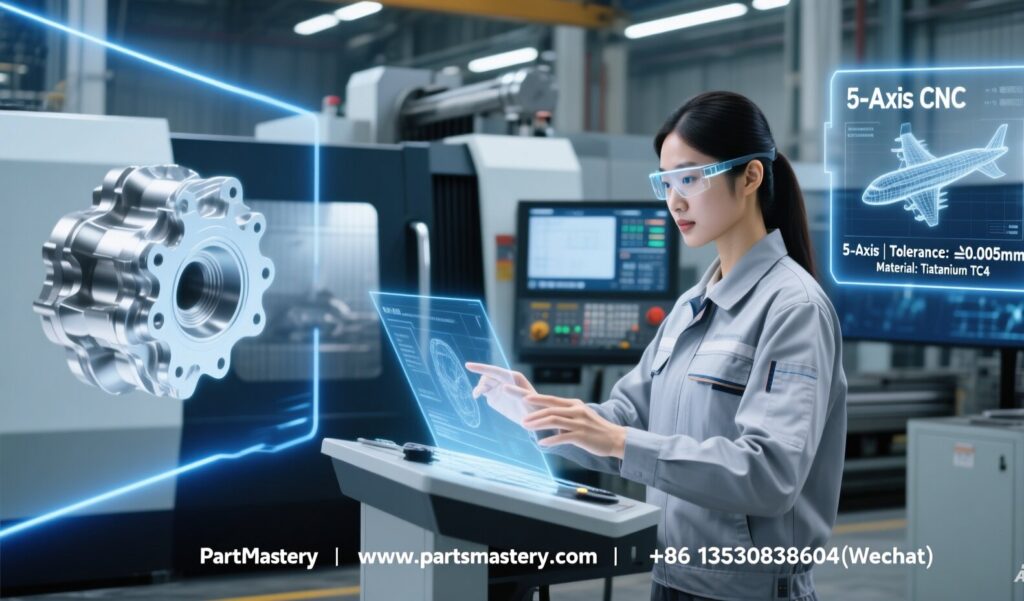
Le processus de fabrication d'un moule industriel a considérablement évolué. Les modèles de conception assistée par ordinateur (CAO) pilotent les opérations d’usinage à commande numérique (CNC), d’électroérosion à fil et d’électroérosion par enfonçage avec une précision de l’ordre du micron. Les centres d’usinage à grande vitesse permettent de réaliser des cavités complexes en quelques heures plutôt qu’en plusieurs semaines. PartsMastery utilise la technologie CNC à cinq axes pour usiner un moule industriel à partir de blocs d'acier massif, ce qui permet de réduire au minimum les besoins en électrodes et de raccourcir les délais de fabrication. Chaque cote critique est vérifiée à l'aide de machines de mesure par coordonnées (CMM), garantissant ainsi votre moule industriel correspond exactement au modèle CAO avant le premier tir d'essai.
L'analyse du flux de moulage est indispensable à la réussite d'un moule industriel. Avant de procéder à la découpe de l'acier, PartsMastery simule le processus d'injection, en prédisant les schémas de remplissage, l'emplacement des lignes de soudure, la position des poches d'air et le comportement au refroidissement. Cette analyse permet d'identifier les problèmes potentiels : remplissage déséquilibré, échauffement par cisaillement excessif ou évacuation insuffisante des gaz. Les ajustements effectués dès la phase de conception ne coûtent rien comparés à la modification d'une pièce finie moule industriel. Les clients qui ne procèdent pas à une analyse du flux de moulage découvrent souvent des défauts une fois le moule terminé, ce qui entraîne des retouches coûteuses et des retards dans le lancement de la production.
La planification de la maintenance permet de prolonger la durée de vie utile de tout moule industriel. Un programme d'entretien préventif bien documenté comprend le nettoyage des évents, la lubrification des glissières, l'inspection des goupilles d'éjection et la vérification de l'intégrité du circuit de refroidissement. PartsMastery fournit une documentation d'entretien détaillée avec chaque moule industriel, y compris les intervalles recommandés et les listes de pièces de rechange. Pour la production à grand volume, le stockage de pièces d’usure en double — broches d’éjection, douilles de guidage, buses de canaux chauds — permet d’éviter des temps d’arrêt prolongés lorsqu’un moule industriel nécessite une intervention.
Les applications concrètes démontrent la valeur d'un produit haut de gamme moule industriel ingénierie. Un équipementier automobile avait besoin d'un moule industriel pour un composant de collecteur d'admission en nylon renforcé de fibre de verre 30%. PartsMastery a fabriqué un circuit de moulage à canaux chauds moule industriel doté de revêtements résistants à l'abrasion et d'un système de refroidissement conformationnel. L'outil a atteint 1,8 million de cycles avant de nécessiter une révision majeure, avec un taux de rebut moyen inférieur à 0,81 TP3T. Un fabricant de dispositifs médicaux avait besoin d'un moule industriel pour un composant de seringue stérile avec des tolérances de ±0,02 mm. Notre acier inoxydable moule industriel grâce à la surveillance de la pression dans la cavité, la conformité dimensionnelle 100% a été assurée sur 2,5 millions de moulages.
Le coût d'un moule industriel varie considérablement en fonction de la complexité, du nombre de cavités, de la nuance d'acier et de l'état de surface. Une simple matrice à deux plaques moule industriel pour une petite pièce, le coût peut varier entre 1 TP4T8 000 et 15 000. Un moule complexe à plusieurs glissières et à canaux chauds moule industriel avec 8 cavités peut dépasser $80 000. Cependant, se concentrer uniquement sur le prix d'achat revient à négliger le coût total de possession. Une solution moins coûteuse moule industriel qui tombe en panne après 200 000 cycles ou génère des rebuts de type 5% coûte bien plus cher qu'un produit haut de gamme moule industriel qui fonctionne pendant 2 millions de cycles avec un taux de rebut de 0,51 TP3T. PartsMastery propose une analyse du coût du cycle de vie, aidant ainsi ses clients à prendre des décisions éclairées en fonction du volume de production et des exigences de qualité.
Choisir le bon partenaire pour votre moule industriel est tout aussi importante que l'outil lui-même. Privilégiez les compétences techniques, la fabrication en interne, la certification qualité (ISO 9001:2015) et une expérience avérée avec vos résines et vos secteurs d'activité spécifiques. PartsMastery allie des décennies d'expérience dans la fabrication de moules à des technologies de fabrication modernes, offrant ainsi moule industriel des solutions qui fonctionnent de manière fiable, cycle après cycle.
Prêt à discuter de votre prochain projet de moule industriel ?
Contactez PartsMastery dès aujourd'hui :
Téléphone / WeChat : +86 13530838604
Site web : www.partsmastery.com
Marque : PartsMastery
Outillage de précision. Résultats prévisibles. Solutions de moulage industriel PartsMastery.