







Die unverzichtbare Checkliste für die Auswahl eines Lieferanten von Spritzgießwerkzeugen
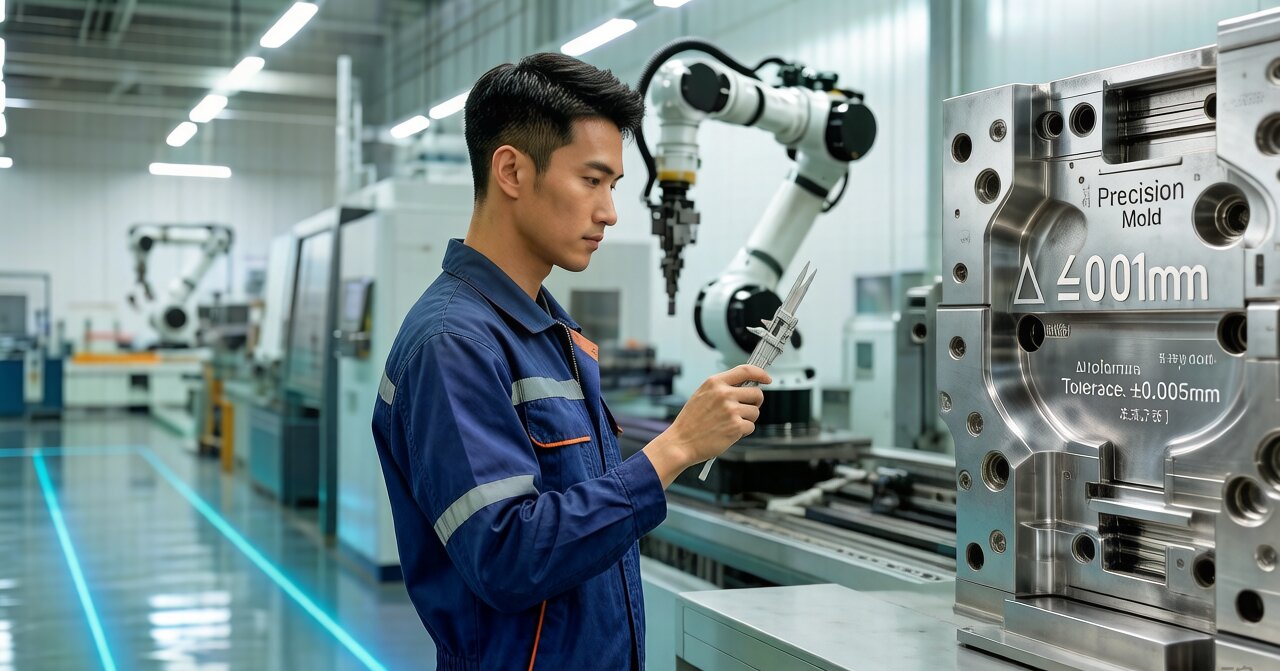
In the world of high-volume manufacturing, the tooling is the foundation upon which product quality, cycle speed, and profitability rest. Choosing the right injection molding tooling supplier is not a purchasing decision; it is a strategic partnership that determines your entire production roadmap. At PartsMastery, we have seen countless product launches succeed or fail based solely on the quality of the mold.
A mold (or tool) is a precision instrument designed to produce identical plastic parts repeatedly under extreme heat and pressure. If your injection molding tooling supplier delivers a mold with poor steel, incorrect cooling channels, or misaligned cores, you will face flash, warpage, and premature wear. This article provides a comprehensive checklist for vetting suppliers and ensuring your tooling delivers decades of reliable service.
Understanding the Different Classes of Tooling
Not all injection molds are created equal. Before contacting an injection molding tooling supplier, you must understand the five standard SPI (Society of the Plastics Industry) mold classifications:
-
Class 101 (Unlimited Cycles): Hardened steel, required for high-volume production exceeding 1 million cycles. Ideal for automotive, medical, and aerospace components.
-
Class 102 (Under 1 Million Cycles): Hardened steel, suitable for medium-high volume with less demanding tolerances.
-
Class 103 (Under 500,000 Cycles): Pre-hardened steel, common for consumer goods and electronics housings.
-
Class 104 (Under 100,000 Cycles): Low-volume or bridge tooling, often made from aluminum or mild steel.
-
Class 105 (Prototype): Soft tooling for fewer than 500 parts.
A reputable injection molding tooling supplier will never upsell you to Class 101 if Class 104 is sufficient for your project. However, they will also refuse to cut corners if your production demands high cycle life.
The Critical Role of Steel Selection
The steel grade directly impacts tool longevity and part finish. When evaluating an injection molding tooling supplier, ask for their standard steel list. High-quality suppliers typically offer:
-
P20 (Pre-hardened): Good for moderate volumes; easy to machine and polish.
-
H13 (Hardened): Excellent toughness and heat resistance for high-temperature resins like PC and Nylon.
-
S136 (Stainless): Corrosion-resistant and mirror-polishable for optical or medical parts.
-
420 Stainless Steel: High hardness and wear resistance for abrasive glass-filled materials.
If a supplier cannot explain the differences between these alloys, consider that a red flag. At PartsMastery, we provide full material certifications (mill test reports) for every mold we build.
Beyond Price: Total Cost of Ownership
Many procurement managers make the mistake of selecting an injection molding tooling supplier based solely on the initial quoted price. A $5,000 mold may seem attractive compared to a $15,000 mold, but the hidden costs tell a different story:
-
Downtime: Cheap molds break ejector pins or crack cooling lines every 50,000 cycles, halting your production line.
-
Wartung: Does the supplier provide spare parts lists? Can you buy extra core pins and ejector sleeves?
-
Modification Fees: What happens when you need to change a gate location or add a rib? Cheap tooling often cannot be modified—it must be scrapped and rebuilt.
-
Scrap Rate: A poorly balanced mold produces inconsistent parts, driving your scrap rate from 1% to 15%.
The most cost-effective injection molding tooling supplier is one who builds the mold right the first time, using validated designs and simulation data.
Mold Flow Simulation: Non-Negotiable Technology
Twenty years ago, mold makers relied on gut instinct. Today, professional tooling suppliers use Mold Flow Analysis software to predict plastic behavior before cutting steel. This simulation identifies:
-
Weld lines (where two flow fronts meet, creating weak spots).
-
Air traps (pockets of gas that cause burn marks).
-
Uneven filling (leading to dimensional variation).
-
Cooling inefficiency (causing long cycle times or warpage).
If your prospective injection molding tooling supplier does not offer DFM (Design for Manufacturability) feedback with Mold Flow analysis, continue your search. At PartsMastery, we provide a full 30+ point DFM report before machining begins, saving you weeks of trial-and-error.
Hot Runner vs. Cold Runner Systems
Another key decision is the runner system. An experienced injection molding tooling supplier will help you choose between:
-
Cold Runner: Simpler and cheaper to build, but generates plastic waste (sprue and runners). Suitable for low volumes or materials that degrade easily.
-
Hot Runner: Uses heated manifolds and valve gates to inject plastic directly into the cavity. No waste, faster cycles, but higher upfront cost. Valve gate hot runners also eliminate gate vestiges, critical for cosmetic surfaces.
For high-volume production, a hot runner system often pays for itself within 3-6 months through resin savings alone.
The Importance of Venting and Ejection
Two of the most overlooked features in injection tooling are venting and ejection. A proper injection molding tooling supplier will include:
-
Venting slots: Shallow grooves (0.02mm to 0.05mm deep) along the parting line to allow trapped air to escape. Without vents, parts suffer burn marks and incomplete filling.
-
Ejector pin layout: Strategically placed pins to push the part out without deformation. Too few pins cause ejection stress; too many leave visible marks.
Unter PartsMastery, we use a combination of ejector pins, sleeve ejectors, and air poppet valves to ensure clean, damage-free part release every cycle.
Secondary Operations and Assembly Support
Modern manufacturing demands more than just raw molded parts. The best injection molding tooling supplier also offers integrated secondary services:
-
Ultrasonic welding fixtures to assemble two molded halves.
-
Hot stamping or pad printing for branding and labels.
-
Threaded insert installation (brass or stainless steel).
-
Painting and EMI shielding for electronic enclosures.
By consolidating these processes with your tooling partner, you reduce shipping costs, lead times, and quality variance. PartsMastery operates a complete in-house finishing department, allowing us to ship ready-to-assemble components directly to your line.
Quality Control: CMM and Beyond
What good is a precision mold if it never gets measured? A world-class injection molding tooling supplier maintains a fully equipped metrology lab, including:
-
CMM (Coordinate Measuring Machine): Measures cavity dimensions to ±0.001mm.
-
Optical comparator: Inspects complex contours and edge radii.
-
Hardness tester: Verifies steel heat treatment.
-
Roughness tester: Confirms surface finish (Ra values) for cosmetic parts.
Every mold shipped from PartsMastery includes a comprehensive CMM inspection report, along with first-article samples for your internal validation.
Lead Times and Communication
Even the most perfectly built mold is worthless if it arrives three months late. When evaluating an injection molding tooling supplier, ask for their standard lead times:
-
Simple single-cavity mold (cold runner): 15-20 working days.
-
Medium complexity (4-cavity, hot runner): 25-30 working days.
-
High-complexity (16-cavity, unscrewing action, or stack mold): 40-45 working days.
Transparent communication is equally critical. You should receive weekly updates with photos of the steel cutting, electrode machining, and assembly progress. PartsMastery provides a dedicated project manager for every tooling order, accessible via WeChat, email, or phone.
Why PartsMastery Stands Out
As a premier injection molding tooling supplier, PartsMastery combines Western engineering standards with advanced manufacturing infrastructure. Our facility houses:
-
15 CNC machining centers (3-axis, 4-axis, and 5-axis).
-
12 EDM sinker and wire EDM machines.
-
8 injection molding presses (90T to 1,300T) for in-house sampling.
-
ISO 9001:2025 certified quality management system.
We specialize in multi-cavity molds, unscrewing molds (for threaded caps), and family molds (multiple part numbers in one tool).
Start Your Tooling Project Today
Do not leave your production line to chance. Whether you need a prototype bridge tool or a Class 101 production mold rated for 5 million shots, PartsMastery delivers precision, reliability, and on-time performance.
Contact PartsMastery Now:
-
Telefon / WeChat: +86 13530838604
-
Brand: PartsMastery
-
Website: www.partsmastery.com
Request your free DFM analysis and Mold Flow simulation today. Let us engineer the tooling that powers your success.