






Hersteller von Heißkanalwerkzeugen - Präzisionswerkzeuge für die Null-Abfall-Produktion
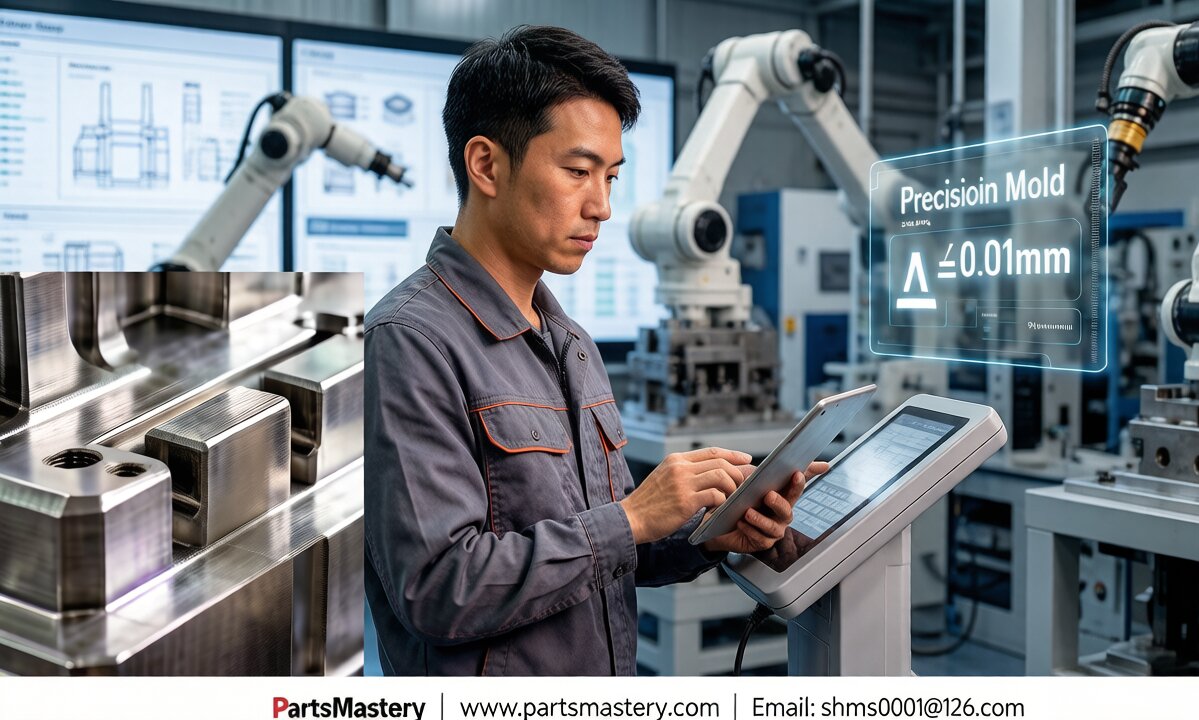
Beim Spritzgießen hoher Stückzahlen stellt das Angusssystem eine bedeutende Quelle für Materialabfall und Ineffizienz dar. Herkömmliche Kaltkanalwerkzeuge produzieren verfestigte Kunststoffkanäle, die entfernt, neu gemahlen und wieder in den Prozess eingeführt werden müssen - jeder Schritt bedeutet zusätzlichen Arbeitsaufwand, Energie und Qualitätsrisiken. A Hersteller von Heißkanalformen löst dieses Problem durch die Lieferung von Werkzeugen, die den Anguss vollständig eliminieren und gleichzeitig die Zykluszeiten und die Teilequalität verbessern.
Unter PartsMastery, Wir entwickeln und bauen Heißkanalwerkzeuge, die Präzisionsbearbeitung mit fortschrittlicher Wärmeregelung kombinieren. Dieser Artikel erläutert die Technologie, ihre wirtschaftlichen Vorteile, Konstruktionsüberlegungen und warum die Wahl des Partners über Erfolg oder Misserfolg entscheidet.
Was ist eine Heißkanalform?
Bei einem Heißkanalwerkzeug bleibt der Kunststoff im Kanalsystem während des gesamten Spritzzyklus in geschmolzenem Zustand. Im Gegensatz zu Kaltkanälen, bei denen das Material in den Kanälen erstarrt und als Ausschuss ausgeworfen wird, verwenden Heißkanäle elektrisch beheizte Düsen und Verteiler, um den Kunststoff flüssig zu halten. Wenn sich das Werkzeug öffnet und die Teile ausgeworfen werden, verlässt kein Angussmaterial das Werkzeug mit dem Teil.
Zu den wichtigsten Komponenten eines Heißkanalsystems gehören:
-
Verteiler: Ein beheizter Verteilerblock, der geschmolzenen Kunststoff von der Maschinendüse zu mehreren Einspritzpunkten leitet.
-
Düsen: Beheizte Rohre, die den Kunststoff vom Verteiler zu den einzelnen Anschnitten der Kavitäten befördern.
-
Heizungen und Thermoelemente: Eingebettete Heizelemente und Temperatursensoren sorgen für eine präzise Wärmeregulierung (in der Regel innerhalb von ±1°C).
-
Angussbuchse: Die beheizte Schnittstelle zwischen der Maschinendüse und dem Verteiler.
Ein Profi Hersteller von Heißkanalformen müssen diese Komponenten nahtlos in den Formboden, das Kühlsystem und den Ausstoßmechanismus integrieren. Eine mangelhafte Integration führt zu Leckagen, Temperaturschwankungen und Produktionsausfällen.
Warum eine Heißkanalform wählen?
Die Entscheidung, in Heißkanalwerkzeuge zu investieren, ist mit höheren Vorlaufkosten verbunden, bietet aber überzeugende betriebliche Vorteile. Eine qualifizierte Hersteller von Heißkanalformen hilft den Kunden bei der Bewertung der Rentabilität ihrer Investition.
Materialeinsparungen. Der Kaltkanalabfall beträgt in der Regel zwischen 15% und 30% des Schussgewichts. Bei teuren technischen Harzen (PEEK, PEI, LCP) oder gefüllten Compounds stellt dieser Abfall einen erheblichen Kostenfaktor dar. Mit einem Heißkanalwerkzeug entfällt dieser Ausschuss vollständig. Bei einem großvolumigen medizinischen Teil aus PEEK mit $800 pro Kilogramm können die Materialeinsparungen allein $200.000 pro Jahr übersteigen.
Reduzierung der Zykluszeit. Kaltkanalwerkzeuge erfordern eine zusätzliche Kühlzeit für den Anguss, der in der Regel dicker ist als das Teil selbst. Bei Heißkanalwerkzeugen entfällt die Kühlung des Angusses, wodurch sich die Zykluszeiten je nach Teilegeometrie um 15% bis 40% verringern.
Kompatibilität mit der Automatisierung. Heißkanalwerkzeuge produzieren Teile ohne angebrachte Kufen, die direkt in Behälter, Förderbänder oder Roboterentnahmestationen fallen. Kaltkanalteile erfordern Entgratungsstationen oder manuelles Beschneiden.
Teil Qualitätsverbesserung. Heißkanalsysteme können Anschnitte an optimalen Stellen für das Füllen und Verpacken der Teile platzieren, ohne die geometrischen Beschränkungen der Kaltkanallayouts. Dies verbessert die Dimensionsstabilität und reduziert die Eigenspannung.
Geringerer Arbeitsaufwand. Durch den Wegfall des Entfernens und Nachschleifens der Läufer wird der direkte Personalbedarf um ein bis zwei Mitarbeiter pro Schicht reduziert.
Anwendungen, die sich am besten für Heißkanal-Werkzeuge eignen
Nicht jedes Projekt rechtfertigt den Einsatz von Heißkanalwerkzeugen. PartsMastery empfiehlt Heißkanal-Werkzeuge für:
-
Jährliches Volumen von mehr als 250.000 Teilen (Materialeinsparungen amortisieren die zusätzlichen Werkzeugkosten in der Regel innerhalb von 6-12 Monaten).
-
Teure oder gefüllte Harze (Nachschleifen von glasgefüllten Materialien beschädigt die Verstärkungsfasern; Heißkanäle erhalten die Materialeigenschaften).
-
Medizinische oder Reinraumanwendungen (Mahlgut stellt ein Kontaminationsrisiko dar; Heißkanäle vermeiden Mahlgut vollständig).
-
Mehrkavitätenformen oder Familienformen (der Ausgleich des Durchflusses über 16, 32 oder 64 Kavitäten ist bei Heißkanälen präziser).
-
Dünnwandige Formteile (Druckabfälle im Kaltkanal begrenzen die Befüllbarkeit; Heißkanäle halten einen höheren verfügbaren Druck aufrecht).
Heißkanalanschnitt-Typen
Eine spezialisierte Hersteller von Heißkanalformen bietet mehrere Gate-Konfigurationen. Jede hat spezifische Vorteile und Einschränkungen.
Thermischer Anschnitt (auch Angussanschnitt oder direkter Anschnitt genannt). Die Düse berührt das Teil direkt; es bleiben keine Anschnittreste zurück. Geeignet für Einzelkavitätenformen oder große Teile, bei denen die Anschnittstelle nicht kosmetisch ist. Einschränkung: Anschnittspuren können sichtbar sein.
Nadelverschluss. Ein mechanischer Stift öffnet und schließt den Anschnitt zu genau kontrollierten Zeiten. Zu den Vorteilen gehören saubere Anschnittreste (minimale Markierung), die Möglichkeit, mehrere Anschnitte nacheinander zu befüllen, und die Vermeidung von Anschnittspuren. Nadelverschlüsse sind für kosmetische Oberflächen und große Teile mit mehreren Anschnitten unerlässlich. PartsMastery verwendet je nach Leistungsfähigkeit der Maschine eine pneumatische oder hydraulische Schieberbetätigung.
Randtor. Die Düse gibt den Kunststoff durch eine kleine Öffnung am Rand des Teils ab. Der Anschnitt wird normalerweise bündig abgeschnitten. Geeignet für Teile, bei denen ein kleiner Überstand akzeptabel ist.
Tip Gate (auch Pinpoint Gate genannt). Ein kleiner Anschnitt (typischerweise 0,5-1,5 mm Durchmesser), der sich auf der Oberfläche des Teils befindet. Der Anschnitt bricht beim Auswerfen sauber ab und hinterlässt eine kleine Beule. Üblich für kleine Präzisionsteile.
Was Sie bei einem Heißkanalwerkzeughersteller beachten sollten
Die Heißkanaltechnik erfordert spezielle Fachkenntnisse, die über den herkömmlichen Formenbau hinausgehen. Bei der Bewertung einer Hersteller von Heißkanalformen, berücksichtigen Sie diese Faktoren.
Fähigkeit zur thermischen Auslegung. Eine gleichmäßige Temperaturverteilung über den Verteiler und die Düsen ist entscheidend. Schon eine Abweichung von 5 °C kann in einigen Zonen zu Materialverschlechterung und in anderen zu kalten Abschnitten führen. Fragen Sie nach der Auslegung der Verteilerheizung, der Platzierung der Thermoelemente und dem Ausgleich der Wärmeausdehnung. PartsMastery nutzt die Finite-Elemente-Thermoanalyse, um die Platzierung der Heizelemente vor der Fertigung zu optimieren.
Verhinderung von Lecks. Heißkanallecks sind katastrophal: Aus dem Verteiler austretender geschmolzener Kunststoff kann die Verkabelung, die Heizungen und die Werkzeugbasis zerstören. Ein professioneller Hersteller verwendet ordnungsgemäß angezogene Verteilerbolzen, Dehnungsfugen und Drucktests (in der Regel das 1,5-fache des maximalen Einspritzdrucks), um die Dichtungsintegrität zu überprüfen.
Qualität der Tore. Der Anschnittbereich bestimmt die Optik und Funktion des Teils. Bei Nadelverschlüssen muss das Spiel zwischen Stift und Buchse weniger als 0,01 mm betragen, um ein Abblitzen zu verhindern. Bei thermischen Anschnitten muss die Geometrie der Düsenspitze genau mit der Kontur der Kavität übereinstimmen.
Controller-Kompatibilität. Heißkanalsysteme erfordern Mehrzonen-Temperaturregler mit geschlossenem PID-Regelkreis. PartsMastery integriert sich in führende Controller-Marken (Athena, DME, Yudo, Gammaflux) oder liefert unsere eigenen validierten Systeme.
Zugang zur Wartung. Die Heißkanalkomponenten müssen regelmäßig gereinigt und die Heizelemente ausgetauscht werden. Die Werkzeugkonstruktion sollte den Zugang zu Düsen und Verteilern ohne vollständige Demontage ermöglichen. Wir liefern mit jeder Form eine detaillierte Wartungsdokumentation.
Fallstudie: Großvolumige medizinische Gerätekomponente
Ein Hersteller medizinischer Geräte benötigte jährlich 1,8 Millionen Spritzenkolben aus einem für medizinische Zwecke geeigneten Polypropylen. Das vorhandene Kaltkanalwerkzeug mit acht Kavitäten produzierte 12% Angussabfälle. Ein Nachschleifen war für dieses Medizinprodukt der Klasse II aufgrund des Kontaminationsrisikos nicht zulässig, so dass der Kunde das Angussmaterial vollständig entsorgte und 12% teures zertifiziertes Harz verlor.
PartsMastery schlug eine Heißkanalform mit acht Kavitäten und Nadelverschlussdüsen vor. Wichtigste Konstruktionsmerkmale:
-
Ausgewogene Verteilerkonstruktion mit identischen Durchflusslängen zu allen acht Kavitäten.
-
Nadelverschlusssequenzierung zur Vermeidung von Schweißnähten an der Kolbenspitze.
-
Die Düsenspitzen sind für einen sauberen Anschnitt konzipiert (keine sichtbaren Rückstände auf der Dichtfläche).
-
Die thermische Analyse wurde für eine einheitliche Hohlraumtemperatur (±2°C über alle Hohlräume) optimiert.
Ergebnisse:
-
Die Materialausnutzung stieg von 88% auf 99,8% (nur Anfahrabfälle und Ausschussteile).
-
Jährliche Materialeinsparungen: 7.200 Kilogramm Polypropylen in medizinischer Qualität (etwa $38.000).
-
Die Zykluszeit wurde von 24 Sekunden auf 17 Sekunden reduziert (Verbesserung um 29%).
-
Der Ausstoß stieg von 1.200 auf 1.694 Teile pro Stunde auf derselben Maschine.
-
Der Kunde erreichte eine Amortisation der Heißkanalwerkzeuge in 7 Monaten.
Kaltkanal vs. Heißkanal: Leitfaden zur Auswahl
Wenn ein Kunde fragt PartsMastery ob ein Heißkanalwerkzeug geeignet ist, bewerten wir drei Faktoren.
| Faktor | Cold Runner Empfohlen | Hot Runner empfohlen |
|---|---|---|
| Jährliches Volumen | Unter 100.000 Teile | Über 250.000 Teile |
| Kosten des Harzes | Unter $5/kg | Über $10/kg |
| Sensibilität des Materials | Stabil zum Nachschleifen | Verschlechtert sich mit dem Nachschleifen |
| Läufer-Teil-Verhältnis | Unter 15% | Über 25% |
| Teilgewicht | Über 50 Gramm | Unter 20 Gramm |
| Empfindlichkeit der Zykluszeit | Niedrig | Hoch |
| Automatisierung | Manuelle Degatierung akzeptabel | Vollständig automatisierte Linie |
| Budget für Werkzeugbau | Zwangsweise | Verfügbar für ROI |
Für Grenzfälle (100.000-250.000 Teile, Harzkosten $5-10/kg), PartsMastery bietet eine formale ROI-Analyse, die die Gesamtbetriebskosten einschließlich Werkzeug, Material, Arbeit und Zykluszeit vergleicht.
Häufige Probleme mit Heißkanälen und deren Vermeidung
Auch bei einem gut konzipierten Heißkanalsystem können Probleme auftreten. Eine verantwortungsvolle Hersteller von Heißkanalformen Entwürfe zur Vermeidung dieser Probleme.
Tor-Sabber. Kunststoff tritt zwischen den Zyklen aus dem Anschnitt aus, wodurch Stringer oder Spreizungen entstehen. Vorbeugung: Nadelverschlüsse (der Stift schließt, bevor sich die Form öffnet) oder geeignete Düsenspitzen mit Temperaturabsenkung.
Kalte Schnecke. Ein verfestigter Kunststoffpfropfen dringt in die Kavität ein und verursacht kurze Schüsse oder Oberflächenfehler. Vorbeugung: angemessene Beheizung der Düse und ordnungsgemäße Konstruktion der Angussbuchse.
Torverschleiß. Abrasive Materialien (glasgefüllte Nylons, mineralgefülltes PP) erodieren mit der Zeit die Schieberöffnungen. Vorbeugung: gehärtete Stahlspitzen (D2 oder CPM) mit austauschbaren Einsätzen.
Temperaturjagd. Der Regler über- und unterschreitet den Sollwert, was zu Viskositätsschwankungen führt. Vorbeugung: richtig eingestellte PID-Parameter und richtig platzierte Thermoelemente.
Verteilerleckage. Kunststoff entweicht zwischen Verteiler und Düse oder Verteiler und Montageplatte. Vorbeugung: richtiges Schraubendrehmoment, Berechnungen der Wärmeausdehnung und Druckprüfung.
PartsMastery dokumentiert Fehlerbehebungsverfahren für jedes Heißkanalwerkzeug, so dass Ihr Produktionsteam kleinere Probleme beheben kann, ohne den Kundendienst zu rufen.
Warum PartsMastery für Heißkanalwerkzeuge
Der Bau von Heißkanalwerkzeugen erfordert technische Disziplin, Präzisionsbearbeitung und thermisches Know-how. PartsMastery liefert:
-
Eigene Konstruktion von Verteilern (wir lagern diese kritische Komponente nicht aus).
-
Multi-Zonen-Temperaturregelung mit Echtzeitüberwachung und Datenprotokollierung.
-
Druckprüfung an jeder Heißkanalbaugruppe vor der Werkzeugmontage.
-
Vollständige Dokumentation einschließlich Verdrahtungsplänen, Thermoelementpositionen und Wartungsplänen.
-
Globale Unterstützung mit Ersatzteillager und Fehlerbehebung aus der Ferne.
Starten Sie Ihr Heißkanalprojekt
Wenn Materialabfall, Zykluszeit oder Teilequalität die Wirtschaftlichkeit Ihrer Produktion einschränken, ist ein Heißkanalwerkzeug von PartsMastery kann die Lösung sein. Senden Sie uns Ihre CAD-Datei, Ihre Materialspezifikation und eine Schätzung des Jahresvolumens. Unser Technikteam wird Ihnen innerhalb von 3 bis 5 Arbeitstagen eine Machbarkeitsbewertung, eine ROI-Analyse und ein verbindliches Angebot unterbreiten.
PartsMastery
Heißkanal-Werkzeuge - kein Abfall, schnellere Zyklen, bessere Teile
Telefon / WeChat: +86 13530838604
Fortschrittliche Werkzeuge für die moderne Fertigung.