








Mold Making Wholesale
Keyword: Mold Making Wholesale
فهم قيمة تصنيع القوالب بالجملة للمشترين العالميين
In the world of industrial production, molds are the unsung heroes that shape everything from automotive bumpers and medical device housings to children’s toys and kitchen appliances. For businesses that rely on injection molding, die casting, or blow molding, sourcing tooling efficiently is just as important as the production process itself. This is where mold making wholesale becomes a strategic advantage. Buying molds in wholesale quantities or partnering with a wholesale-focused supplier allows manufacturers, product developers, and procurement professionals to reduce per-unit tooling costs, streamline supply chains, and maintain consistent quality across multiple production lines.
The global mold manufacturing market continues to expand, driven by rising demand from emerging economies and the ongoing reshoring of certain manufacturing sectors. Within this landscape, wholesale mold making has evolved from a simple bulk-purchase model into a sophisticated service that includes design standardization, modular tooling systems, and long-term maintenance agreements. Understanding how wholesale mold making works—and how to select the right partner—can significantly impact your company’s bottom line and production agility.
What Is Mold Making Wholesale?
Mold making wholesale refers to the production and supply of molds in larger quantities or through a direct, volume-based pricing model. Unlike custom, one-off mold projects where every tool is designed from scratch for a specific part, wholesale mold making often involves standardized mold bases, repeatable manufacturing processes, and economies of scale that lower the cost per cavity or per mold set.
Wholesale arrangements can take several forms:
-
Bulk orders of identical molds – A company may need ten identical molds for the same part to run on different injection molding machines across multiple facilities.
-
Modular or interchangeable mold systems – Common mold bases with replaceable cavity inserts allow a single mold base to produce various part geometries by swapping inserts.
-
High-cavitation molds – A 32-cavity or 64-cavity mold for high-volume consumables (e.g., bottle caps, syringes, connectors) is inherently a wholesale-focused product because the tooling cost is amortized over a very large number of cavities.
-
Blank or semi-finished molds – Some buyers purchase unfinished mold bases and standard components in bulk, then perform final cavity machining in-house or through a local finishing shop.
For buyers who regularly commission new tooling, establishing a wholesale relationship with a dedicated mold making factory can reduce lead times, simplify quality assurance, and lower total tooling expenditure over multiple projects.
Advantages of Choosing Mold Making Wholesale
1. Significant Cost Savings Per Mold
The most obvious benefit of wholesale mold making is lower unit pricing. Mold manufacturing involves fixed costs such as programming CNC machines, setting up EDM electrodes, and performing first-article inspections. When these setup costs are spread across multiple identical molds or a large cavity count, the cost per mold or per cavity drops substantially. For high-volume consumer products, these savings can amount to tens of thousands of dollars annually.
2. Consistent Quality Across Production Lines
When you order multiple molds from the same wholesale supplier, they will be produced using identical processes, materials, and inspection criteria. This consistency ensures that parts made in Shanghai, Mexico, and Ohio come out the same way. Variations in cooling channel layout, gate size, or vent depth are minimized, reducing the need for separate process validation for each tool.
3. Faster Replacement and Reduced Downtime
Having spare molds or standardized insert sets on hand allows manufacturers to swap out a worn or damaged tool in minutes rather than waiting weeks for a repair. For industries with 24/7 production schedules, this redundancy is invaluable. Wholesale mold making often includes the option to order one or two backup molds at the same time as the primary set, at a fraction of the cost of an emergency rush order later.
4. Simplified Supply Chain Management
Dealing with a single wholesale partner for multiple mold projects reduces administrative overhead. Instead of negotiating separate contracts, managing different shipping schedules, and maintaining relationships with several small tool shops, you work with one supplier that understands your quality standards, material preferences, and documentation requirements.
5. Access to Standardized Components
Wholesale-focused mold makers typically stock large inventories of standard mold bases, ejector pins, sprue bushings, and cooling fittings. This inventory allows them to build molds faster and at lower cost than shops that order components per project. The same efficiency is passed on to wholesale buyers.
Key Considerations When Evaluating Mold Making Wholesale Suppliers
Not all mold making wholesale offerings are created equal. To avoid costly mistakes, buyers should evaluate potential partners on several critical dimensions.
Manufacturing Capacity and Scalability
A supplier that produces one or two molds per month may not have the machine hours or skilled labor to fulfill a wholesale order of ten complex molds within your deadline. Ask about the number of CNC spindles, EDM units, and tooling engineers on staff. Request case studies of previous wholesale projects similar in scale to your requirement.
Quality Assurance Systems
Wholesale mold making amplifies both good and bad practices. If a supplier delivers a defective mold, the cost is multiplied by the number of molds in the order. Ensure the factory holds ISO 9001 certification at minimum. For automotive or medical wholesale orders, IATF 16949 or ISO 13485 should be mandatory. Ask to see their inspection reports and CMM equipment calibration records.
Material Traceability and Steel Certification
When buying multiple molds, you need assurance that every tool uses the specified steel grade with proper heat treatment. A reputable wholesale supplier provides mill test reports for each batch of mold steel and maintains heat treatment logs. Without traceability, you risk receiving a mix of genuine P20 or H13 and cheaper substitutes that will wear out prematurely.
Design Standardization and Modularity
The most cost-effective wholesale mold making relies on standardized designs. Ask whether the supplier offers modular mold bases with interchangeable cavity inserts. This approach allows you to change part designs without building entirely new molds. It also simplifies spare parts stocking—one set of standard ejector pins and springs serves all your molds.
After-Sales Support and Maintenance
Wholesale mold making should include ongoing support. Does the supplier offer spare parts kits? Will they provide remote troubleshooting or on-site repair services? What is their policy for warranty claims on a bulk order? Clarify these points before signing a wholesale agreement.
Industries That Benefit Most from Mold Making Wholesale
While any company that uses molded parts can benefit from wholesale tooling, certain industries are particularly well-suited.
Packaging and Consumables
Bottle caps, closures, thin-wall containers, and disposable cutlery are produced in astronomical volumes. A single factory may run hundreds of injection molding machines, each requiring multiple cavities. Wholesale mold making—often with 32, 48, or 64 cavities—is the industry standard here.
Automotive Components
From clip fasteners and wire harness connectors to HVAC ducts and interior trim, automotive manufacturers need dozens or hundreds of mold tools across their supply chain. Wholesale purchasing agreements with tiered pricing based on annual volume are common.
Medical Disposables
Syringe barrels, test tube racks, Petri dishes, and inhaler components are typically made in high-cavitation molds. Wholesale mold making ensures that a single design is replicated precisely across multiple production sites, a requirement for regulatory compliance.
Electronics and Connectors
USB housings, SIM card trays, battery covers, and internal structural parts are often produced using standardized mold designs that can be repeated across product families. Wholesale pricing reduces tooling costs for each new generation of devices.
Common Mistakes in Wholesale Mold Sourcing
Focusing only on price per mold
The cheapest wholesale quote may come from a factory using lower-grade steel, inadequate cooling, or poor venting. Over a multi-million-cycle production run, the increased downtime, scrap rate, and maintenance costs will erase any upfront savings. Always request sample parts and run a trial before committing to a large order.
Ignoring lead time variability
A supplier that promises 30-day delivery for ten molds may be overcommitting. Ask for a detailed production schedule showing when each mold enters machining, heat treatment, finishing, and testing. Build in a buffer for unexpected delays, especially if the supplier is located overseas.
Neglecting spare parts and documentation
Wholesale orders generate many molds, but without proper documentation (drawings, material certs, inspection reports), troubleshooting a specific tool years later becomes a nightmare. Insist on a complete digital documentation package for every mold in the order.
How PartsMastery Delivers Excellence in Mold Making Wholesale
For businesses looking to leverage the benefits of wholesale mold making, PartsMastery combines technical expertise, modern manufacturing capacity, and a customer-centric approach. With years of experience serving clients in automotive, medical, electronics, and packaging industries, PartsMastery understands that wholesale tooling requires not just lower prices but also uncompromising quality and reliable delivery.
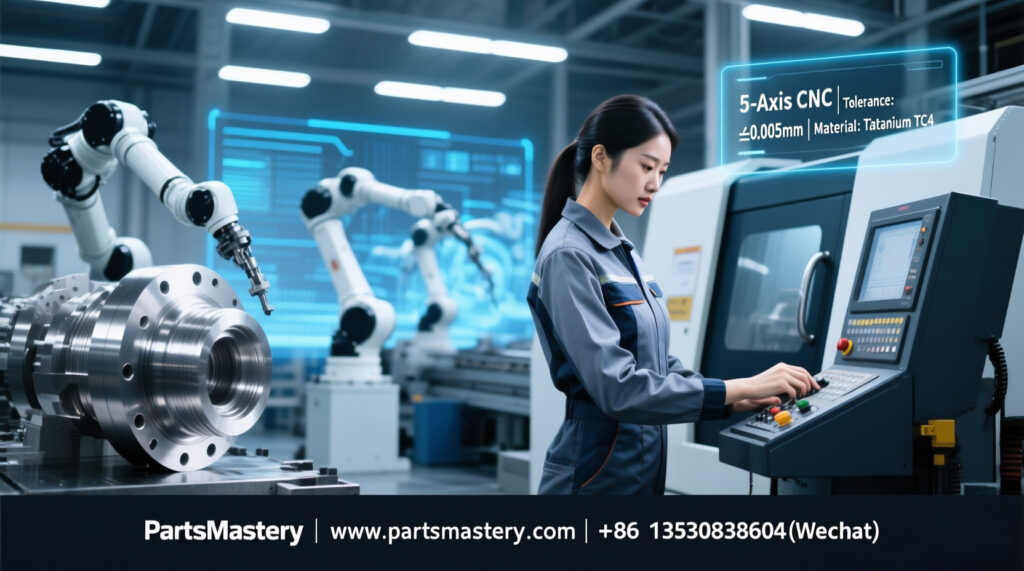
Every wholesale project begins with a detailed design for manufacturability (DFM) review to ensure that standardized mold designs will produce parts that meet your specifications. Advanced CNC machining centers, EDM equipment, and in-house CMM inspection allow PartsMastery to achieve cavity accuracy of ±0.01mm across every mold in a bulk order.
Materials are sourced from certified mills with full traceability, and heat treatment is performed in controlled furnaces with documented cycles. For customers requiring modular mold systems, PartsMastery offers interchangeable insert designs that reduce future tooling costs and simplify maintenance.
After delivery, PartsMastery provides comprehensive documentation for each mold, including dimensional reports, material certificates, and recommended spare parts lists. Remote sampling support and video troubleshooting ensure that your production team can quickly resolve any issues.
الخاتمة
Mold making wholesale represents a powerful strategy for companies that need consistent, high-quality tooling across multiple production lines or high-volume applications. By partnering with a capable supplier, you can reduce per-unit costs, simplify supply chain management, and maintain production uptime. However, success requires careful evaluation of manufacturing capacity, quality systems, material traceability, and after-sales support.
For companies ready to explore wholesale mold making solutions, PartsMastery offers the expertise and capacity to deliver.
Contact PartsMastery to discuss your mold making wholesale requirements:
📞 Phone / WeChat: +86 13530838604
🌐 Visit: https://partsmastery.com
Reliable tooling, wholesale efficiency.