








قالب الصب بالقالب: الدليل الكامل للأدوات المعدنية عالية الضغط
الكلمة الرئيسية Die casting mold
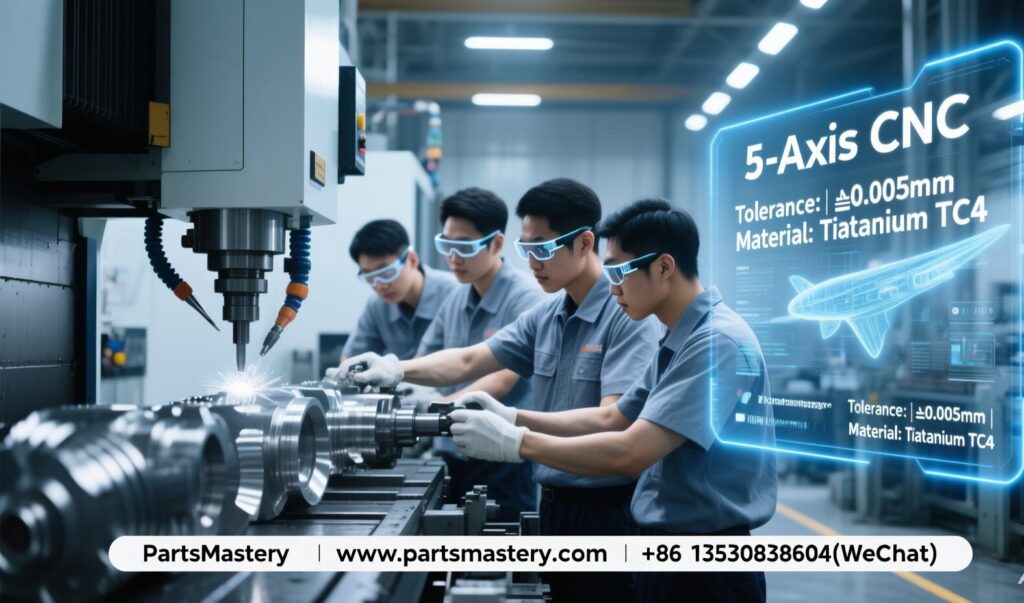
Unlike plastic injection molding, a die casting mold must withstand molten metal—temperatures exceeding 650°C and injection pressures up to 10,000 PSI. The die casting mold is a precision tool that shapes non-ferrous metals (aluminum, zinc, magnesium, copper alloys) into near-net-shape components for automotive, aerospace, electronics, and industrial applications. At قطع الغيار, we design and manufacture high-performance die casting mold tools that deliver thousands to millions of shots with tight dimensional stability.
يشرح هذا الدليل الشامل ماهية die casting mold is, how it differs from plastic molds, the critical design principles, and how to select the right steel grade for your application.
1. What Is a Die Casting Mold?
A die casting mold (often called a die) is a two-part tool made from specialized hot-work tool steel. The die casting mold consists of a fixed cover half (stationary) and an ejector half (movable). Molten metal is injected at high velocity (30-100 m/s) and high pressure (1,500-10,000 PSI) into the die casting mold cavity. The metal solidifies in milliseconds to seconds, and the die casting mold opens to eject the finished metal part.
Unlike plastic molds that cycle at 20-200°C, a die casting mold operates at 150-350°C surface temperature with molten metal at 620-680°C (aluminum) or 380-420°C (zinc). Thermal shock is the primary enemy of any die casting mold. A poorly designed or improperly maintained die casting mold will develop heat checking—a network of fine surface cracks that transfer to every casting.
2. Types of Die Casting Molds
تصميم die casting mold depends on the process and part complexity:
Hot Chamber Die Casting Mold:
Used for low-melting-point alloys (zinc, magnesium, lead). The injection mechanism is submerged in molten metal. The die casting mold fills directly through a gooseneck. Hot chamber die casting mold tools cycle faster (up to 2,000 shots per hour) but require corrosion-resistant steel.
Cold Chamber Die Casting Mold:
Used for high-melting-point alloys (aluminum, brass, copper). Molten metal is ladled into a shot sleeve, then a hydraulic piston forces it into the die casting mold. Cold chamber die casting mold tools experience the most severe thermal shock and require premium H-13 or H-11 steel.
Multi-Slide Die Casting Mold:
A specialized die casting mold with four moving slides for complex, thin-wall parts like electronic connectors or decorative hardware. Multi-slide die casting mold tools are smaller but more complex than conventional dies.
3. Critical Differences: Die Casting Mold vs. Plastic Mold
| الميزة | Die Casting Mold | قالب بلاستيك |
|---|---|---|
| Operating temperature | 150-350°C (surface) | 20-100°C |
| Molten material temp | 380-680°C | 200-350°C |
| Injection pressure | 1,500-10,000 PSI | 500-1,500 PSI |
| Injection speed | 30-100 m/s | 5-15 m/s |
| Thermal shock | Extreme (every cycle) | Mild to moderate |
| Preferred steel | H-13, H-11, DIEVAR | P-20, H-13, stainless |
| Venting | Critical (air evacuation) | Important |
| الانكماش | 0.5-1.5% | 0.4-2.0% |
4. Materials Used in Die Casting Molds
إن die casting mold steel must resist thermal fatigue, erosion, and heat checking:
H-13 Tool Steel (46-50 HRC):
The industry standard die casting mold material for aluminum and magnesium. H-13 offers excellent resistance to heat checking and thermal fatigue. A properly heat-treated H-13 die casting mold can produce 50,000-150,000 shots before requiring refurbishment.
H-11 Tool Steel (46-50 HRC):
Similar to H-13 but with slightly higher toughness. H-11 die casting mold tools are preferred for zinc and small aluminum parts where impact resistance is critical.
DIEVAR (Uddeholm):
A premium die casting mold steel with enhanced resistance to thermal fatigue. DIEVAR die casting mold tools last 30-50% longer than H-13, particularly for complex automotive parts. Higher cost but lower cost-per-shot.
QRO-90 (Böhler):
A high-performance die casting mold steel with excellent high-temperature strength. QRO-90 resists erosion from high-velocity aluminum flow, especially at gates and cores.
H13 with Nitriding:
Many die casting mold tools receive a nitrided surface layer (0.1-0.3mm thick, 65-70 HRC). Nitriding improves wear resistance but can cause surface cracking if the die casting mold core is not properly heat-treated first.
5. Critical Design Elements of a Die Casting Mold
نجاح die casting mold incorporates several features unique to metal casting:
Gate and Runner System:
إن die casting mold gate is where molten metal enters the cavity. Unlike plastic, metal gates must be designed for turbulent flow (which is unavoidable) while minimizing air entrapment. Typical die casting mold gates are 1-3mm thick and 10-50mm wide. Fan gates and tangential gates are common.
Overflow Wells:
A die casting mold includes overflow wells—small pockets at the end of fill that trap the first metal (which contains oxides and air). Overflows improve cavity filling and are trimmed off after casting. A well-designed die casting mold has overflow volume equal to 10-30% of part volume.
التنفيس:
Air in the die casting mold must escape faster than metal enters. Vent depths are 0.05-0.15mm—deeper than plastic molds. Vacuum assist systems are common on high-quality die casting mold tools to achieve porosity-free castings.
Cooling Channels:
A die casting mold requires aggressive cooling to remove heat from the molten metal. Cooling channels are placed 10-15mm from the cavity surface. Water flow rates are high (5-15 L/min per channel). Thermal analysis of the die casting mold is essential to prevent hot spots.
Ejector System:
Ejector pins in a die casting mold are larger (6-12mm diameter) and more numerous than in plastic molds because metal parts shrink tightly onto cores. The die casting mold ejector plate must apply high force (50-200 tons).
Parting Line:
إن die casting mold parting line must be perfectly flat and parallel. Any mismatch causes flash (thin metal fins). Typical die casting mold parting line flatness is 0.02mm over 300mm.
6. The Die Casting Mold Manufacturing Process
بناء الدقة die casting mold requires specialized heat treatment and machining:
1. Steel Selection and Roughing:
إن die casting mold block is cut from annealed H-13 or DIEVAR. Rough machining removes 70-80% of material.
2. Heat Treatment:
إن die casting mold is vacuum heat-treated to 46-50 HRC, then double-tempered at 550-600°C. Proper heat treatment is critical—undercured die casting mold steel will heat check rapidly.
3. Finish Machining:
The hardened die casting mold is finish-machined using carbide tooling. EDM is used for deep ribs, cores, and complex features.
4. Surface Finishing:
إن die casting mold cavity is polished to SPI A-2 or B-1. Polishing removes EDM recast layer and reduces thermal stress concentration.
5. Cooling Channel Drilling:
Deep-hole drilling creates cooling channels within 10mm of the die casting mold cavity. Cross-drilling and baffles direct coolant to specific zones.
6. طلاء (اختياري):
Premium die casting mold tools receive PVD coatings (TiAlN, AlCrN) to resist erosion and soldering (metal sticking to the mold).
7. Common Die Casting Mold Defects and Solutions
| العيب | السبب | الحل |
|---|---|---|
| Heat checking (fine cracks) | Thermal fatigue; insufficient cooling | Add cooling to die casting mold; reduce shot-to-shot time |
| Soldering (metal sticks) | Die casting mold surface degraded; poor release | إعادة التهيئة die casting mold; apply PVD coating |
| Porosity (internal voids) | Air trapped in die casting mold; turbulent fill | Add vacuum assist; modify gate design |
| Erosion (gate wear) | High-velocity metal eroding die casting mold | Enlarge gate; use premium steel (DIEVAR) at gate area |
| Flash (thin metal fins) | Die casting mold parting line worn; clamp force low | Refurbish parting line; increase machine tonnage |
| Short shot (incomplete fill) | Die casting mold too cold; gate too small | Increase mold temperature; enlarge gate |
8. Applications of Die Casting Molds
ستجد die casting mold التكنولوجيا في كل الصناعات تقريبًا:
السيارات:
Engine blocks, transmission housings, steering knuckles, brackets, heat sinks. A single automotive die casting mold may produce 100,000-500,000 parts over its life.
Aerospace:
Avionics housings, connector shells, hydraulic components. Aerospace die casting mold tools require NDT inspection and material certifications.
الإلكترونيات:
LED heat sinks, smartphone frames, laptop hinges, shielding cans. Electronics die casting mold applications demand tight tolerances (±0.05mm) and thin walls (0.8-1.5mm).
Industrial:
Pump housings, gearboxes, power tool bodies, motor housings. Industrial die casting mold tools prioritize durability and wear resistance.
9. Die Casting Mold Maintenance and Longevity
جهاز يتم صيانته بشكل جيد die casting mold can last 100,000-500,000 shots before major refurbishment:
-
يومياً: نظيفة die casting mold cavity with soft brass brushes. Inspect for soldering or buildup. Verify cooling water flow.
-
أسبوعيًا: Check ejector pins for smooth movement. Inspect die casting mold parting line for flash accumulation.
-
شهرياً: إزالة die casting mold and inspect cavity surfaces under magnification. Measure gate erosion. Check cooling channels for scale.
-
Every 50,000 shots: Stress relieve the die casting mold by heating to 550°C and slow cooling. This restores ductility and extends life.
10. The PartsMastery Approach to Die Casting Mold Manufacturing
في قطع الغيار, فإننا نتعامل مع كل die casting mold as a high-thermal-performance tool. The extreme conditions of molten metal demand precision metallurgy and cooling design.
لدينا die casting mold تتضمن العملية ما يلي:
-
Thermal simulation: We simulate the die casting mold thermal cycle to identify hot spots and optimize cooling channel placement.
-
Premium steel selection: We match H-13, DIEVAR, or QRO-90 to your alloy, volume, and cycle time.
-
Precision heat treatment: Vacuum hardening with double tempering ensures consistent die casting mold hardness without distortion.
-
Surface finishing: Diamond polishing and optional PVD coating reduce soldering and extend die casting mold life.
-
Test sampling: We run your alloy in the die casting mold on our cold chamber press to verify fill, porosity, and ejection before shipping.
الخاتمة
إن die casting mold is among the most demanding tools in manufacturing. Molten metal at 650°C, injected at 100 m/s and 10,000 PSI, pushes steel to its limits. A well-designed die casting mold balances thermal management, erosion resistance, and mechanical strength. Whether you need a prototype die casting mold for 1,000 shots or a production tool for 500,000 aluminum automotive parts, precision engineering determines your success.
Ready to bring your metal part to production with a high-performance die casting mold? اتصل بنا قطع الغيار اليوم في +86 13530838604 (WeChat) . Send us your 3D CAD file, alloy specification, and desired volume. We will deliver a die casting mold engineered for thermal stability, erosion resistance, and long life.