






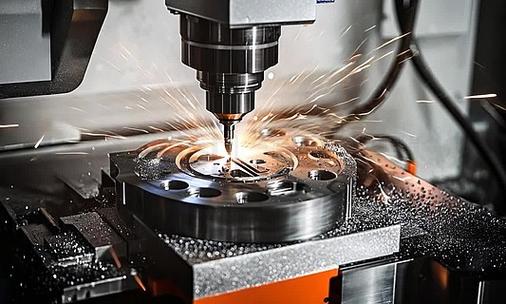
Low-volume CNC machining serves as the core manufacturing solution between prototype validation and full-scale production. It combines high precision, fast turnaround and flexible order sizing, and delivers production-grade parts without expensive tooling investment. It is widely used in R&D iteration, pilot runs, spare part supply and custom component manufacturing.
This guide systematically breaks down the process portfolio, material selection, cost structure, design optimization and quality control methods of low-volume CNC machining, and provides engineering and procurement teams with actionable decision-making reference.
1. Positioning and Core Value of Low-Volume CNC Machining
1.1 Typical Batch Sizes and Application Scenarios
In industry practice, low-volume CNC machining generally covers orders from 10 to 5,000 pieces. Prototyping runs usually involve 1 to 50 parts, pilot production 200 to 500 pieces, and spare part batches 50 to 200 pieces. Compared with mass production processes, its biggest advantage lies in zero mold cost and extremely low modification cost, which supports rapid design iteration.
It fits especially well in the following situations:
- Functional prototypes and assembly verification parts in the R&D stage
- Pilot production batches before full product launch
- Replacement spare parts for equipment maintenance and repair
- Custom components for special-purpose machines and test fixtures
- End-use parts for niche market products with limited demand
1.2 Advantages and Limitations
Compared with molding, casting and other high-volume processes, low-volume CNC machining has four irreplaceable strengths:
- Shorter time to market: No mold development is required; production starts directly from CAD data. Lead time is usually 30% to 50% shorter than tooling-based processes.
- Flexible design iteration: Design changes only require program adjustment instead of new tooling, which greatly reduces modification cost and cycle time.
- High and consistent precision: Typical machining accuracy reaches ±0.01 mm. Performance and material properties are equivalent to full-production parts.
- Lower inventory risk: Parts can be produced on demand, which reduces overstock, warehouse cost and cash flow pressure for new products.
At the same time, it has clear limitations. Unit price is usually higher than mass-produced molded parts. For annual volumes above tens of thousands of pieces, it is generally recommended to evaluate alternative processes such as injection molding or die casting for better cost efficiency.
2. Main Machining Processes and Capability Boundaries
Low-volume CNC machining is not a single process, but a combination of multiple cutting technologies. The optimal process route should be selected according to part geometry, precision requirements and material type.
| Process | Core Capability | Typical Applications |
|---|---|---|
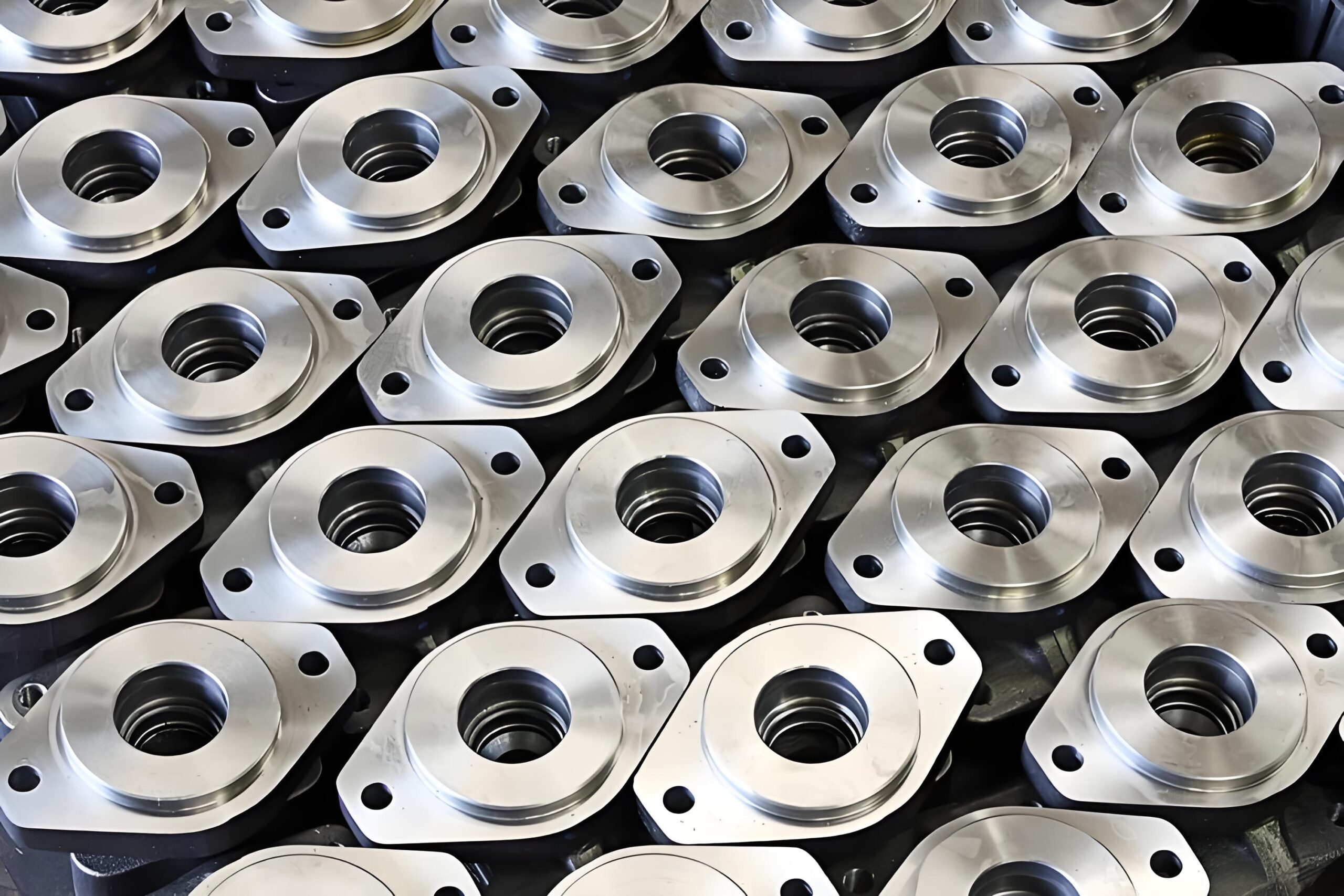
| CNC turning (with mill-turn) | High-efficiency rotary part machining; mill-turn completes multiple features in one setup | Shafts, bushings, flanges, fasteners |
| 3/4/5-axis milling | Prismatic and freeform features; 5-axis reduces setup and improves accuracy | Housings, brackets, impellers, mold cavities |
| Drilling, tapping & boring | Precision hole systems with tight position tolerance and thread quality | Mounting holes, locating holes, threaded holes |
| EDM (wire & sinker) | Machines hard materials and sharp internal corners without cutting force | Die inserts, precision slots, micro features |
| Precision grinding | Sub-micron accuracy and ultra-fine surface finish | Gauge parts, mold cores, precision shafts |
For complex parts, multiple processes are usually combined. Whenever possible, consolidating operations in one setup reduces clamping errors and improves batch consistency.
3. Material and Surface Treatment Selection
3.1 Common Machining Materials
Low-volume CNC machining supports a very wide range of materials. Different materials differ greatly in machinability and cost, so selection should balance performance requirements and economic efficiency.
- Aluminum alloys: Excellent machinability, high thermal conductivity and low density. 6061 and 7075 are the most widely used grades, with short lead time and low cost.
- Stainless and alloy steels: High strength and corrosion resistance, but prone to work hardening. Requires rigid machines and dedicated cutting tools.
- Copper alloys: Outstanding electrical and thermal conductivity. Soft and sticky when cutting, requiring sharp tools and sufficient coolant.
- Titanium alloys: Excellent strength-to-weight ratio and corrosion resistance, but difficult to machine with high tool wear. Higher overall cost.
- High-temperature alloys: Retain strength at elevated temperatures, with severe work hardening. Mostly processed by EDM or slow-feed milling.
- Engineering plastics: Including ABS, PC, POM, PEEK, etc. Lightweight and chemical resistant; cutting heat must be controlled to avoid deformation.
3.2 Common Surface Finishes
Surface treatment can be selected according to functional and cosmetic requirements:
- Anodizing: improves corrosion and wear resistance of aluminum parts; available in various colors
- Bead blasting: creates uniform matte surface, hides machining marks and improves coating adhesion
- Polishing: achieves mirror or satin finish for decorative appearance parts
- Electroplating: adds metal coating for wear resistance, corrosion protection or conductivity
- Powder coating: rich color options, good weather resistance for exterior parts
- Heat treatment: quenching, tempering, solution treatment to improve hardness and strength
- Black oxide: forms dark protective layer on steel, reduces reflection and provides mild rust protection
4. Standard Workflow from Quote to Delivery
Standardized process control is the foundation of stable quality and on-time delivery for low-volume CNC machining. PartsMastery follows a structured six-step workflow for every order.
Step 1: DFM analysis and quotation
After receiving CAD files and technical requirements, process engineers first perform manufacturability analysis, identify potential issues such as thin-wall deformation, unreachable features and unreasonable tolerances, and provide optimization suggestions. A detailed quote is issued within 24 hours.
Step 2: Process planning and programming
We select the most suitable machine, tooling and fixture scheme according to part features. CAM software generates optimized tool paths, and simulation is run to avoid collision and overcut. Efficient tool path strategies can reduce machining time by 15% or more.
Step 3: First article trial and validation
For precision-critical parts, 1 to 2 first articles are machined before full batch production to verify dimensional accuracy, clamping stability and process feasibility. This step greatly reduces the risk of batch scrap.
Step 4: Batch production with in-process control
Operators follow the approved process plan for batch production. In-process inspection and in-machine probing ensure that each dimension stays within tolerance throughout the production run.
Step 5: Final inspection and packaging
After machining, quality control performs full-dimensional inspection according to the drawing, and issues inspection reports and material certificates. Parts are carefully packaged with protective material to prevent scratches and damage during transit.
Step 6: Delivery and iteration support
Finished parts are delivered on schedule. We also follow up on assembly and testing feedback, and quickly adjust process parameters for design revisions. This closed-loop support helps customers optimize products continuously.
5. Cost Structure and Optimization Methods
5.1 Cost Breakdown
The total cost of a low-volume CNC order usually consists of four parts:
- Material cost: accounts for 30% to 60% of total cost, even higher for premium materials like titanium and superalloys. Optimized nesting can reduce waste by 15% to 20%.
- Machining cost: accounts for 30% to 50%, determined mainly by part complexity, tolerance level and material machinability.
- Tooling and fixture cost: standard tools have no extra charge; custom fixtures add one-time cost that can be amortized over repeat orders.
- Post-treatment and QC cost: accounts for 10% to 25%, depending on surface finish and inspection requirements.
5.2 Practical Cost Optimization Tips
Without affecting functional performance, you can effectively reduce cost through the following ways:
- Optimize part design at the DFM stage: simplify complex features, relax non-critical tolerances, standardize hole diameters and corner radii.
- Select cost-effective materials: choose easy-to-machine grades when performance allows, and avoid over-specifying materials.
- Consolidate similar parts: group parts of the same material and similar process for production to reduce setup changeover time.
5.3 Lead Time Acceleration Options
Several methods can help shorten delivery time without sacrificing quality:
- Run programming and material preparation in parallel to reduce front-end waiting time.
- Split complex parts across multiple machines for concurrent processing.
- Use multi-task machines to combine multiple operations in one setup.
Under normal conditions, standard aluminum parts are delivered in 5 to 7 days, steel and titanium parts in 7 to 10 days. Expedited 48-hour service is available for urgent orders.
6. DFM Guidelines for Low-Volume CNC Machining
Good DFM (Design for Manufacturing) is the most effective way to reduce cost, shorten lead time and improve quality. The following guidelines cover the most common points.
6.1 Tolerance and Datum Design
Apply tolerances by grade: only assign tight tolerances to truly critical mating features, and use general tolerances for non-critical dimensions. Overly strict tolerances can increase cost by 20% to 30%. In addition, keep design datums consistent with machining and inspection datums to reduce cumulative error.
6.2 Wall Thickness and Geometry
Keep wall thickness as uniform as possible to avoid deformation caused by uneven stress. For most plastic and aluminum parts, minimum wall thickness is recommended to be no less than 1 mm. Use rounded internal corners instead of sharp corners, because sharp corners require slower machining or even EDM.
6.3 Tool Accessibility
Avoid undercuts, deep blind cavities and other features that standard tools cannot reach. For deep holes and deep slots, keep depth-to-width ratio within 4:1 whenever possible. Leave enough tool entry and exit space to reduce setup and programming complexity.
6.4 Process Consolidation
Design parts to be machined in as few setups as possible. Standardize hole sizes, thread specifications and corner radii to reduce tool changes and improve machining efficiency.
7. Quality Control and Consistency Assurance
7.1 Incoming Material Control and Traceability
All raw materials come with material certificates. Hardness and composition checks are performed before warehousing. Each production batch retains complete processing records and inspection reports for full traceability.
7.2 In-Process Quality Control
We implement a three-level first-article inspection system: operator self-check, team leader re-check, QC final check. For critical dimensions, in-machine probing provides real-time tool offset compensation. SPC (Statistical Process Control) is used for mass repeat orders to monitor process stability.
7.3 Final Inspection and Certification
Conventional parts are inspected with calipers, micrometers and height gauges. High-precision and complex parts are inspected by CMM (Coordinate Measuring Machine). PartsMastery operates under ISO 9001 quality management system, and supports industry-specific standards such as ISO 13485 for medical and AS9100 for aerospace.
8. How to Select a Reliable Low-Volume CNC Supplier
Choosing the right supplier directly affects part quality, delivery time and project success. It is recommended to evaluate from the following dimensions:
- Process capability: whether they have 3/4/5-axis machines, mill-turn centers, EDM and secondary process capabilities in-house.
- Engineering support: whether they provide proactive DFM analysis and optimization suggestions, rather than just machining exactly what is drawn.
- Quality system: whether they have standardized inspection procedures and corresponding quality certifications, and can provide formal material and inspection reports.
- Delivery performance: whether they have stable on-time delivery rate, and flexible expedite channels for urgent orders.
- Transparent pricing: whether the quote clearly breaks down material, machining, surface treatment and other cost items, with no hidden charges.
9. Typical Industry Applications
| Industry | Core Requirements | Typical Parts |
|---|---|---|
| Automotive & new energy | Lightweight, high strength, fast iteration | Battery structures, motor housings, transmission parts |
| Medical devices | High precision, biocompatibility, traceability | Surgical instruments, implant components, device housings |
| Consumer electronics | Fine appearance, tight tolerance, fast launch | Device frames, heat sinks, connector parts |
| Aerospace | High-performance materials, strict quality documentation | Structural brackets, turbine components, hydraulic parts |
| Industrial automation | Reliable performance, high customization | Machine panels, jigs & fixtures, cylinder components |
10. Frequently Asked Questions
What is the minimum order quantity for low-volume CNC machining?
We accept orders starting from 1 piece for prototype and validation purposes. From a cost perspective, quantities of 10 pieces or above can better amortize programming and setup cost, resulting in lower unit price.
What accuracy can be achieved?
Standard milling accuracy can reach ±0.01 mm, turning accuracy up to ±0.005 mm. Grinding and EDM can achieve even tighter tolerances. Actual achievable accuracy depends on part size, structure and material. We will indicate achievable tolerances in the DFM review.
What file formats do you accept?
We accept common 3D formats such as STEP, IGES, STP, XT, as well as 2D drawings in DWG and PDF formats. It is recommended to provide both 3D model and dimensioned 2D drawing to ensure machining accuracy.
Can you handle both prototype and production quantities?
Yes. We support one-off prototypes, small-batch pilot runs and ongoing low-volume production. For repeat orders, we retain fixtures and program files to ensure consistent quality and shorter lead time for subsequent batches.
Summary
Low-volume CNC machining bridges the gap between prototype development and mass production, offering an ideal balance of precision, flexibility and speed. By selecting the right process, applying DFM optimization and implementing strict quality control, you can obtain high-quality custom parts with controlled cost and short lead time.
PartsMastery provides one-stop CNC machining services from prototype validation to low-volume production. With a full range of precision equipment and professional engineering support, we help customers turn designs into high-quality physical parts efficiently and reliably.