






Humanoid robots are steadily moving out of laboratories. Today, they serve as a new productive force in smart manufacturing environments.
Unlike traditional industrial robots built for fixed workstations, humanoid robots have a human-like form factor and built-in collaborative safety features. They fit directly into existing factory layouts and tool systems. They also handle assembly, inspection and material handling without costly production line overhauls.
This guide breaks down the technology system, industry chain and real-world value of humanoid robots. It also covers core barriers to large-scale adoption and gives a clear implementation roadmap for manufacturing teams.
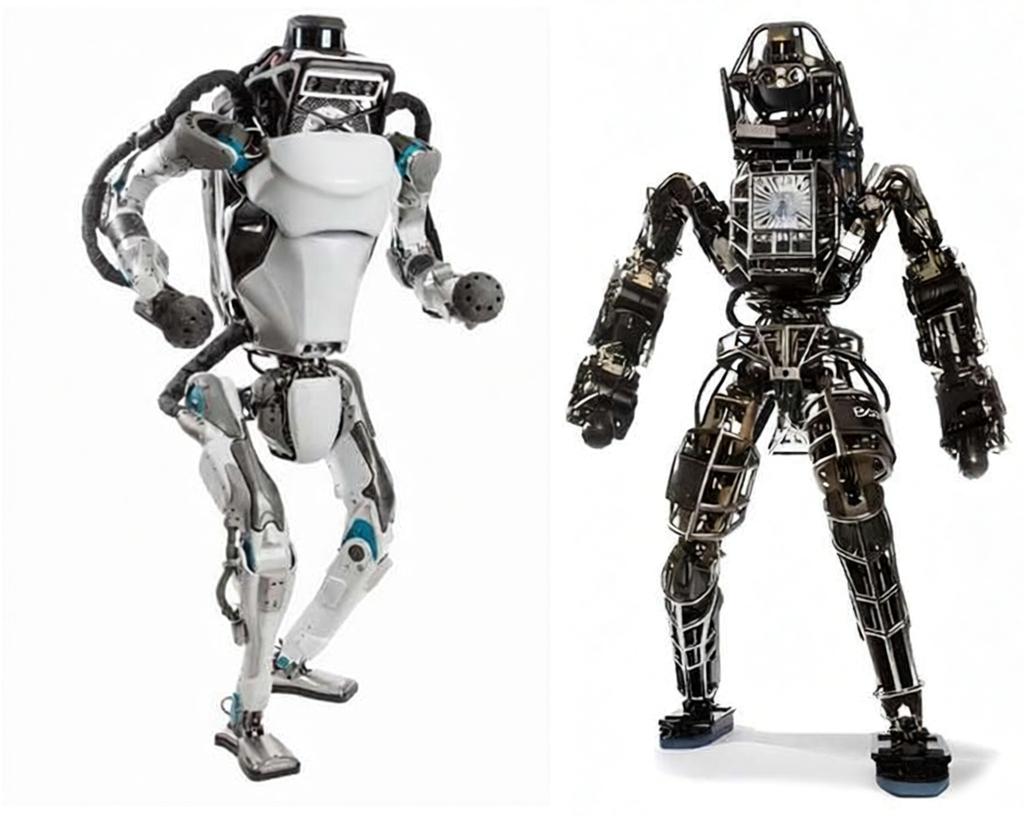
1. Definition and Core Technology System of Humanoid Robots
1.1 Basic Definition and Morphological Characteristics
Humanoid robots are intelligent machines designed to mimic human form and movement. Most feature bipedal legs, multi-axis robotic arms and head-mounted perception units.
They operate in standard human workspaces without custom tooling or dedicated infrastructure. The International Federation of Robotics (IFR) predicts global manufacturing deployments will exceed 150,000 units by 2035.
Compared to traditional industrial robots, they stand out in three key ways. First, they navigate unstructured spaces like workshop aisles and staircases with ease. Second, they switch between tasks via software updates instead of hardware changes. Third, they work safely next to humans without protective safety fences.
1.2 Four Core Technology Pillars
Motion control technology forms the foundation of reliable operation. Highly integrated joint actuators and balance algorithms enable stable bipedal walking, stair climbing and navigation on uneven floors.
Current mainstream models already handle basic tasks like small-part picking and repetitive assembly. Over time, their dexterity will continue to approach human levels.
Multi-modal perception systems act as the robot’s sensory layer. They combine vision cameras, LiDAR, force sensors and tactile units to detect workpiece shapes and obstacles in real time.
This allows both precise visual inspection and autonomous collision avoidance in dynamic workshop environments.
AI decision-making and learning drives task flexibility. Powered by large language models and reinforcement learning, humanoid robots plan their own work paths and correct motion errors on the fly.
They learn new workflows from just a few demonstrations. No tedious offline programming is required for new tasks.
Human-robot safety mechanisms protect nearby workers. Full-body force feedback, compliant control and emergency stop systems trigger an immediate slowdown on contact with a person or obstacle.
Industry data shows collaborative robots reduce workshop accident rates by over 30%. They improve operational safety without sacrificing production output.
2. Core Drivers for Humanoid Robot Adoption in Manufacturing
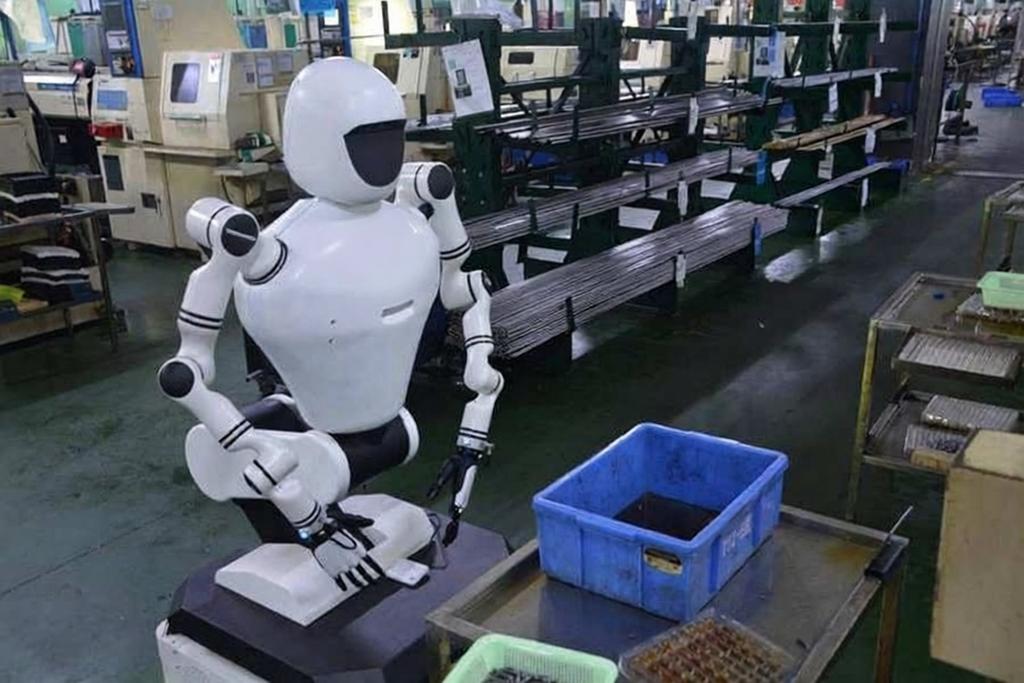
Manufacturing has become the primary real-world scenario for humanoid robots. This trend is driven by both industry demand and maturing technology. Four key factors stand out.
2.1 Rigid Demand From Labor Structure Gaps
Manufacturers worldwide face aging workforces and growing difficulty hiring frontline staff. In 2024, the global manufacturing job vacancy rate rose above 20%.
Humanoid robots fill these gaps by taking over repetitive, high-intensity manual roles. They also reduce production swings caused by high staff turnover.
2.2 Efficiency Demand From Flexible Manufacturing Upgrades
Small-batch, high-mix production is now the industry standard. Traditional dedicated robots require long changeover times and expensive retooling for new tasks.
Humanoid robots use the same tools and fixtures as human workers. They switch between tasks quickly via AI training, which cuts production changeover time dramatically.
2.3 Safety Replacement Demand in High-Risk Scenarios
Many factory jobs involve high temperatures, heavy loads or exposure to toxic materials. These tasks carry long-term occupational health risks for workers.
Humanoid robots take over these dangerous duties. They handle hazardous material transfer, high-temperature station work and high-dust inspection tasks. This reduces safety incidents at the source.
2.4 Strategic Demand for Supply Chain Resilience
Demand fluctuations and supply chain disruptions are increasingly common. The fast deployability of humanoid robots helps manufacturers adjust capacity quickly.
Leading industry data shows factories with intelligent flexible robots recover 25% faster from supply disruptions. Their overall risk resistance is significantly stronger.
3. Manufacturing Industry Chain and Core Processes
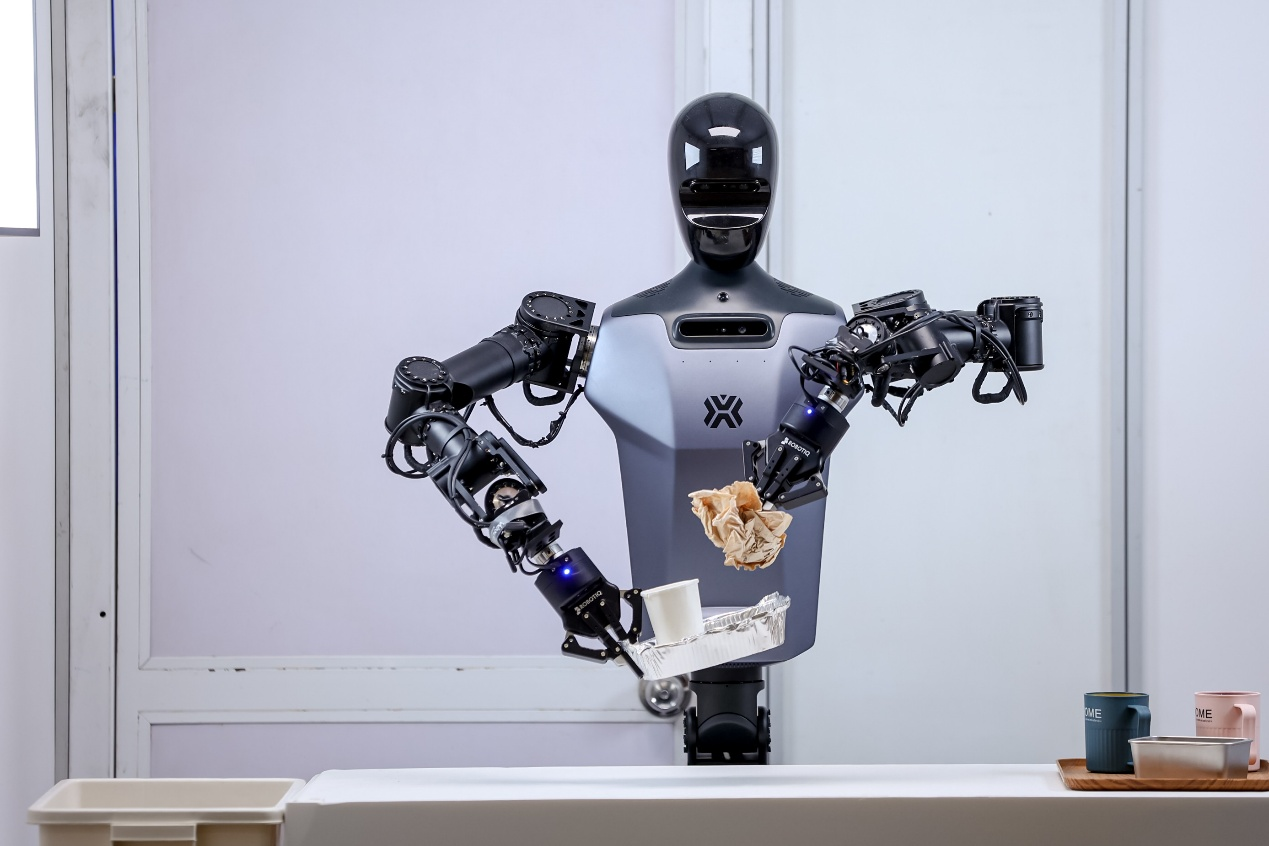
Building humanoid robots crosses multiple fields: materials science, precision machining, semiconductors and artificial intelligence. The process complexity matches that of aerospace and high-end automotive production.
The full production workflow breaks down into four core stages.
3.1 Precision Machining of Mechanical Structural Parts
Core metal components include body frames, joint housings and support structures. Most are produced via CNC precision machining with tolerances as tight as ±0.01 mm.
This level of precision ensures assembly accuracy and long-term motion stability for the finished robot.
For complex topology and lightweight parts, manufacturers use metal 3D printing for rapid prototyping. Sheet metal enclosures and guards go through stamping, welding and surface finishing.
PartsMastery offers custom precision machining for humanoid robot joints, brackets and housings. Its services cover milling, turning and 5-axis machining to support both low-volume prototyping and mass production.
3.2 Core Component Manufacturing
Reducers, servo motors and sensors make up the largest share of total cost. Reducers and servo motors rely on powder metallurgy, precision gear cutting and cleanroom assembly.
Their performance directly defines joint accuracy, load capacity and overall service life.
Perception sensors include vision cameras, LiDAR and force-torque sensors. They must be assembled and calibrated in controlled environments to guarantee reliable, accurate data.
3.3 Electronic and Control System Integration
This stage covers control board PCB fabrication, SMT assembly, full-machine wiring harnesses and power management modules.
Reliable signal and power delivery is essential for stable motion control and smooth AI computing performance.
3.4 Whole-Machine Calibration and System Testing
After mechanical and electrical assembly, robots go through full verification testing. This includes motion accuracy calibration, vision tuning, AI algorithm adaptation and safety performance checks.
Tests cover single-joint performance, full-body balance and task execution accuracy. The goal is to guarantee stable, consistent performance in real industrial settings.
4. Typical Industrial Application Scenarios in Manufacturing
Humanoid robots are already in pilot use across many manufacturing segments. Their practical value continues to be validated in real production environments.
The key industry applications are outlined below.
| Industry Sector | Core Application Scenarios | Implementation Value |
|---|---|---|
| Automotive Manufacturing | Body part assembly, appearance defect inspection, material loading/unloading, inter-station transfer | Improves assembly consistency, reduces repetitive manual labor, adapts to mixed-model production |
| Electronics Manufacturing | Micro-component insertion, appearance AOI inspection, finished product packaging, material replenishment | Meets clean workshop requirements, improves precision yield, reduces contamination risk |
| Medical & Pharmaceutical | Medical device assembly, drug sorting and packaging, hazardous material transfer | Ensures clean production, stronger compliance, reduces human contact hazards |
| Aerospace & New Energy | Composite workpiece handling, precision dimensional inspection, auxiliary assembly | Adapts to high-precision low-volume production, reduces heavy-load safety risks |
| Warehousing & In-Plant Logistics | Shelf picking, cargo loading/unloading, line-side delivery, warehouse inventory | Navigates complex plant layouts, adapts to multi-category material flow |
5. Core Challenges to Large-Scale Deployment
Adoption is accelerating, but wide-scale rollout still faces clear bottlenecks. Companies should evaluate these challenges carefully before making purchasing decisions.
5.1 High Upfront Investment and Maintenance Costs
Mature humanoid robots still carry a high purchase price today. Core components also have a limited service life, so maintenance costs run higher than for traditional industrial robots.
A 2024 Gartner survey found 63% of SMEs view high upfront cost as their biggest barrier. Long payback periods remain a core pain point for smaller firms.
5.2 Limited Energy Efficiency and Battery Life
Bipedal walking and multi-joint movement use a lot of energy. Most mainstream models only run for 3–5 hours on a single charge.
This runtime is not enough for a full production shift. Quick-swap battery systems are becoming more common, but they add operational complexity. True 24/7 operation remains out of reach with current technology.
5.3 Shortcomings in Precision Operation Capability
A human hand has 27 degrees of freedom. Most current humanoid grippers only have 12–16. This leads to lower success rates for fine work like micro-part assembly and high-precision insertion.
For sub-millimeter precision tasks, both motion control and force feedback still need further improvement.
5.4 Insufficient Human-Robot Interaction and Worker Acceptance
Noisy factory floors reduce voice recognition accuracy. Natural language interaction with the robots is often slow and unreliable.
Many frontline workers also worry about job displacement. This lowers acceptance of collaborative work on the shop floor. Successful rollouts include clear upskilling programs to reduce resistance.
5.5 Unclear Compliance and Liability Frameworks
Current industrial standards lack clear safety rules and liability definitions for humanoid robots. Questions around error responsibility and production data privacy have no clear regulatory answers yet.
Closing this gap will require joint work from industry bodies and policymakers.
6. Implementation Roadmap for Manufacturing Enterprises
Companies should not rush into large-scale humanoid robot deployments. A gradual, step-by-step approach delivers the best results with the lowest risk.
6.1 Scenario Selection and Pilot Verification
Start with non-core, high-repetition, high-risk workstations as entry points. Common examples include material handling, simple assembly and visual inspection.
Run a small-scale pilot first to measure efficiency gains and payback timeline. Expand scope only after the pilot proves clear value. This approach keeps trial and error costs low.
6.2 Workforce Skill Transformation and Training
Humanoid robots do not replace human workers. Instead, they change what those workers do on the production floor.
Companies should offer targeted upskilling programs. Frontline assembly workers can transition into robot operator and scheduler roles. These roles cover daily management, program tuning and basic maintenance. This creates a smooth shift to collaborative work.
6.3 Safety System and Standard Upgrading
For shared human-robot workspaces, update workshop safety rules and add real-time monitoring and warning systems.
Follow established collaborative robot standards from ISO and OSHA. Define clear work zones, set safety thresholds and run regular safety checks. This keeps human-robot collaboration compliant and safe.
6.4 Deep Integration With Digital Systems
Connect humanoid robots to factory systems like MES, ERP and digital twins. This turns them into mobile data nodes and execution terminals for smart manufacturing.
AI scheduling optimizes task allocation across the fleet. Predictive maintenance cuts unplanned downtime. Together, these integrations maximize the operational value of each robot.
7. Future Development Trends
Humanoid robot technology is evolving quickly. Four key trends will shape the next decade and expand manufacturing use cases even further.
7.1 Falling Costs and Rising Reliability
Component mass production and a maturing supply chain are driving purchase costs steadily downward. Leading brands aim to bring general-purpose models below $20,000.
At the same time, component lifespans and mean time between failures continue to improve. This will steadily lower adoption barriers for small and medium-sized manufacturers.
7.2 Continuous Breakthroughs in AI Generalization Capability
On-device large models and reinforcement learning will speed up task learning dramatically. Robots will evolve from learning via demonstration to learning autonomously.
In the near future, robots will master new tasks simply by watching a human worker. This will make them even better suited to high-mix, low-volume flexible production.
7.3 Deep Integration With Industry 4.0 Systems
Humanoid robots will act as mobile intelligent nodes on the factory floor. They will close the gap between physical production lines and digital management systems.
Real-time production data uploads and cloud-based scheduling will create fully closed-loop optimization. This will push smart manufacturing to a new level of efficiency.
7.4 Cross-Industry Scenario Expansion
Starting from manufacturing, humanoid robots will spread into warehousing, commercial services, emergency response and more. They will evolve into a truly general-purpose product category.
Goldman Sachs forecasts the global humanoid robot market will exceed $3.8 billion by 2035. It will become a major new growth pole for the industrial technology sector.
8. Frequently Asked Questions
Q1: What tasks do humanoid robots mainly perform in manufacturing?
A: Today’s deployments focus on four main task categories. First, repetitive assembly and loading/unloading work. Second, product appearance and dimensional inspection. Third, in-plant material handling and warehouse picking. Fourth, replacement work in high-risk, high-pollution environments.
In mature use cases, humanoid robots lift operational efficiency by 15–30%. They also cut manual safety risks by around 40%.
Q2: What is the difference between humanoid robots and traditional industrial robots?
A: The core difference is versatility and environmental adaptability. Traditional industrial robots are dedicated machines for fixed stations. They are fast and precise, but only handle one pre-programmed task. Retooling them for new work is expensive.
Humanoid robots can move around and perform a wider range of tasks. They deploy without major line changes and offer much greater production flexibility.
Q3: Are humanoid robots suitable for small and medium-sized enterprises?
A: At this stage, SMEs should start with targeted pilots on high-standardization, high-labor-cost workstations.
As costs fall and solutions mature, wider SME adoption will likely happen within the next 3–5 years. Companies can follow technology trends now and roll out deployments in phases later.
Q4: Will humanoid robots replace factory workers?
A: Right now, humanoid robots act as assistants and supplements to human workers. They take over repetitive, strenuous and high-risk tasks, but they do not fully replace people.
Instead, they shift job roles. New positions in robot operation, maintenance and scheduling will appear. This lets workers move from physical labor to skilled technical roles.
Conclusion
Humanoid robots are moving from lab testing to real-world large-scale use. Manufacturing, as their core application field, will be the first to benefit from this technology.
For manufacturers, the best strategy is balanced and gradual. There is no need to chase hype blindly, and no need to fear widespread job replacement either.
By matching robot capabilities to real production needs and rolling out deployments step by step, companies can boost both flexible production capacity and long-term competitiveness.
PartsMastery specializes in custom precision parts machining. It supplies high-precision structural parts, joint housings and brackets for humanoid robots and industrial automation equipment. Services include CNC machining, 5-axis machining and surface treatment, supporting both prototyping and volume production. It helps robotics customers improve product accuracy and speed up market deployment.