





In the world of custom motorcycle building and high-performance upgrades, CNC precision machining stands as a core manufacturing technology. Put simply, it pushes the industry forward with micron-level accuracy, tough structural strength, and total design flexibility.
Everything from critical engine parts to precision brake controls and custom cosmetic pieces benefits from this process. CNC machining creates uniform, high-strength components by cutting away excess material from a solid block of raw material. Unlike traditional casting and forging methods, it handles complex shapes and tight fit requirements easily while keeping quality consistent across every production run. As a direct result, it offers both long-lasting reliable performance and full customization freedom in one solution.
This guide breaks down the core technical basics, main part categories, and key manufacturing methods for CNC motorcycle parts. It also walks through measurable performance improvements, common material choices, standard custom build steps, and key cost factors. All in all, it gives custom bike builders, race teams, and OEM manufacturers a complete, easy-to-follow technical reference.
1. Technical Fundamentals of CNC Motorcycle Parts
CNC motorcycle parts are made with computer numerical control machining, a precise process that removes material step by step. At its core, the entire workflow follows a fully digital path from first design to finished part.
First off, engineers use professional CAM software to turn 3D CAD models into precise tool paths for the machine. From there, the machine cuts away extra material layer by layer from a solid billet. By the end of the process, the finished part meets strict requirements for size, shape, and fit accuracy.
When compared with traditional manufacturing methods, CNC machining has one key advantage: it requires no custom hard tooling. For this reason, it supports fast turnaround for one-off and small-batch production. On top of that, it delivers highly consistent results with almost no human error.
Standard custom aftermarket parts hold size tolerances within ±0.01 mm. For high-performance critical components, precision can go as tight as ±0.002 mm. This level of accuracy means the parts easily meet the strict fit requirements of critical systems like engines and brakes.
2. Core Component Categories and Functional Roles
Broadly speaking, CNC machining works for every category of motorcycle part, from internal engine pieces to exterior cosmetic accessories. To make this easier to follow, we group these components into five main categories, each with its own machining needs and performance goals.
| Component Category | Typical Examples | Core Functions & Value |
|---|---|---|
| Powertrain Components | Cylinder heads, pistons, valve covers, throttle bodies, camshafts | Deliver micron-accurate combustion chamber sealing, optimize intake and exhaust efficiency and power output, and improve engine running stability. |
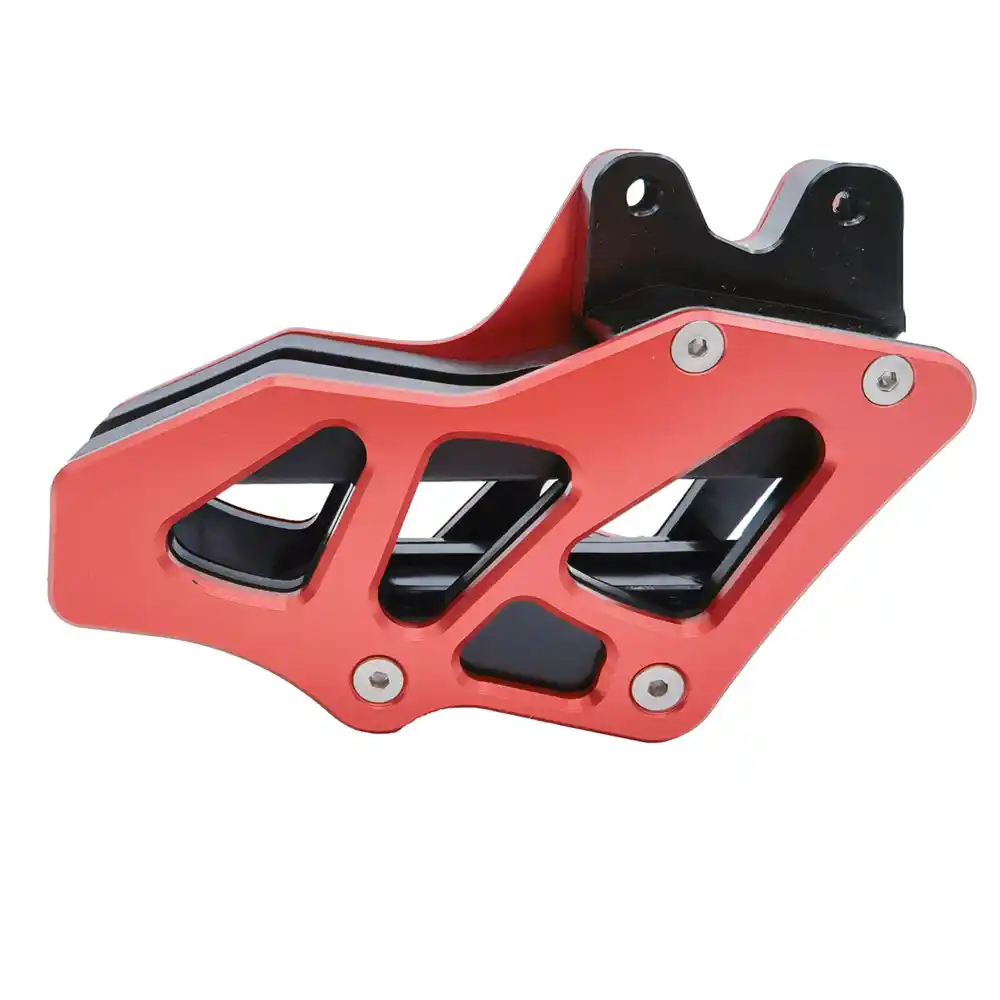
| Brake & Drivetrain Components | Brake caliper bodies, master cylinder pistons, clutch levers, sprockets, shift forks | Provide high structural strength and geometric accuracy for responsive braking and efficient power transfer, reduce operating wear and extend core component service life. |
| Control & Ergonomic Components | Custom handlebars, footpeg assemblies, clutch/brake levers, handlebar clamps | Geometry tailored to rider body type and riding style, improves riding posture, reduces long-distance fatigue, and enhances control precision. |
| Chassis & Suspension Components | Custom wheels, shock absorber end caps, steering stems, swingarm adjusters | Combine lightweight design with structural strength, reduce unsprung mass, and improve cornering agility and high-speed stability. |
| Custom Cosmetic & Functional Parts | Carbon fiber composite trim pieces, custom fuel caps, engine dress-up covers, license plate brackets | Deliver personalized styling, balance light weight and visual identity, and meet the unique design requirements of custom builds. |
3. Key Manufacturing Processes and Precision Characteristics
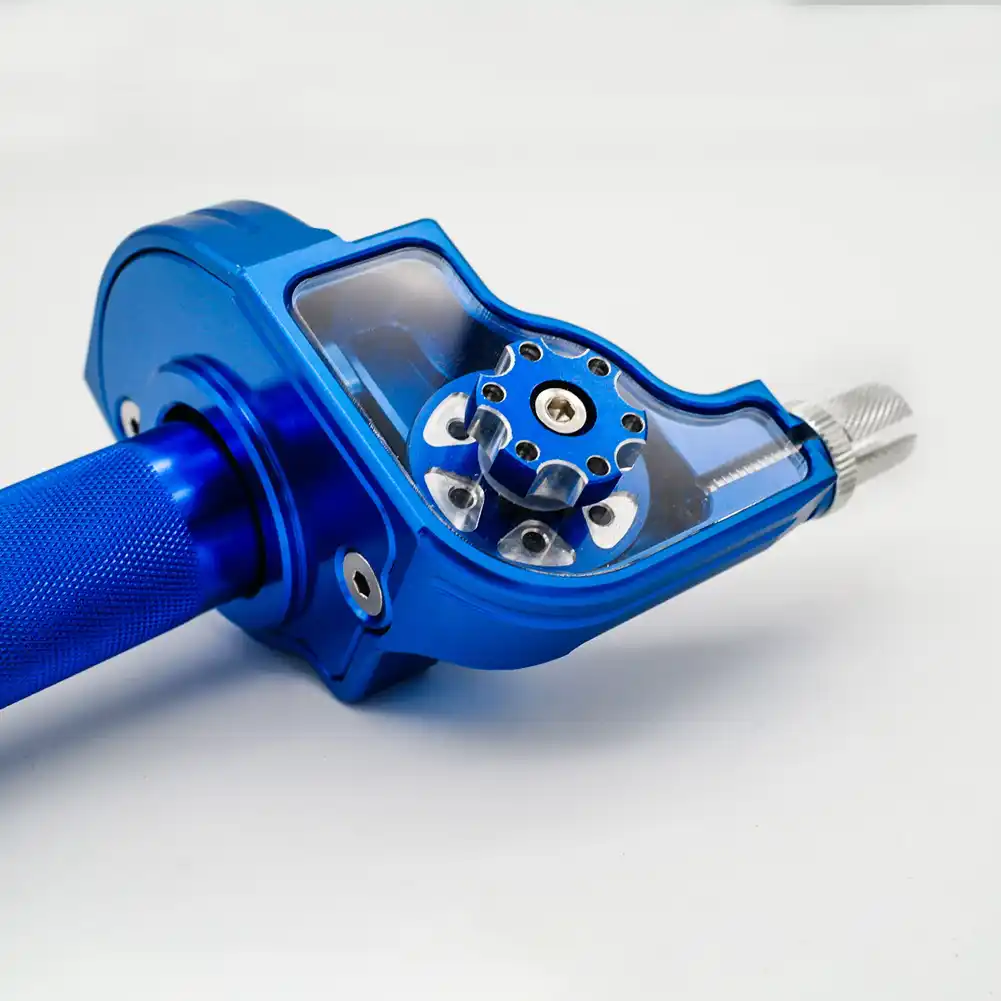
At the heart of CNC motorcycle part production is controlled material removal. Depending on the part’s shape and design features, manufacturers combine different machining methods. Two core technologies form the foundation: CNC milling and CNC turning.
3.1 CNC Milling: Core Process for Complex Geometries
CNC milling uses multi-axis rotating cutting tools to shape a firmly clamped workpiece from multiple angles. For complex, irregular motorcycle parts, it is the go-to manufacturing solution.
- Typical applications: For example, cylinder heads, brake calipers, footpeg brackets, engine dress-up covers, and parts with complex cavities, curved surfaces, and lightweight cutouts.
- Process advantages: Supports 3-axis to 5-axis simultaneous machining, and completes multi-sided machining in a single setup to keep tight shape tolerances. In addition, it enables weight-optimized designs by removing material only from non-critical areas.
- Precision level: Standard milling holds size tolerances within ±0.01 mm. For precision fitting surfaces, accuracy reaches ±0.002 mm with surface roughness as low as Ra 1.6 μm.
3.2 CNC Turning: Efficient Solution for Rotational Parts
In CNC turning, the workpiece spins at high speed while a fixed cutting tool moves along radial and axial directions. This process is built specifically for machining round, symmetric parts.
- Typical applications: These include wheels, exhaust flanges, pistons, pins, shock shafts, and other cylindrical parts with strict alignment requirements.
- Process advantages: Delivers high machining efficiency with excellent roundness and alignment accuracy. Furthermore, it ensures proper dynamic balance of rotating parts and works well for large production runs.
- Precision level: Outer diameter tolerances stay within ±0.005 mm. With finish turning, surface roughness can drop to Ra 0.8 μm for sealing and sliding components.
3.3 Complementary Laser Processing
Beyond the core milling and turning operations, laser processing works as a highly useful secondary finishing step.
For one thing, laser cutting handles profile shaping for thin sheet metal parts like mounting brackets and trim panels. Thanks to its precise heat input, this process creates clean, burr-free edges that need no extra deburring work.
For another, laser engraving adds permanent markings, custom patterns, and anti-slip textures to part surfaces. As a practical example, builders can use it to add personalized branding without weakening the part’s structural strength.
4. How CNC Machining Improves Overall Motorcycle Performance
CNC technology offers far more value than just a better way to make parts. In fact, it improves overall motorcycle performance in three measurable ways: tighter fit precision, targeted weight reduction, and refined aerodynamic optimization.
4.1 Precision Fit Optimizes Power Transfer Efficiency
Thanks to micron-level tolerances, CNC machining creates a perfect fit between all moving components. This tight fit directly reduces slack and impact loads as power moves through the drivetrain.
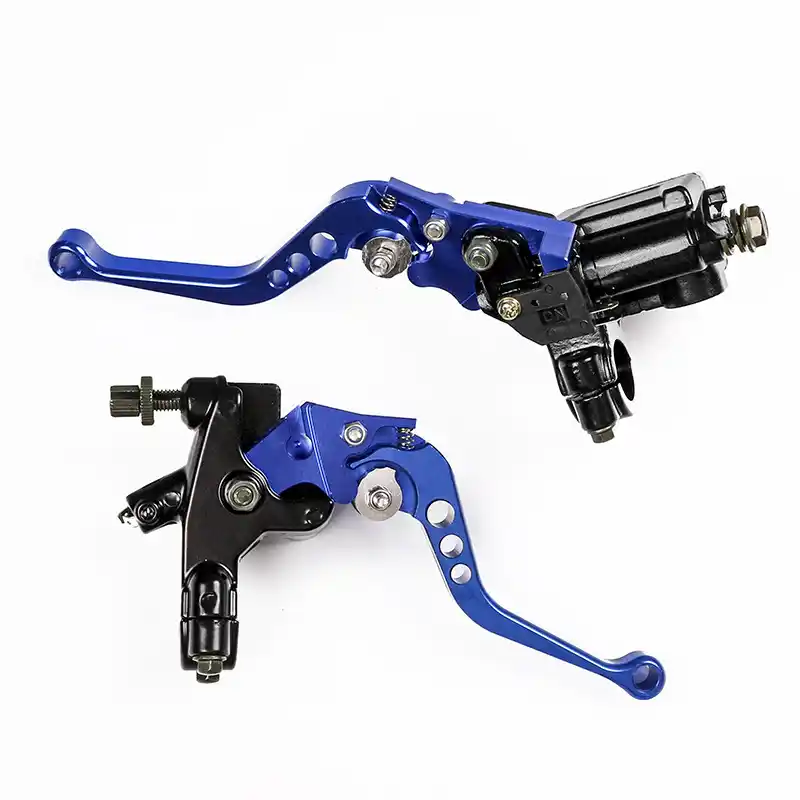
Take drive sprockets as a practical example. Precision-milled sprockets with minimal tooth profile error let the chain engage smoothly with every rotation. As a result, they cut down on drivetrain noise and wear while improving overall power transfer efficiency.
Beyond drivetrain parts, precision-machined piston-to-cylinder clearances also optimize combustion chamber sealing. This tighter seal reduces blow-by losses and increases both engine power output and fuel efficiency.
For high-performance builds, the precision fit of valves and camshafts also enables exact control over valve timing. This level of control keeps engine power output variance below 1%. By contrast, traditional casting methods simply cannot match this degree of accuracy.
4.2 Lightweight Design Raises the Handling Ceiling
Another major benefit of CNC machining is its ability to support smart, weight-optimized part designs. These targeted designs remove excess material from non-load-bearing areas while keeping reinforcing structures in high-stress zones. In the end, this approach creates an ideal balance between structural strength and overall weight.
- To start, a CNC-machined aluminum wheel of the same specification weighs over 30% less than a traditional cast wheel. This significant drop in unsprung weight improves acceleration, braking response, and cornering agility.
- In addition, titanium frame connectors and suspension components can reduce weight by 45% compared to steel equivalents. At the same time, they maintain higher structural strength and fatigue resistance for a substantially higher handling limit.
4.3 Flow Path Optimization Boosts High-Speed Aerodynamics
For speed-focused high-performance motorcycles, CNC machining also creates precision aerodynamic surfaces that deliver measurable real-world gains.
Take a custom exhaust system as one example. It uses precisely calibrated internal diameters and tapered flow paths to cut down on backpressure. This improved flow enhances exhaust scavenging and typically delivers a 3% to 5% increase in horsepower.
In addition, accurately machined curves on aerodynamic fairings and body panels reduce overall drag. On some custom builds, this adjustment lowers the drag coefficient by roughly 10%. In practical terms, this translates to a higher top speed and more stable handling at high speeds.
5. Custom Build Pathways and Design Directions
Customization stands as one of the biggest advantages of CNC machining for motorcycle builds. Nearly every detail, from performance parameters to visual styling, can be tailored to match the rider’s exact preferences. In turn, this flexibility makes it possible to create a truly one-of-a-kind motorcycle.
5.1 Three Core Directions for Customization
- Performance customization: This involves tuning powertrain, brake, and suspension parameters — for example, custom pistons to adjust compression ratio, or custom-ratio drive sprockets — to target specific performance improvements.
- Ergonomic customization: This covers custom handlebar height/angle and footpeg position/angle matched to the rider’s body type. In turn, this improves riding posture, reduces long-distance fatigue, and boosts control precision.
- Styling customization: This includes custom shapes and textures for body trim, engine covers, and fuel caps, plus exclusive engraved patterns to create a unique visual identity.
5.2 Standard Custom Implementation Workflow
The CNC customization process follows a closed digital loop that connects design directly to manufacturing. It moves through clear, sequential stages from initial concept to final part delivery.
First off, engineers build a 3D CAD model and run structural stress tests to verify performance. Once the customer approves the design, CAM software generates precise tool paths with matched cutting tools and optimized parameters.
After that, the machine finish-machines the part from the selected billet material, followed by full dimensional inspection and deburring. As the final step, technicians apply the chosen surface finish and perform fit checks before shipping.
Most importantly, this entire workflow needs no custom hard tooling. This means it supports fast turnaround for one-off and small-batch custom work. Even better, it keeps design revision costs very low, so builders can tweak designs at any time based on real-world test results.
6. Common Materials and Application Scenarios
When it comes to CNC motorcycle parts, material choice is the single biggest factor that determines both performance and cost. Different materials offer very different levels of strength, weight, corrosion resistance, and price point. For this reason, builders should always select materials based on the part’s specific functional role.
| Material Type | Key Advantages | Common Grades | Typical Applications |
|---|---|---|---|
| Aluminum Alloy | Low density, excellent machinability, good corrosion resistance, cost-effective, heat-treatable for higher strength | 6061-T6, 7075-T6 | Engine dress-up covers, wheels, foot pegs, handlebars, general cosmetic parts |
| Stainless Steel | High structural strength, excellent corrosion resistance, good impact resistance for high-stress use | 304, 316, 17-4PH | Brake system components, exhaust piping, high-stress brackets, fasteners |
| Titanium Alloy | Outstanding strength-to-weight ratio, far better corrosion resistance than stainless steel, excellent fatigue performance — the premium choice for high-end builds | TC4 (Ti-6Al-4V) | High-end exhaust systems, critical engine components, suspension links, lightweight fasteners |
| Carbon Fiber Composite | Extremely low density, specific strength far exceeding metals, distinct high-performance aesthetic | T700, T800 grade carbon | Body fairings, fenders, decorative covers, lightweight guards |
7. Surface Finishing Processes and Performance Benefits
Surface finishing is a critical post-processing step for every CNC motorcycle part. It boosts corrosion resistance, wear resistance, and visual appeal all at once. Below, we cover the three most widely used finishing processes.
7.1 Anodizing
For aluminum parts, anodizing is by far the most popular surface treatment. It uses an electrochemical reaction to form a dense, protective aluminum oxide layer on the part surface.
This treatment can triple the surface hardness of raw aluminum. In addition, it greatly improves scratch and abrasion resistance while enhancing corrosion protection for outdoor exposure to rain and road salt.
From a styling perspective, anodizing comes in both matte and gloss finishes with a wide range of color options. This combination of protection and customization makes it perfect for high-contact aluminum parts such as foot pegs, handlebars, and engine covers.
7.2 Polishing and Bead Blasting
These two processes create distinct surface finishes and offer separate functional benefits:
- Mirror polishing: Creates a reflective, mirror-like surface through multiple grinding stages. Besides improving visual appeal, it reduces fluid resistance inside exhaust passages and resists dirt buildup for easier cleaning.
- Bead blasting: Uses high-velocity glass or ceramic beads to produce a uniform matte finish. It also removes machining tool marks and improves surface adhesion for follow-up coating or anodizing steps.
7.3 Laser Engraving
Laser engraving serves as a functional add-on surface treatment. It etches permanent markings into the part surface using a focused, high-energy laser beam.
Common applications include brand logos, part numbers, custom graphics, and text. The markings are highly wear-resistant and completely permanent. Put simply, it lets builders add popular personalization to custom builds without reducing structural strength.
8. End-to-End Quality Control System
High precision and reliable performance make up the core value of CNC-machined parts. A strong quality control system is what turns these promises into consistent, real-world results. For professional CNC motorcycle part production, inspections happen in two core stages.
8.1 Precision Dimensional Inspection
Every finished part passes through a full dimensional tolerance verification step. For standard measurements, technicians use digital micrometers, calipers, and height gauges for quick, reliable checks.
For parts with complex cavities and tight geometric tolerances, a Coordinate Measuring Machine (CMM) runs a full 3D inspection. It works at micron-level accuracy to make sure every part matches design specs and delivers a consistent fit across all production runs.
When testing rotational parts, technicians also run additional checks for roundness, alignment, and dynamic balance. These checks prevent high-speed vibration that would otherwise hurt ride stability and safety.
8.2 Durability and Performance Validation
All critical load-bearing parts must also pass reliability testing that simulates real-world operating conditions:
- Load pressure testing: Replicates the maximum loads a part will face during riding to confirm structural strength and prevent catastrophic failure.
- Wear testing: Simulates thousands of miles of regular use to verify wear life and guarantee consistent long-term performance.
- Environmental aging testing: Uses salt spray and thermal cycling to validate the weather resistance of both the surface finish and base material.
9. Cost Structure and Selection Recommendations
Pricing for CNC motorcycle parts can vary significantly depending on the project. Three main factors determine the final cost of each component. Riders can balance performance gains and budget by understanding how these factors work together.
- Material cost: Raw material price forms the base of the total cost. Aluminum alloy offers the best overall value, followed by stainless steel. Titanium and carbon fiber carry the highest cost, typically 3–10 times that of aluminum.
- Design complexity: More complex geometries and tighter tolerances require additional operations and longer machining time. Parts with cutouts, multi-axis curves, and deep cavities carry notably higher machining difficulty and expense.
- Production volume: CNC machining has relatively high per-piece setup costs. Higher production volumes reduce unit cost substantially. One-off custom parts, by contrast, cost far more than volume-produced components.
As a general selection guide, follow these simple recommendations. For daily street riding and cosmetic upgrades, anodized aluminum parts offer the best balance of performance and value. When upgrading high-stress performance parts, opt for high-strength stainless steel or 7-series aluminum instead. For professional race bikes and high-end custom builds, meanwhile, titanium and carbon fiber components deliver the greatest weight savings and performance gains.
10. Key Advantages of CNC Parts Over Traditional Manufacturing
When stacked up against traditional casting and forging methods for motorcycle parts, CNC machining offers two irreplaceable advantages:
- Higher precision and greater design freedom: Traditional manufacturing processes are limited by fixed tooling constraints. They struggle with complex geometries and tight fits, and they drive up costs for small-batch customization. CNC machining, by contrast, needs no custom tooling, handles almost any complex shape, achieves far tighter accuracy, and delivers unmatched custom flexibility.
- Better performance and higher reliability: CNC parts are machined from a single solid block of material. They have none of the internal porosity or shrinkage defects common to cast parts. This uniform internal structure delivers much higher fatigue strength and structural reliability than cast components. In many applications, it also outperforms standard forged parts.
Frequently Asked Questions
Which motorcycle parts benefit from CNC machining?
Core engine parts, brake and drivetrain components, control parts, chassis parts, and custom cosmetic pieces all work well with CNC machining. Most importantly, the technology delivers the greatest value for performance-critical components with strict fit requirements, as well as for personalized custom aftermarket parts.
What is the standard production workflow for CNC motorcycle parts?
The standard production workflow follows five clear, sequential steps. First, 3D CAD modeling and structural stress testing. Second, CAM programming to generate tool paths and set cutting parameters. Third, CNC machining from the chosen billet material. Fourth, full dimensional inspection and deburring after machining. Finally, surface finishing and a final quality check before delivery.
Why do custom CNC motorcycle parts cost more?
Three main factors account for the higher price of custom CNC parts. First, custom work is usually produced in single units or very small batches, so economies of scale cannot bring down per-unit machining and design costs. Second, every custom project requires dedicated design, programming, and process development work. Third, high-end builds often use premium materials such as titanium and carbon fiber. Strict quality inspection procedures also add to the final cost.
Do CNC-machined motorcycle parts require regular inspection?
Yes, regular inspection is highly recommended — especially for high-stress parts in the brake, engine, and suspension systems. As a baseline, performing a general inspection every 800 to 1600 kilometers is a good rule of thumb. Riders should look for loose fasteners, cracks, abnormal wear, or signs of corrosion. After aggressive riding or track days, inspections should happen more frequently. Most importantly, regular checks catch potential issues early, improve riding safety, and extend the service life of CNC components.
What are the most common materials for CNC motorcycle parts?
Aluminum alloys like 6061-T6 and 7075-T6 see the widest use thanks to their light weight and excellent cost-performance ratio. 304 and 316 stainless steel work well for high-stress and corrosion-prone applications. For high-end builds, TC4 titanium alloy delivers the ultimate strength-to-weight ratio. Body panels and fairings typically use carbon fiber composites for maximum weight savings. Ultimately, the best material choice depends on the component’s load requirements, operating environment, and available budget.
Conclusion
All in all, CNC machining unlocks unprecedented possibilities for motorcycle performance upgrades and personalized customization. It delivers measurable improvements in power, handling, and long-term reliability. Even more importantly, it gives riders full creative control over the look and performance of their bikes. For these reasons, it remains a foundational technology in modern motorcycle modification and custom manufacturing.
PartsMastery is home to a professional multi-axis CNC machining team backed by a complete surface treatment supply chain. We offer full end-to-end services, from initial design modeling and precision machining to final surface finishing and quality inspection.
Whether you need one-off custom aftermarket parts or volume-produced OEM components, we deliver high-performance, high-quality CNC motorcycle parts. We uphold strict tolerance control and consistent, reliable quality standards for every single order.