




OEM China Dies
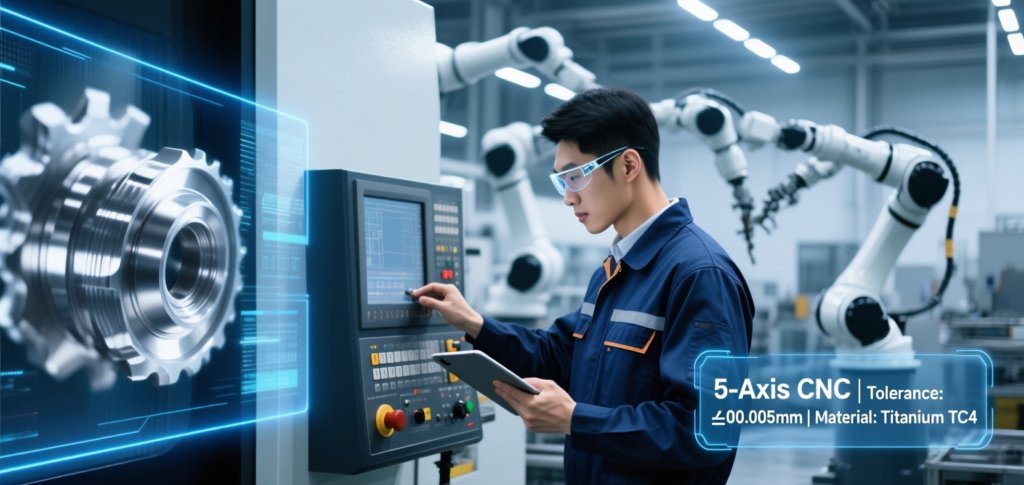
Original Equipment Manufacturing (OEM) represents the highest level of integration between a buyer and a supplier. When it comes to OEM China dies, the relationship goes far beyond simple tooling procurement. An OEM die partner takes ownership of the entire die development process—from design engineering and material selection to manufacturing, tryout, and often ongoing maintenance. For global brands seeking to scale production without building their own tooling departments, Chinese OEM die suppliers offer a compelling combination of technical capability, cost efficiency, and production flexibility.
What Defines An OEM Die Partnership
An OEM die arrangement is distinctly different from buying standard dies or even customized tools through a transactional sale. In an OEM model, the Chinese supplier acts as an extension of the buyer’s engineering and manufacturing team. The supplier receives part specifications, performance requirements, and quality targets, then assumes responsibility for delivering production-ready dies that meet those targets consistently over the tool’s lifetime.
This partnership typically includes:
-
Joint design reviews where the supplier’s engineers provide DFM (Design for Manufacturability) feedback to optimize part geometry for stamping or casting.
-
Prototyping and sampling before mass tooling production begins.
-
First-article inspection with full dimensional reporting.
-
Controlled production runs to validate die performance.
-
Documentation packages including material certificates, heat treatment logs, and tryout videos.
-
Post-delivery support such as spare parts lists, maintenance guides, and troubleshooting assistance.
For buyers, this model reduces internal workload, shortens time-to-market, and transfers technical risk to a specialized partner.
Engineering Capabilities Of Chinese OEM Die Suppliers
OEM China dies factories have matured significantly over the past two decades. Many now operate in-house engineering departments staffed by tooling engineers with decades of experience. These teams use advanced CAD/CAE software—including SolidWorks, UG/NX, AutoForm, and Moldflow—to design dies that optimize material flow, minimize stress concentrations, and maximize die life.
What distinguishes an OEM-capable supplier from a generalist die shop is the depth of process knowledge. An OEM partner understands how die design interacts with downstream operations such as heat treatment, surface coating, and press setup. They recommend appropriate steel grades (D2, SKD11, H13, DC53, etc.) based on production volume and material being formed. They design cooling channels or lubrication grooves specifically for the customer’s cycle time targets. And they build in sensors or scrap cutters that automate quality checks.
Many Chinese OEM die suppliers also offer concurrent engineering. While the buyer is still finalizing a part design, the die supplier begins preliminary tooling layout and simulation. This parallel workflow can shave weeks off the overall project timeline.
Quality Systems And Certifications
For OEM partnerships, quality cannot be an afterthought. Leading OEM China dies factories maintain ISO 9001:2015 as a baseline. For automotive components, IATF 16949 is mandatory, ensuring rigorous process control, failure mode and effects analysis (FMEA), and production part approval process (PPAP) documentation. Some suppliers also hold ISO 14001 (environmental management) or ISO 45001 (occupational health and safety).
OEM buyers should expect full traceability. Each die should be stamped with a unique serial number, and the supplier should retain records of every manufacturing step—from raw material lot numbers to final inspection results. CMM (coordinate measuring machine) reports should be provided for all critical dimensions, with Cpk values demonstrating process capability (typically ≥1.33).
Trial runs are another hallmark of a serious OEM partner. Before shipping, the supplier mounts each die on a tryout press, runs actual customer material (or an agreed substitute), and produces sample parts. Those samples are measured, photographed, and often shipped to the buyer for approval. Some suppliers offer live video streaming of tryouts or recorded videos as proof of performance.
Cost Structure Of OEM Die Projects
OEM die projects involve more upfront investment than off-the-shelf purchases. The pricing typically breaks down into:
-
Design and engineering fees: Simulation, DFM reports, and detailed drawings.
-
Material costs: Tool steel, carbide inserts, guide components, and hardware.
-
Machining and fabrication: CNC milling, wire EDM, turning, grinding.
-
Heat treatment and surface finishing: Vacuum hardening, nitriding, PVD coating.
-
Assembly and tryout: Fitting die components, press trial, sample production.
-
Quality inspection and documentation: CMM measurement, report generation, first-article submission.
-
Packaging and export crating: Rust protection, wooden crates, ocean-freight ready packing.
Despite these line items, OEM China dies typically cost 25-40% less than equivalent tooling from Europe or North America, due to lower labor rates, efficient supply chains, and high factory utilization. Moreover, the OEM model reduces hidden costs such as internal design time, trial-and-error modifications, and production delays caused by poorly performing tools.
Selecting An OEM Die Supplier In China
Choosing the right partner among OEM China dies factories requires due diligence. Begin by assessing the supplier’s portfolio. Have they built dies for your industry? For similar part materials (aluminum, steel, zinc, magnesium)? For comparable press sizes and production volumes? Ask for case studies that include initial specifications, simulation results, tryout reports, and post-delivery performance data.
Next, evaluate communication and project management. An OEM partnership involves weeks or months of collaboration. The supplier should assign a dedicated project manager who speaks fluent English (or your preferred language) and provides regular updates. They should be responsive to design change requests and transparent about any challenges.
Finally, consider logistics and after-sales support. Dies are heavy, high-value assets. The supplier should have experience crating and shipping to your country, including handling customs documentation. Many OEM partners also maintain a stock of spare wear parts (punches, bushings, springs) that can be shipped quickly to minimize downtime.
Conclusion
OEM China dies represent a mature, reliable sourcing option for companies that require production-grade tooling without building in-house die-making capacity. By partnering with a capable OEM supplier, buyers gain access to advanced engineering, robust quality systems, and competitive pricing. The key to success lies in clear specifications, thorough vetting, and a collaborative relationship built on trust and technical transparency.
PartsMastery – Your Trusted Die Casting and Stamping Mold Partner
Contact: +86 13530838604 (WeChat)