







Custom Plastic Injection Molding Manufacturer – Tailored Solutions for Unique Product Requirements
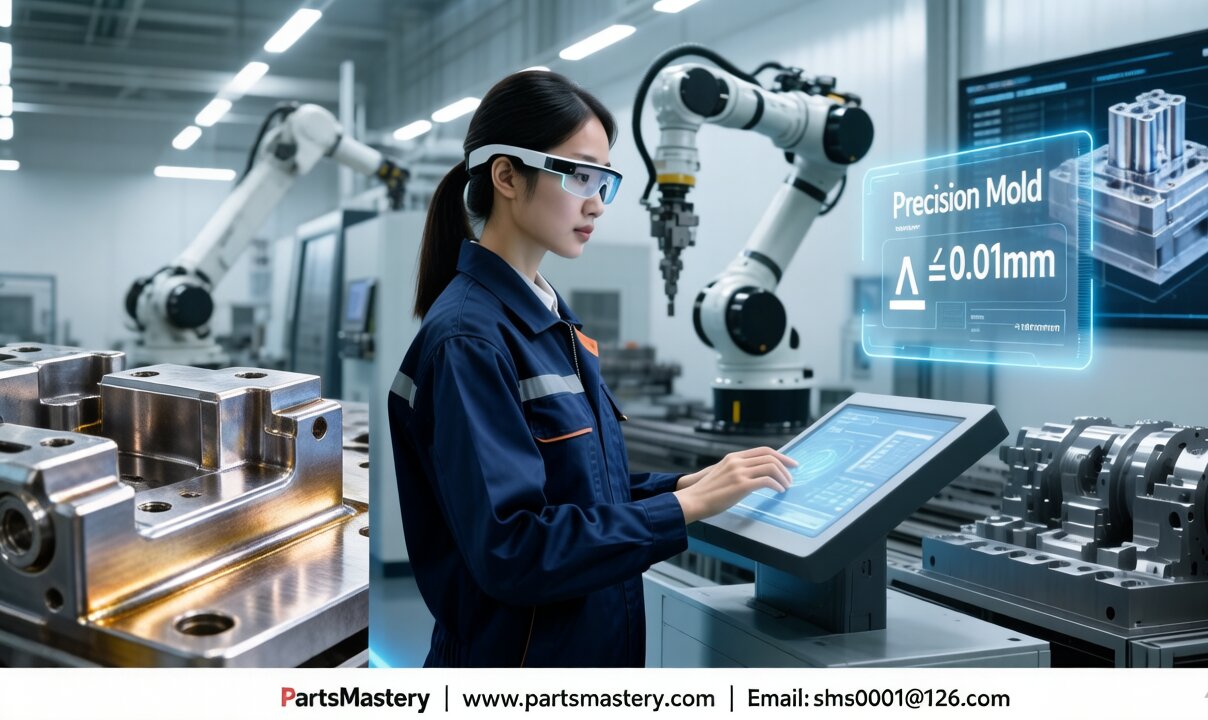
Off-the-shelf plastic components rarely fit the precise dimensions, material properties, or performance criteria of a new product. When standard parts fail to meet engineering specifications, the only practical solution is a custom-engineered approach. A qualified custom plastic injection molding manufacturer does not simply produce parts from existing tooling; they collaborate with clients to design molds, select resins, and optimize processes for a specific application.
Au PartsMastery, we have built our reputation on solving complex molding challenges that off-the-shelf suppliers cannot address. This article explores the technical depth required for true custom molding, from initial concept validation through full production scaling.
What Defines Custom Plastic Injection Molding?
Unlike catalog part suppliers who produce standardized components, a custom plastic injection molding manufacturer creates unique tools and processes for each customer’s geometry. Every aspect of production is tailored:
-
Mold geometry: Designed specifically for your CAD model, including cores, cavities, slides, and lifters as needed.
-
Gate location and runner system: Determined by your part’s functional areas and cosmetic requirements.
-
Ejection method: Pin, sleeve, or stripper plate based on part geometry and release characteristics.
-
Material formulation: Base resin plus additives (glass fiber, UV stabilizers, flame retardants, colorants) mixed to your exact specification.
This level of customization requires deep engineering involvement. At PartsMastery, we assign a dedicated project engineer to every custom molding project, from DFM through production validation.
The Custom Molding Workflow: From Concept to Mass Production
A professional custom plastic injection molding manufacturer follows a disciplined, multi-stage process. Cutting corners at any stage leads to defective parts, mold damage, or schedule overruns.
Stage 1: Design for Manufacturability (DFM) Review
Before any metal is cut, our engineers at PartsMastery analyze your 3D model against the fundamental rules of injection molding. We look for:
-
Variations de l'épaisseur des parois : Sudden changes cause sink marks and internal stress.
-
Sharp internal corners: These act as stress concentrators and impede material flow.
-
Inadequate draft: Surfaces parallel to mold opening direction must have 0.5 to 2 degrees of taper.
-
Sous-coupes : Features that prevent straight ejection require side-actions or bump-offs.
We provide a written DFM report with specific recommendations. Many customers revise their designs based on this feedback, saving tens of thousands of dollars in mold modifications later.
Stage 2: Material Selection and Verification
Custom molding allows precise material tailoring. For a medical device housing, you might specify clear polycarbonate (PC) with a specific melt flow index for thin-wall filling. For an under-hood automotive component, you might need 30% glass-filled nylon (PA66) with heat stabilization to 150°C.
PartsMastery maintains relationships with major resin suppliers including Sabic, BASF, DuPont, and Celanese. We provide material certificates and, when required, perform verification testing including melt flow rate (MFR), tensile strength, and heat deflection temperature (HDT).
Stage 3: Custom Mold Design and Tooling Construction
The mold is the most expensive single investment in a custom injection molding project. For production runs exceeding 100,000 parts, we specify hardened tool steels such as H13 or S136. For lower volumes or prototyping, pre-hardened P20 offers cost savings.
Our in-house toolroom includes high-speed CNC machining centers, sinker and wire EDM, and surface grinding with precision to 0.002mm. We also offer conformal cooling channels for complex geometries, reducing cycle times by 20 to 35 percent compared to conventional straight-drilled cooling.
Stage 4: Process Development and Mold Trials
Once the mold is complete, we install it in an injection molding machine matched to the required clamp tonnage (typically 50 to 800 tons at PartsMastery). Our process engineers establish a scientific molding recipe including:
-
Barrel temperatures (zoned from feed throat to nozzle).
-
Injection pressure and velocity profile (often multi-stage).
-
Packing pressure and time.
-
Cooling time and coolant temperature.
-
Back pressure and screw speed.
The first trial produces sample parts, which are measured against your print using CMM and optical comparators. Adjustments are documented, and the mold may return to the toolroom for minor modifications such as vent deepening or ejector pin repositioning.
Why Standard Molds Cannot Satisfy Custom Requirements
Some suppliers offer “semi-custom” parts, modifying existing generic molds by blocking off cavities or adding simple inserts. This approach has severe limitations:
-
Fixed gate locations may not optimize flow for your geometry.
-
Cooling channels designed for a different part may leave hot spots.
-
Ejector layout might mark critical functional surfaces.
-
Material history from previous runs can contaminate sensitive resins.
A true custom plastic injection molding manufacturer builds a mold exclusively for your part. No compromises. No legacy constraints. PartsMastery does not resell used or modified tools. Every mold we ship is purpose-built.
Quality Systems for Custom Molding Projects
Custom parts often serve critical functions: fluid handling, structural support, electrical insulation, or optical transmission. Quality cannot be an afterthought. PartsMastery operates under ISO 9001:2015 with documented procedures covering:
-
Incoming material inspection: Certificates of analysis for every resin lot.
-
In-process monitoring: Real-time data logging of injection pressure, melt temperature, and cycle consistency.
-
Dimensional inspection: First article, in-process, and final sampling per ANSI/ASQ Z1.4.
-
Functional testing: As specified by customer, including pressure decay, force deflection, or conductivity.
We provide a full documentation package with each custom molding order: material certifications, dimensional reports, process parameter sheets, and sample parts.
Case Study: Custom Enclosure for Industrial IoT Sensor
A client developing a wireless vibration sensor for industrial machinery needed a weatherproof enclosure (IP67 rating) with integrated boss geometry for a threaded metal insert and a clear window for LED indication. Three standard enclosure suppliers declined due to the complex undercut for the window seal groove.
PartsMastery designed a custom three-plate mold with collapsible core technology to release the undercut. We specified UV-stabilized ASA (acrylonitrile styrene acrylate) for outdoor durability and molded-in TPE gasket for sealing. After four mold trials with iterative vent adjustments, the mold achieved 99.3% first-pass yield. The customer launched their product on schedule and has ordered over 300,000 units to date.
Cost Considerations for Custom Tooling
Custom molds require higher upfront investment than catalog parts. However, the total cost of ownership often favors custom molding when considering:
-
Assembly reduction: Custom features (snap fits, living hinges, self-tapping bosses) eliminate secondary operations.
-
Material savings: Thin-wall custom designs use less resin per part.
-
Longer tool life: Properly specified steel lasts for millions of cycles.
-
Brand differentiation: Unique geometry cannot be copied by competitors buying the same catalog parts.
PartsMastery offers flexible tooling options including aluminum molds for pilot runs (under 10,000 parts) transitioning to hardened steel for high-volume production. We also provide bridge tooling to meet launch dates while production molds are completed.
Global Support for Custom Molding Projects
Sourcing custom molds from a custom plastic injection molding manufacturer requires clear communication. PartsMastery provides:
-
English-speaking project managers available during US and European business hours.
-
Weekly photo and video updates showing mold machining and assembly progress.
-
Digital mold book including 2D drawings, 3D models, spare parts list, and maintenance schedule.
-
Remote troubleshooting via video call for production issues.
We ship molds via air or sea freight with full export documentation. For customers who prefer turnkey parts production, we can also supply finished components directly from our facility.
Start Your Custom Molding Project Today
Whether you need a single prototype cavity or a high-volume eight-cavity production mold, PartsMastery delivers engineering excellence and manufacturing reliability. Send your CAD file, material specification, and annual quantity estimate. Our team will respond within 24 hours with DFM feedback and a firm quotation.
PartsMastery
Custom injection molding – engineered for your exact specifications
Phone / WeChat: +86 13530838604
Your geometry. Your material. Your production partner.