






Dans la fabrication mécanique de précision, la précision d’usinage des alésages internes détermine directement la qualité de l’assemblage des composants et la durée de vie des équipements. Les processus de perçage et d’alésage ne suffisent souvent pas à eux seuls à répondre aux exigences d’un usinage d’alésages internes à haute tolérance. C'est alors que les alésoirs deviennent les outils de finition essentiels pour améliorer la qualité des alésages. En effectuant une micro-coupe et un façonnage sur des alésages pré-percés, ils permettent d'améliorer considérablement la précision du diamètre, la circularité et la régularité de la paroi interne des alésages, et constituent un processus incontournable dans l'usinage des ajustements de roulements, des alésages de goupilles de positionnement et des connecteurs de précision.
1. Positionnement des alésoirs : quelle est la différence entre le perçage, l'alésage et l'alésage fin ?
De nombreux débutants en usinage ont tendance à confondre les fonctions du perçage, de l'alésage et du alésage de précision. Ces trois opérations constituent des étapes successives du processus d'usinage des alésages, et leur rôle est totalement différent :
- Forage: Permet de réaliser un alésage de base à partir de zéro, avec un enlèvement de matière important, une précision d'usinage minimale et une paroi intérieure rugueuse. Il s'agit de la première étape de tout usinage d'alésage.
- Ennuyeux: Utilisé pour agrandir le diamètre du trou et corriger les écarts de position, ainsi que pour remédier aux défauts d'alignement et aux erreurs de cotes résultant du perçage. Il offre une précision d'usinage moyenne et constitue une étape de transition entre l'ébauche et la finition.
- Alésage: Opération de finition finale, qui ne consiste qu'à retirer une très fine couche de métal sur le bord. Elle a pour principal objectif d'améliorer la précision dimensionnelle, de réduire la rugosité de surface et de garantir la circularité et la cylindricité du trou.
Les principales différences entre ces trois éléments sont présentées dans le tableau ci-dessous :
| Procédé d'usinage | Fonction principale | Enlèvement de matière | Précision et finition | Scénarios types |
|---|---|---|---|---|
| Forage | Créer des trous de base originaux | Grand | Faible précision, paroi interne rugueuse | Première étape de l'usinage de tous les trous |
| Ennuyeux | Agrandir l'ouverture, corriger l'écart de position du trou | Moyen | Précision moyenne, meilleure coaxialité que le perçage | Correction d'ouverture, ébauche de trous de grand diamètre |
| Alésage | Réaliser la finition des trous pré-percés selon la précision finale requise | Très petit | Précision maximale, finition de surface optimale | Finition finale des alésages de précision |
2. Présentation détaillée des 8 principaux types d'alésoirs
En fonction de leurs différences de structure, d'application, de matériau et de conception, les alésoirs couramment utilisés dans les processus industriels peuvent être classés en 8 catégories, chacune correspondant à des cas d'utilisation spécifiques :
2.1 Alésoir à main


Un alésoir à main est un outil manuel actionné à l'aide d'une clé d'alésoir. Sa principale caractéristique technique réside dans son cône de guidage plus long, qui permet une mise en coupe plus en douceur et un meilleur contrôle pendant l'utilisation. Il est adapté à la maintenance sur site, au réglage lors du montage et à la correction des alésages de pièces non standard produites en petites séries.
Cette technique ne nécessite pas de machine-outil et offre une flexibilité extrêmement élevée ; elle peut être mise en œuvre sur site, là où les équipements ne peuvent pas accéder. Cependant, son rendement est relativement faible et la qualité de l'usinage dépend fortement du niveau technique de l'opérateur ; elle n'est donc pas adaptée aux chaînes de production de masse à grande échelle.
2.2 Alésoir mécanique
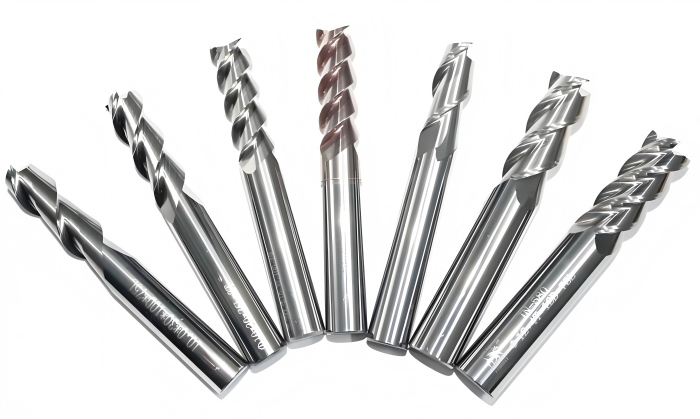
Les alésoirs mécaniques sont des outils destinés à la production en série, adaptés aux équipements à commande numérique (CNC) tels que les perceuses, les tours et les centres d'usinage. Ils se caractérisent par des sections de guidage plus courtes et une rigidité globale accrue, et permettent d'effectuer un usinage automatique en continu selon des paramètres de vitesse et d'avance fixes.
Leur principal atout réside dans une grande régularité d'usinage, avec une erreur d'ouverture minimale pour les pièces en série et une qualité de surface stable. Il s'agit du type d'alésoir le plus couramment utilisé pour les lignes de production automatisées et la production en série de pièces de précision. En fonction des méthodes de serrage, ils peuvent également être classés en deux catégories : à queue droite et à queue conique, s'adaptant ainsi à différents types de broches de machines-outils.
2.3 Alésoir réglable
Le diamètre effectif d'un alésoir réglable peut être ajusté avec précision dans une certaine plage, ce qui résout parfaitement le problème posé par les alésoirs à taille fixe, qui ne peuvent pas s'adapter à des ouvertures non standard. Lorsque l'outil est légèrement usé ou que l'ouverture de la pièce à usiner nécessite une correction mineure, il n'est pas nécessaire de le remplacer par un outil neuf : il suffit d'ajuster sa taille pour continuer à l'utiliser.
Ce type d'outil permet de réduire efficacement le stock d'outils d'un atelier et est particulièrement adapté aux ateliers de maintenance ainsi qu'aux situations d'usinage de petites séries à grande variété de pièces. Cependant, sa structure réglable sacrifie une partie de la rigidité, et sa précision d'usinage est légèrement inférieure à celle des alésoirs fixes monoblocs ; il n'est donc pas adapté à la production en série nécessitant une précision ultra-élevée.
2.4 Alésoir à rainure droite

L'alésoir à cannelures droites est l'alésoir de base, caractérisé par sa structure la plus simple et sa plus grande polyvalence. Ses arêtes de coupe sont disposées en ligne droite, ce qui facilite sa fabrication et permet de maîtriser son coût ; il s'agit d'un alésoir polyvalent couramment utilisé dans les ateliers.
Elle est adaptée à l'usinage de trous traversants et de matériaux permettant une rupture aisée des copeaux, tels que la fonte et l'acier au carbone ordinaire, avec une évacuation fluide des copeaux et un état de coupe stable. Cependant, dans l'usinage de trous borgnes et de matières plastiques, où l'on observe souvent des copeaux longs et frisés, la capacité d'évacuation des copeaux des rainures droites s'avère insuffisante, ce qui peut facilement rayer la paroi du trou et nuire à la qualité finale de la surface.
2.5 Alésoir à cannelures hélicoïdales

Les arêtes de coupe de l'alésoir à goujure hélicoïdale sont torsadées en spirale, ce qui lui confère deux avantages majeurs : une grande capacité d'évacuation des copeaux et une coupe plus régulière. La structure en spirale permet de guider les copeaux vers une direction précise le long de la goujure, évitant ainsi leur accumulation dans le trou et les rayures sur la paroi intérieure. C'est l'outil de prédilection pour l'usinage des trous borgnes et des trous profonds.
Parallèlement, l'arête de coupe en spirale pénètre progressivement dans la pièce à usiner, avec un faible impact de coupe, ce qui permet de réduire efficacement les vibrations d'usinage et d'améliorer l'état de surface. Lors de l'usinage de matériaux susceptibles de produire de longs copeaux, tels que l'acier inoxydable et les alliages d'aluminium, les résultats sont bien supérieurs à ceux obtenus avec des alésoirs à goujures droites. En fonction du sens de rotation, ils se divisent en deux types : à gauche et à droite, s'adaptant ainsi aux différentes exigences en matière de sens d'évacuation des copeaux.
2.6 Alésoir conique
Contrairement aux alésoirs classiques destinés à l'usinage de trous cylindriques, les alésoirs coniques sont spécialement conçus pour l'usinage de trous intérieurs coniques. Le corps de l'outil est conique dans son ensemble le long de l'axe et permet d'usiner des trous intérieurs conformes aux cônes normalisés.
Ils sont principalement utilisés dans des applications telles que le positionnement de goupilles coniques, l'assemblage de joints coniques et l'usinage de trous coniques dans des matrices, où la précision conique doit répondre à des exigences extrêmement élevées. La moindre erreur empêchera les pièces d'emboîtement de s'ajuster correctement. Les cônes standard courants comprennent le rapport 1:50, le cône Morse, etc., et des cônes non standard peuvent également être personnalisés en fonction des exigences d'usinage.
2.7 Alésoir à coque
Les alésoirs à coque sont dotés d'une structure en deux parties, la partie coupante (manchon de coupe) et la tige de l'outil étant indépendantes l'une de l'autre ; ils sont principalement utilisés pour la finition de trous de grand diamètre.
Les alésoirs monoblocs de grande taille entraînent non seulement des coûts de fabrication élevés, mais génèrent également d’importants déchets lorsqu’ils doivent être entièrement mis au rebut en raison de l’usure. Dans le cas des alésoirs à manchon, seul le manchon de coupe usé doit être remplacé, tandis que la tige de l’outil peut être réutilisée, ce qui réduit considérablement le coût des outils pour l’usinage de grandes ouvertures. Par ailleurs, leur structure en deux parties facilite leur transport et leur stockage, ce qui explique leur utilisation répandue dans l'usinage de grandes ouvertures sur les machines lourdes et les équipements de grande taille.
2.8 Alésoir en carbure

Les alésoirs en carbure sont des outils hautement performants. Le corps de l'outil est doté d'arêtes de coupe en carbure monobloc ou en carbure soudé, dont la dureté est bien supérieure à celle des alésoirs traditionnels en acier rapide, et qui offrent une résistance exceptionnelle à l'usure et aux températures élevées.
Leur durée de vie est plusieurs fois supérieure à celle des alésoirs en acier rapide. Lors de l'usinage en série d'aciers à très haute dureté et de matériaux abrasifs, ils permettent de conserver longtemps des arêtes de coupe tranchantes et une grande précision dimensionnelle, de réduire les temps de changement d'outil et d'améliorer l'efficacité de l'usinage. Cependant, le carbure est relativement cassant et présente une faible résistance aux chocs, ce qui impose des exigences plus élevées en matière de rigidité de la machine-outil, de précision de serrage et de paramètres de coupe. Il convient aux scénarios d’usinage automatisés dans des conditions de travail stables, mais ne convient pas aux conditions de travail soumises à des chocs importants et à une coupe intermittente.
3. 5 Dimensions de classification des alésoirs
Outre les 8 catégories mentionnées ci-dessus, classées selon leur fonction et leur structure, le secteur classe généralement les alésoirs selon les 5 critères suivants afin d'aider les transformateurs à sélectionner rapidement les outils adaptés :
- Par mode d'utilisation: Alésoir à main, alésoir mécanique
- Par structure de la flûte: Alésoir à goujure droite, alésoir à goujure hélicoïdale
- Par type de trou usiné: Alésoir pour alésages cylindriques, alésoir conique
- Par type de structure: alésoir monobloc, alésoir à coque, alésoir réglable
- Par matériau de l'outil: Alésoir en acier rapide, alésoir en carbure, alésoir revêtu
4. Quatre points essentiels pour le choix d'un alésoir
Le choix d'un alésoir adapté permet non seulement d'améliorer la qualité d'usinage, mais aussi de réduire les coûts liés aux outils et d'optimiser l'efficacité de la production. Lors de votre sélection, concentrez-vous sur les quatre critères essentiels suivants :
4.1 Préciser les exigences relatives au type de trou et aux tolérances
Commencez par déterminer s'il s'agit d'un trou traversant ou d'un trou borgne, d'un trou cylindrique ou d'un trou conique, et précisez en même temps le niveau de tolérance. Pour les trous traversants ordinaires, un alésoir à goujures droites suffit ; pour les trous borgnes et les trous profonds, les alésoirs à goujures hélicoïdales sont préférables ; pour les trous coniques, il faut choisir des alésoirs coniques spéciaux présentant la conicité correspondante. Plus les exigences de tolérance sont élevées, plus il convient de choisir des alésoirs monoblocs en carbure rigides et de haute précision.
Par ailleurs, il convient de noter que les alésoirs ne servent qu’à la micro-finition et ne permettent pas de corriger les erreurs dimensionnelles importantes. La précision des trous pré-percés doit être maintenue dans une fourchette raisonnable, et une marge d’alésage appropriée doit être prévue.
4.2 Adapter les caractéristiques du matériau de la pièce à usiner
Les performances de coupe varient considérablement d'un matériau à l'autre, ce qui détermine directement le choix du matériau de l'alésoir et du type de goujure :
- Matériaux faciles à usiner, tels que l'acier au carbone ordinaire et la fonte : les alésoirs à cannelure droite en acier rapide répondent à ces besoins tout en offrant le meilleur rapport qualité-prix.
- Matériaux difficiles à usiner, tels que l'acier inoxydable et les superalliages : privilégiez les alésoirs hélicoïdaux en carbure dotés de revêtements adaptés afin d'améliorer la durée de vie de l'outil.
- Matériaux tendres tels que les alliages d'aluminium et de cuivre : optez pour des alésoirs à cannelures hélicoïdales très tranchants afin d'éviter le grippage des parois du trou provoqué par l'adhérence de l'outil.
4.3 Choisir le type de rainure en fonction des exigences en matière d'évacuation des copeaux
L'évacuation des copeaux constitue l'une des principales difficultés rencontrées lors de l'alésage. L'accumulation de copeaux rayera directement la paroi du trou et entraînera un dépassement des tolérances de l'ouverture.
- Pour les trous traversants et les matériaux à copeaux courts : optez pour des alésoirs à goujures droites, de conception simple et peu coûteux.
- Trous borgnes, trous profonds et matériaux produisant de longs copeaux : optez pour des alésoirs à goujures hélicoïdales et tirez parti de leur structure en spirale pour faciliter l'évacuation des copeaux.
- Pour les conditions de travail particulières, il est également possible de choisir des alésoirs à rotation à gauche ou à droite afin de s'adapter aux différentes directions d'évacuation des copeaux.
4.4 Sélection du matériau de l'outil en fonction du mode de production
- Usinage en petites séries, débogage de maintenance, conditions de travail instables : optez pour des alésoirs en acier rapide, qui offrent une bonne ténacité, une bonne résistance aux chocs, une tolérance élevée aux défauts et des coûts d'acquisition réduits.
- Production en série, usinage en continu, matériaux à haute dureté : optez pour les alésoirs en carbure. Bien que leur prix unitaire soit élevé, ils offrent une longue durée de vie, réduisent la fréquence des changements d'outils, permettent de diminuer les coûts globaux d'usinage et garantissent une meilleure stabilité dimensionnelle.
5. Foire aux questions
5.1 Les alésoirs manuels et les alésoirs mécaniques peuvent-ils être utilisés de manière interchangeable ?
Non. Les alésoirs à main sont dotés de longs cônes de guidage et présentent une faible rigidité. Ils se cassent facilement et laissent des traces de vibrations lorsqu’ils sont utilisés sur des machines ; ils ne permettent donc pas de garantir la précision d’usinage. Les alésoirs de machine sont dotés de cônes de guidage courts ; il est donc difficile d’aligner la position du trou lorsqu’ils sont utilisés manuellement, ce qui peut facilement entraîner une coupe oblique et rayer la paroi du trou. Ces deux types d’alésoirs ont des conceptions et des positionnements totalement différents et doivent être choisis en fonction du scénario d’utilisation.
5.2 Quelle est la marge d'alésage appropriée ?
La marge de alésage doit être déterminée en fonction de la taille de l'ouverture, de la dureté du matériau et de la précision de l'alésoir. Le principe général est le suivant : “ mieux vaut une marge trop petite que trop grande ”. Une surépaisseur excessive entraînera une force de coupe trop importante, une usure accélérée de l'alésoir, un alésage hors tolérance et une rugosité de surface accrue. Si la surépaisseur est trop faible, les marques laissées par l'outil lors du pré-perçage ne pourront pas être corrigées et le résultat de finition souhaité ne pourra pas être obtenu.
De manière générale, pour les pièces en acier dont l'ouverture est inférieure à 10 mm, la marge unilatérale est comprise entre 0,05 et 0,1 mm ; pour les ouvertures comprises entre 10 et 30 mm, la marge unilatérale est comprise entre 0,1 et 0,15 mm. Pour les pièces en fonte, cette tolérance peut être augmentée de manière appropriée, tandis que pour les métaux non ferreux tendres, elle doit être réduite de manière appropriée.
5.3 Les alésoirs en carbure sont-ils nécessairement meilleurs que ceux en acier rapide ?
Pas nécessairement. L'avantage du carbure réside dans sa grande dureté et sa résistance à l'usure, mais il est fragile et impose des exigences élevées en matière de conditions d'usinage. Dans des conditions de coupe intermittente, lorsque la rigidité de la machine-outil est insuffisante et que le serrage est instable, les alésoirs en carbure sont sujets à l'ébréchage et s'avèrent moins durables que les alésoirs en acier rapide. Ce n'est que dans des conditions de travail stables et lors d'opérations d'usinage en continu que les avantages du carbure peuvent être pleinement exploités.
Conclusion
Bien que l'alésage soit la dernière étape du processus d'usinage d'un alésage, il détermine directement la qualité finale de celui-ci. Différents types d'alésoirs s'adaptent à différents scénarios d'usinage. Il n'existe pas de “ modèle universel ” absolu, mais seulement le choix le plus adapté.
La maîtrise des caractéristiques des différents types d'alésoirs, de la logique de classification et des méthodes de sélection, ainsi qu'une adaptation judicieuse des outils aux exigences de la pièce, aux caractéristiques du matériau et aux modes de production, permettent d'optimiser l'efficacité de l'usinage et de réduire les coûts liés aux outils, tout en garantissant la précision de l'usinage.