



In der Präzisionsfertigung dient die Oberflächenbehandlung nicht nur der optischen Aufwertung – sie bestimmt unmittelbar die Lebensdauer, die Witterungsbeständigkeit und die Funktionsfähigkeit eines Bauteils. Unter allen verfügbaren Veredelungsverfahren für Nichteisenmetalle sticht das Eloxieren als eine der vielseitigsten und am weitesten verbreiteten Lösungen hervor, insbesondere für Aluminiumkomponenten.
Im Gegensatz zu aufgebrachten Beschichtungen, die auf dem Substrat aufliegen, bildet sich beim Eloxieren eine schützende Oxidschicht, die direkt aus dem Grundmetall selbst herauswächst. Dieser einzigartige Mechanismus sorgt für außergewöhnliche Haltbarkeit sowie für in hohem Maße anpassbare ästhetische Eigenschaften. Dieser Leitfaden erläutert den gesamten Arbeitsablauf beim Eloxieren, die wichtigsten Verfahrensarten, die Materialverträglichkeit, gestalterische Überlegungen sowie Anwendungsbeispiele aus der Praxis.
Was genau ist Eloxieren?
Das Eloxieren ist eine elektrochemische Oberflächenbehandlung, bei der eine kontrollierte, gleichmäßige Oxidschicht auf der Oberfläche von Nichteisenmetallen gebildet wird. Das Bauteil selbst dient dabei als Anode (positive Elektrode) in einem Elektrolysebad, daher der Name “Eloxieren”.”
Ein wesentlicher Unterschied zur Galvanisierung besteht darin, dass die eloxierte Schicht keine separate Beschichtung ist, die auf das Metall aufgebracht wird – sie ist vielmehr eine integrale Erweiterung des Grundmaterials. Sie wächst von der Oberfläche nach außen und wird unter normalen Bedingungen niemals abplatzen, abblättern oder sich ablösen. Die Schichtdicke kann je nach Verfahren und Parametern von weniger als 1 Mikrometer bei dekorativen Oberflächen bis zu über 100 Mikrometer bei hochbelastbaren Hartbeschichtungen reichen.
Der Arbeitsablauf beim Eloxieren Schritt für Schritt
Eine gleichbleibend hochwertige Eloxierung erfordert eine sorgfältige Kontrolle in jeder Phase des Prozesses. Eine Standard-Produktionslinie verläuft nach folgendem Ablauf:
1. Oberflächenvorbereitung und Vorbehandlung
Die Teile durchlaufen zunächst eine mechanische Vorbehandlung, die auf die gewünschte Grundstruktur abgestimmt ist. Zu den Optionen gehören das Perlstrahlen für eine gleichmäßige, matte Grundstruktur, das mechanische Polieren für eine hochglänzende Oberfläche oder das Bürsten für eine gerichtete, strukturierte Oberfläche. Anschließend durchlaufen die Teile eine chemische Reinigung: Durch alkalische Entfettung werden Schneidflüssigkeiten und Oberflächenverunreinigungen entfernt, gefolgt von einer Säureätzung, um kleinere Bearbeitungsunregelmäßigkeiten zu beseitigen und ein gleichmäßiges Oberflächenprofil zu schaffen. Ein abschließender Entschlackungsschritt entfernt verbleibenden Oxidstaub und hinterlässt eine chemisch aktive Oberfläche, die für die Oxidation bereit ist.
2. Elektrochemische Oxidation
Die sauberen Teile werden auf speziell entwickelte Gestelle montiert und in das Elektrolysebad abgesenkt, wo sie an den Pluspol angeschlossen werden. Die Wände des Behälters sind mit Kathodenplatten aus leitfähigem Material ausgekleidet. Wenn Strom durch die Lösung fließt, werden an der Anodenoberfläche Sauerstoffionen freigesetzt, die mit dem Grundmetall reagieren und eine poröse Metalloxidstruktur bilden. Die Schichtdicke wird durch die Einstellung der Stromdichte, der Badetemperatur und der Eintauchzeit gesteuert.
3. Ausmalen
Die frisch gebildete Oxidschicht weist eine hochporöse, wabenartige Struktur auf, die Pigmente leicht aufnimmt. In der Industrie kommen drei grundlegende Färbeverfahren zum Einsatz:
– Tauchfärben: Die Teile werden in Farbstofflösungen auf Wasserbasis getaucht, wodurch sich eine besonders große Auswahl an Farben ergibt.
– Elektrolytische Färbung: Durch sekundäre Elektrolyse lagern sich Metallsalze in den Poren ab, wodurch äußerst lichtbeständige Metallic-Töne entstehen.
– Integralfärbung: Die Färbung entsteht bereits während des Eloxiervorgangs selbst durch die Verwendung spezieller Legierungszusammensetzungen, wodurch in der Regel bronze- oder schwarze Farbtöne entstehen.
4. Abdichtung
Nach dem Färben muss die poröse Oxidschicht versiegelt werden, um das Pigment einzuschließen und die Oberflächenporen zu verschließen. Unversiegelte eloxierte Oberflächen nehmen Schmutz auf, verfärben sich leicht und bieten nur minimalen Korrosionsschutz. Zu den gängigen Versiegelungsverfahren zählen die Kaltversiegelung mit Nickel-Fluorid für die Großserienfertigung, die Mitteltemperatur-Metallsalzversiegelung sowie die Heißversiegelung mit entionisiertem Wasser, bei der das Oxid hydratisiert wird, um die Poren auf natürliche Weise zu verschließen.
Die wichtigsten Arten von Eloxalverfahren
Eloxierverfahren werden nach der verwendeten Elektrolytzusammensetzung und den daraus resultierenden Schichteigenschaften klassifiziert. Die vier gängigsten industriellen Verfahren sind:
| Prozesstyp | Typische Dicke | Wichtigste Merkmale | Hauptanwendungsbereiche |
|---|---|---|---|
| Typ I – Chromsäure | 0,5 – 2,5 µm | Dünne, flexible Schicht; erhält die Dauerfestigkeit; begrenzte Färbbarkeit | Strukturteile für die Luft- und Raumfahrt, militärische Ausrüstung, Präzisionsbaugruppen |
| Typ II – Schwefelsäure | 2,5 – 25 µm | Industriestandard; volle Farbpalette; gute Korrosionsbeständigkeit | Unterhaltungselektronik, Fahrzeugausstattung, Baubeschläge, Küchenzubehör |
| Typ III – Harteloxierung | 13 – 150 µm | Äußerst hart und dicht; hervorragende Verschleißfestigkeit; dunkle natürliche Farbe | Hydraulikkomponenten, Schiffsausrüstung, Industriewerkzeuge, Militärfahrzeuge |
| Phosphorsäure | < 2,5 µm | Sehr dünne, hochporöse Schicht; hervorragende Haftgrundlage | Haftvermittler, Lackiervorbereitung, Montage von Flugzeugstrukturen |
Gängige Varianten der eloxierten Oberfläche
Abgesehen von der Art des Verfahrens kann das Eloxieren mit verschiedenen Vorbehandlungen kombiniert werden, um bestimmte optische Effekte zu erzielen:
- Klares Eloxieren: Transparente Oxidschicht, die das natürliche metallische Silberaussehen von Aluminium bewahrt. Die gängigste Wahl für Funktionsteile.
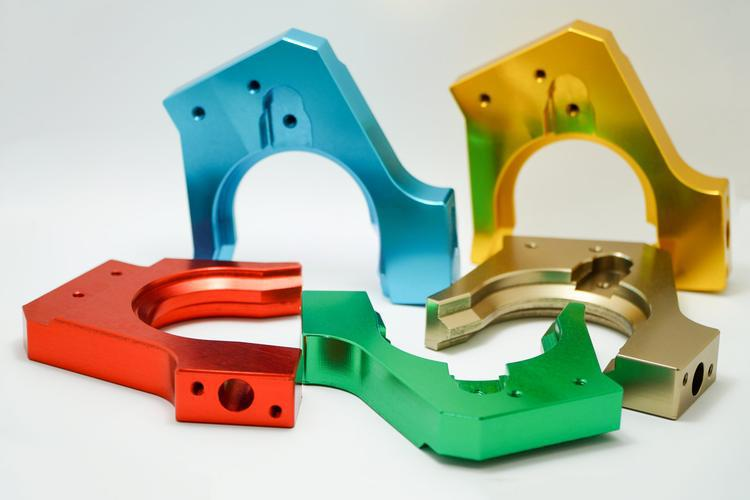
- Farbige Eloxierung: Klar eloxiert, anschließend farbig tauchlackiert. Erhältlich in nahezu jedem Farbton, von den Standardfarben Schwarz und Gold bis hin zu individuellen RAL-Farben.
- Harteloxieren: Dichte, dicke Beschichtung vom Typ III mit einer natürlichen dunkelgrauen bis schwarzen Optik. Hier steht die Leistung vor der Ästhetik.
- Helle Eloxierung: Wird auf einer maschinell polierten Unterlage aufgetragen, um eine hochglänzende, reflektierende, farbige Oberfläche zu erzielen.
- Gebürstete Eloxierung: Wird auf eine in einer bestimmten Richtung gebürstete Oberfläche aufgetragen, um unter der farbigen Oxidschicht eine raffinierte, lineare Maserung zu erzielen.
Farboptionen und Färbemethoden
| Farbe | Dip-Dye-Verfahren | Elektrolytische Färbung |
|---|---|---|
| Klar / Naturfarben | Standard-Eloxierung ohne Farbstoff | Nicht zutreffend |
| Schwarz | Beliebteste Option: tiefes, gleichmäßiges Schwarz | Äußerst strapazierfähig; lichtechte schwarze Oberfläche |
| Gold / Bronze | Große Auswahl an warmen Farbtönen verfügbar | Klassische Architekturbronze; äußerst witterungsbeständig |
| Rot / Blau / Grün | Vielfältige Vollspektrum-Optionen | Nicht verfügbar |
| Individuelle Farbtöne | Mischformulierungen von Farbstoffen | Beschränkt auf metallische Erdtöne |
Die wichtigsten Vorteile eloxierter Oberflächen
- Hervorragende Korrosionsbeständigkeit: Die Oxidschicht wirkt als physikalische Barriere gegen Feuchtigkeit, Salz und Chemikalien aus der Umgebungsluft. Versiegeltes, eloxiertes Aluminium kann im Außenbereich und in maritimen Umgebungen jahrzehntelang halten.
- Verbesserte Oberflächenhärte: Eloxiertes Aluminiumoxid erreicht auf der Mohs-Skala eine Härte, die fast der von Diamant entspricht, wodurch sich die Kratz- und Verschleißfestigkeit im Vergleich zu blankem Metall deutlich verbessert.
- Unbegrenzte gestalterische Flexibilität: Unterstützt nahezu jede Farbe, verschiedene Glanzgrade und diverse Grundstrukturen. Die Farbkonsistenz ist über alle Produktionschargen hinweg hervorragend.
- Elektrische Isolierung: Die Oxidschicht ist ein natürlicher elektrischer Isolator, wodurch sich eloxierte Teile ideal für Elektronikgehäuse und Hochspannungskomponenten eignen.
- Dauerhafte Haftung: Da die Beschichtung direkt auf dem Grundmetall aufgebracht wird, besteht keinerlei Risiko, dass sie im Laufe der Zeit abplatzt, abblättert oder sich ablöst.
- Umweltfreundlich: Moderne Eloxalanlagen arbeiten mit geschlossenen Kreislaufsystemen und ungiftigen Chemikalien, wodurch im Vergleich zu Galvanisierungsverfahren nur minimale Mengen an Sondermüll anfallen.
Eloxieren im Vergleich zu anderen gängigen Oberflächenbehandlungen
| Eigenschaft | Eloxieren | Pulverbeschichtung | Galvanik |
|---|---|---|---|
| Prozesstyp | Elektrochemisches Oxidwachstum | Elektrostatische Pulverbeschichtung + Aushärtung durch Erhitzen | Elektrolytische Metallabscheidung |
| Ebene „Natur“ | Untrennbar mit dem Grundmetall verbunden | Aufgebrachte Oberflächenbeschichtung | Aufgebrachte Metallschicht |
| Typische Dicke | 5 – 50 µm | 50 – 125 µm | 2,5 – 500 µm |
| Verschleißfestigkeit | Ausgezeichnet (insbesondere Typ III) | Gut | Je nach Beschichtungsmetall unterschiedlich |
| Farbpalette | Breit; metallisch-durchscheinendes Erscheinungsbild | Praktisch unbegrenzt; deckende Farben | Beschränkt auf Metalltöne |
| Kompatibilität der Materialien | Nur Nichteisenmetalle | Nahezu alle Metalle | Die meisten leitfähigen Materialien |
Materialverträglichkeit und praktische Anwendungen
Zwar entfällt über 90% des Volumens der industriellen Eloxierung auf Aluminium, doch lässt sich das Verfahren auch auf verschiedene Nichteisenmetalle anwenden:
Aluminiumlegierungen
Das am häufigsten eloxierte Material, das mit Legierungen der Serien 1000 bis 7000 kompatibel ist (mit unterschiedlichen Ergebnissen). Die Legierungen 6061 und 6063 ergeben die gleichmäßigsten Oberflächen. Zu den Anwendungsbereichen zählen Elektronikgehäuse, Verkleidungen im Automobilbau, Strukturplatten für die Luft- und Raumfahrt, Konsumgüter sowie Bauteile für die Architektur.
Titan
Bei der Titan-Eloxierung entstehen durch Lichtinterferenzeffekte leuchtende, schillernde Farben, ohne dass Farbstoffe erforderlich sind. Die so entstehende Schicht ist biokompatibel und findet breite Anwendung bei medizinischen Implantaten, chirurgischen Instrumenten, Befestigungselementen für die Luft- und Raumfahrt sowie bei hochwertigen Konsumgütern wie Uhrengehäusen und Brillenfassungen.
Magnesium
Das Eloxieren bietet einen entscheidenden Korrosionsschutz für leichte Magnesiumbauteile. Es wird meist als Grundierung für weitere Beschichtungen verwendet. Zu den gängigen Anwendungsbereichen zählen Drohnenkonstruktionen, Batteriegehäuse für Kraftfahrzeuge und gewichtsreduzierende Bauteile für die Luft- und Raumfahrt.
Zink
Eloxierte Zinkbeschichtungen verbessern die natürliche Korrosionsbeständigkeit des Metalls noch weiter. Zu den typischen Anwendungsbereichen zählen Baubeschläge, Sanitärarmaturen, Befestigungselemente für die Automobilindustrie sowie dekorative Metallkomponenten.
Wichtige Aspekte bei der Konzeption
- Dimensionales Wachstum: Durch das Eloxieren erhöht sich die Schichtdicke auf jeder Bauteiloberfläche um etwa die Hälfte. Bei Präzisionsbauteilen sollten die Konstruktions-Toleranzen dieses Wachstum berücksichtigen, insbesondere bei einer dicken Typ-III-Hartbeschichtung.
- Gewindeelemente: Gewinde sollten vor dem Eloxieren abgeklebt werden, um einen einwandfreien Sitz zu gewährleisten. Die Oxidschicht kann den Durchmesser geringfügig vergrößern und das Einrasten der Befestigungselemente beeinträchtigen.
- Kontaktabdrücke am Rack: Die Teile müssen während der Bearbeitung elektrisch verbunden sein, wobei kleine Kontaktstellen verbleiben. Wählen Sie nach Möglichkeit nicht kritische Oberflächen für die Platzierung im Gestell aus.
- Werkstoffauswahl: Legierungen mit hohem Kupferanteil wie 2024 lassen sich weniger gleichmäßig eloxieren und können ein trübes Erscheinungsbild ergeben. Geben Sie 6061 oder 5052 an, um möglichst gleichmäßige optische Ergebnisse zu erzielen.
- Scharfe Kanten: An scharfen Ecken ist die Dicke der Oxidschicht geringer. Runden Sie die Kanten mit einem Radius von mindestens 0,1 mm ab, um eine gleichmäßigere Beschichtung zu erzielen.
Häufig gestellte Fragen
Warum ist eloxiertes Aluminium so korrosionsbeständig?
Die dichte Aluminiumoxidschicht bildet eine undurchlässige Barriere, die verhindert, dass Feuchtigkeit, Sauerstoff und korrosive Chemikalien zum darunterliegenden Metall gelangen. Bei ordnungsgemäßer Versiegelung bietet sie selbst in Salzwasser und industriellen Umgebungen langfristigen Schutz.
Was ist der Unterschied zwischen einer Typ-II- und einer Typ-III-Eloxierung?
Typ II (Standard-Schwefelsäure) ist eine universell einsetzbare Dekor- und Schutzbeschichtung mit einer Dicke von 5–25 µm und einer umfassenden Farbauswahl. Typ III (Harteloxierung) wird bei niedrigeren Temperaturen und höherer Stromdichte hergestellt, wodurch eine wesentlich dickere, dichtere Schicht entsteht, die für extreme Verschleiß- und Abriebfestigkeit optimiert ist.
Wie reinigt und pflegt man eloxierte Teile?
Für die meisten Anwendungen reicht eine regelmäßige Reinigung mit einem milden Reinigungsmittel und warmem Wasser aus. Vermeiden Sie Scheuermittel, starke Säuren und alkalische Reinigungsmittel, da diese die versiegelte Oberfläche beschädigen und zu vorzeitigem Ausbleichen führen können.
Ist das Eloxieren ein kostspieliges Veredelungsverfahren?
Die Kosten variieren je nach Art, Dicke und Komplexität des Bauteils. Die Standard-Eloxierung vom Typ II ist preislich wettbewerbsfähig für die Produktion mittlerer bis hoher Stückzahlen. Zwar können die Anschaffungskosten diejenigen einer einfachen Lackierung übersteigen, doch aufgrund der deutlich längeren Lebensdauer und des Wegfalls von Nacharbeiten ist dieses Verfahren über den gesamten Lebenszyklus eines Produkts hinweg äußerst kosteneffizient.
Beeinflusst die Eloxierung die elektrische Leitfähigkeit?
Ja – die Aluminiumoxidschicht ist ein elektrischer Isolator. Wenn Oberflächenleitfähigkeit erforderlich ist, können bestimmte Bereiche während der Bearbeitung abgeklebt oder nach dem Eloxieren bearbeitet werden, um das blanke Metall freizulegen.
Abschließende Überlegungen
Das Eloxieren nimmt unter den Verfahren zur Metalloberflächenbehandlung eine Sonderstellung ein, da es in einem einzigen Prozess hohe Haltbarkeit, große ästhetische Vielseitigkeit und zuverlässigen Umweltschutz vereint. Insbesondere für Aluminiumkomponenten gilt es nach wie vor als der Goldstandard der Oberflächenbehandlung für Anwendungen, die von der Unterhaltungselektronik bis zur Luft- und Raumfahrttechnik reichen.
Um gleichbleibend hochwertige Ergebnisse zu erzielen, ist es entscheidend, die richtige Anodisierungsart und -dicke auf Ihre Leistungsanforderungen abzustimmen, Maßabweichungen bereits bei der Konstruktion zu berücksichtigen und mit einem erfahrenen Partner für Oberflächenbehandlungen zusammenzuarbeiten, der eine strenge Prozesskontrolle über alle Badparameter gewährleistet.