






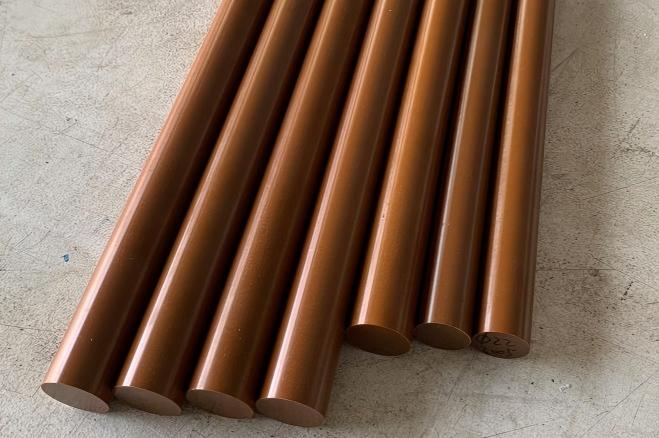
Polyimid (kurz PI) gehört zu einer Klasse von hochleistungsfähigen technischen Spezialkunststoffen. Seine molekulare Hauptkette enthält Imid-Funktionsgruppen, die für seine extreme Langlebigkeit sorgen.
Insbesondere zeichnet sich PI durch eine äußerst stabile Leistungsfähigkeit unter rauen Betriebsbedingungen aus. Aus diesem Grund gilt es als unersetzbarer strategischer Kernwerkstoff in der High-End-Fertigung.
Im Vergleich zu herkömmlichen technischen Kunststoffen bietet PI um ein Vielfaches bessere Eigenschaften hinsichtlich Hitzebeständigkeit, chemischer Beständigkeit, elektrischer Isolierung und Maßgenauigkeit. Es spielt eine entscheidende Rolle in der Luft- und Raumfahrt, der Halbleiterindustrie, bei Fahrzeugen mit alternativen Antrieben und in anderen Bereichen mit strengen Zuverlässigkeitsstandards.
In diesem Leitfaden erläutern wir die Klassifizierung von PI, seine wesentlichen Eigenschaften, Verarbeitungsverfahren und Anwendungsbeispiele in der Industrie. Sie erhalten professionelle, praxisorientierte Einblicke für die Materialauswahl in Projekten und die Umsetzung von Prozessen.
1. Definition und wichtigste Klassifizierungen von PI-Materialien
Das molekulare Grundgerüst von PI besteht abwechselnd aus aromatischen und aliphatischen Struktureinheiten sowie Imidringen. Je nach Hauptkettenstruktur lassen sich drei Haupttypen unterscheiden: aromatisch, aliphatisch und semi-aromatisch.
Insbesondere verfügt aromatisches PI über eine starre Molekülkette und eine stabile konjugierte Struktur. Es dominiert die industriellen Anwendungen mit großem Abstand.
Diese Molekülstruktur verleiht dem Material eine außergewöhnliche thermische Stabilität und mechanische Festigkeit. Es behält auch nach längerer Einwirkung hoher Temperaturen und in korrosiven Umgebungen seine volle Leistungsfähigkeit. Für Konstruktionsteams ist es eine erstklassige Lösung, um Metall zu ersetzen und das Gewicht von Bauteilen zu reduzieren.
PartsMastery eignet sich für anspruchsvolle Präzisionsprojekte, bei denen Designteams Wert auf aromatisches PI legen. Es ist das Material der Wahl für Hochtemperatur-Isolierstrukturen und Halbleiterträger.
Bei Bauteilen, die langfristig bei 260 °C betrieben werden und eine Maßtoleranz von ±0,02 mm einhalten müssen, liefert aromatisches PI gleichbleibende Ergebnisse. Es bleibt auch bei wiederholten Temperaturzyklen formstabil, ohne dass sichtbare Verformungen oder Materialversagen auftreten.
2. Sechs zentrale Leistungsdimensionen von PI-Materialien
PI zählt hinsichtlich seiner Gesamtleistung zu den Spitzenprodukten unter den technischen Kunststoffen. Dank seiner ausgewogenen thermischen, mechanischen, elektrischen und chemischen Eigenschaften eignet es sich für den Einsatz unter extremsten Betriebsbedingungen.
2.1 Hervorragende thermische Stabilität
Erstens zeichnet sich aromatisches PI durch eine branchenweit führende thermische Stabilität aus. Seine Glasübergangstemperatur (Tg) liegt in der Regel über 300 °C, und seine thermische Zersetzungstemperatur erreicht 500–600 °C.
Einige modifizierte Typen halten sogar kurzzeitigen Temperaturen von bis zu 800 °C stand. Ihre Wärmeformbeständigkeit liegt bei über 300 °C, und sie funktionieren zuverlässig bei kurzzeitigen Temperaturen über 400 °C.
So führte PartsMastery beispielsweise Prüfungstests an PI-Hochtemperatur-Isoliergehäusen durch. Wir legten die Bauteile 48 Stunden lang ununterbrochen in eine Konstanttemperaturkammer bei 385 °C.
Die endgültige Verformung blieb im Bereich von ±0,02 mm, ohne dass es zu einer Karbonisierung oder Rissbildung kam. In dieser Hinsicht übertrifft PI vergleichbare Hochleistungskunststoffe wie PEEK und PPS bei weitem.
2.2 Stabile mechanische Eigenschaften
Zweitens weist PI über den gesamten Temperaturbereich hinweg eine hohe und konstante mechanische Leistungsfähigkeit auf. Standard-PI-Typen weisen eine Zugfestigkeit von 100–180 MPa und einen Elastizitätsmodul von 3,0–4,5 GPa auf.
Selbst bei hohen Temperaturen behält es über 80% seiner Festigkeit bei Raumtemperatur bei. Zudem weist es unter Dauerbelastung eine hervorragende Kriechfestigkeit auf.
Die Ergebnisse der Ermüdungsprüfung bestätigen diesen Vorteil. Nach Hunderttausenden von Belastungszyklen weisen PI-Bauteile weitaus geringere bleibende Verformungen auf als herkömmliche technische Kunststoffe.
Dadurch eignet es sich ideal für langfristig belastete Bauteile wie Tastarme und Präzisionszahnräder.
2.3 Hervorragende elektrische Isolationsleistung
Drittens dient PI als zentrales Isoliermaterial für hochwertige elektrische und elektronische Produkte. Sein spezifischer Volumenwiderstand liegt bei 10¹⁵–10¹⁷ Ω·cm, und seine Durchschlagfestigkeit übersteigt 150 kV/mm.
Zudem nimmt seine Dämmleistung über weite Temperaturbereiche und unter Hochfrequenzbedingungen kaum ab. Diese Beständigkeit hebt es von minderwertigen Dämmstoffen ab.
So fertigte PartsMastery beispielsweise maßgeschneiderte PI-Hochspannungsisolierplatten für die Messtechnik in Kernkraftwerken an. Unter Testbedingungen von 25 kV lag die Durchschlagfestigkeit bei über 190 kV/cm.
Dieses Leistungsniveau entspricht in vollem Umfang den Anforderungen an die Sicherheitsredundanz bei Hochspannungsanwendungen.
2.4 Hohe chemische Korrosionsbeständigkeit
Viertens ist PI beständig gegen Einwirkungen starker Säuren, starker Laugen und der meisten organischen Lösungsmittel. Es funktioniert langfristig zuverlässig in Medien wie Schwefelsäure, Salpetersäure, Kaliumhydroxid, DMF und MEK.
Im Rahmen eines Projekts zur Förderung korrosiver Flüssigkeiten haben wir PI-Rohrleitungen in einer Umgebung aus einer Mischung aus Chlor und Flusssäure getestet. Nach sechs Monaten Dauerbetrieb wiesen die Bauteile keinerlei Anzeichen von Korrosion, Delaminierung oder Versprödung auf.
In dieser Hinsicht übertrifft PI gängige korrosionsbeständige Werkstoffe wie PTFE und PPS.
2.5 Hochpräzise Maßhaltigkeit
Fünftens weist PI unter wechselnden Bedingungen eine äußerst hohe Dimensionsstabilität auf. Sein linearer Wärmeausdehnungskoeffizient liegt unter 20 ppm/°C, und seine Feuchtigkeitsaufnahme liegt in der Regel unter 0,5%.
Hochwertiges aromatisches PI kann eine Feuchtigkeitsaufnahme von nur 0,21 TP3T erreichen. Daher verursachen Temperatur- und Feuchtigkeitsschwankungen nahezu keine Maßschwankungen.
Wir haben Feuchtigkeits- und Hitzetests an Präzisionszahnrädern aus PI im Mikrometerbereich durchgeführt. Nach 14 Tagen in einer Umgebung mit 60 °C und 95% relativer Luftfeuchtigkeit betrug die Maßänderung weniger als ±0,01 mm.
Diese Präzision eignet sich perfekt für Anwendungen, bei denen hohe Genauigkeit gefragt ist, wie beispielsweise in der Präzisionsgetriebefertigung und der mikroelektronischen Fertigung.
2.6 Inhärente Flammhemmung und geringe Rauchtoxizität
Schließlich verfügt PI über inhärente flammhemmende Eigenschaften. Es erfüllt die Anforderungen der Klassifizierung UL94 V-0 ohne Zusatz von Flammschutzmitteln. Bei der Verbrennung entstehen keine geschmolzenen Tropfen, und es werden nur geringe Mengen an Rauch mit geringer Toxizität freigesetzt.
So erfüllen beispielsweise PI-Isolierkomponenten in Signalanlagen für den Schienenverkehr die Anforderungen der Norm EN 45545 hinsichtlich der Brandschutzklassen S1 und HL3. Sie haben sich zu einem bevorzugten, normkonformen Werkstoff für die Schienenverkehrsbranche entwickelt.
3. Wichtigste Verarbeitungsverfahren für PI-Materialien
Die hohe Leistungsfähigkeit von PI geht mit einem relativ hohen Bearbeitungsaufwand einher. Sie müssen den richtigen Prozess anhand der Bauteilgeometrie, der Toleranzanforderungen und des Produktionsvolumens auswählen.
Heute dominieren drei Hauptverfahrenskategorien diesen Bereich: CNC-Präzisionsbearbeitung, Thermoformen und die spezielle Verarbeitung von PI-Folien.
3.1 CNC-Präzisionsbearbeitung
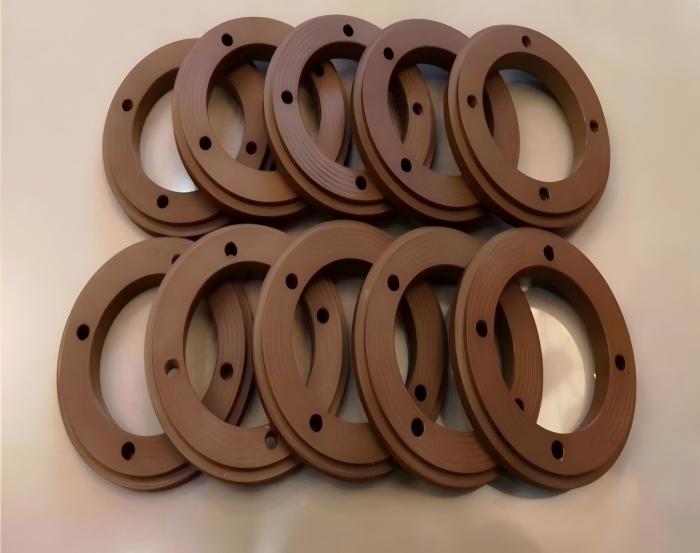
PI-Werkstoffe zeichnen sich durch hohe Härte und geringe Duktilität aus. Diese Eigenschaften führen beim Zerspanen zu schnellem Werkzeugverschleiß und der Gefahr von Mikrorissen.
Um die Qualität sicherzustellen, sind eine geeignete Werkzeugauswahl, optimierte Parameter und eine gezielte Prozessgestaltung erforderlich. Im Folgenden gehen wir auf die wichtigsten Aspekte der CNC-PI-Bearbeitung ein.
3.1.1 Werkzeugauswahl
Für die Bearbeitung von PI empfehlen wir dringend diamantbeschichtete Werkzeuge oder Werkzeuge aus polykristallinem Diamant (PCD).
Ihre überragende Verschleißfestigkeit verringert den Zerspanungsverlust und verlängert die Standzeit der Werkzeuge. Zudem sorgen sie für einen stabileren Zerspanungsvorgang, wodurch Maßabweichungen bei den Fertigteilen reduziert werden.
3.1.2 Einstellung der Schnittparameter
Für die Spindeldrehzahl empfehlen wir einen Bereich von 4000 bis 8000 U/min. Stellen Sie den Vorschub auf 0,05–0,1 mm pro Umdrehung ein und halten Sie die Einzelschnitttiefe unter 0,2 mm.
Diese Parametereinstellung sorgt für ein ausgewogenes Verhältnis zwischen Zerspanungsleistung und Werkzeugbelastung. Außerdem trägt sie dazu bei, eine bessere Oberflächengüte bei den Fertigteilen zu erzielen.
3.1.3 Kühl- und Schneidverfahren
Bei der PI-Bearbeitung eignen sich Trockenschneiden oder Druckluftkühlung am besten. Flüssigkühlmittel sollten Sie nach Möglichkeit vermeiden.
Kühlmittel, das in das Material eindringt, kann Mikrorisse und eine Delaminierung zwischen den Schichten auslösen. Diese Defekte beeinträchtigen die strukturelle Integrität des Materials dauerhaft.
Wenn Sie Druckluftkühlung verwenden, achten Sie darauf, dass die Luftquelle trocken bleibt. Feuchtigkeit in der Luft kann ebenfalls die bearbeitete PI-Oberfläche beschädigen.
3.1.4 Bearbeitungslösungen für dünnwandige und schlanke Bauteile
Dünnwandige PI-Teile – wie Steckverbinder, Sondenhalterungen und optische Halterungen – verformen sich leicht und neigen bei der Bearbeitung zu Vibrationen.
Um diesem Problem entgegenzuwirken, empfehlen wir eine 4- oder 5-Achsen-Simultanbearbeitung. Kombinieren Sie diese mit vibrationsdämpfenden Spannvorrichtungen, um die Schnittvibrationen zu reduzieren.
Diese Kombination reduziert strukturelle Verformungen und Oberflächenfehler erheblich.
3.1.5 Erzielung einer hohen Oberflächenqualität
An Halbleiter- und medizinische PI-Teile werden äußerst strenge Anforderungen hinsichtlich Oberflächenreinheit und -glätte gestellt.
Durch die Optimierung der Werkzeugkanten und Schnittwege lässt sich eine Oberflächengüte von Ra 0,6–0,8 μm erzielen. Dieser Wert erfüllt die Anforderungen von High-End-Präzisionsanwendungen.
3.2 Thermoformverfahren (Spritzgießen / Heißpressen / Extrudieren)
Thermoplastisches PI eignet sich gut für die Massenproduktion mittels Spritzguss, Heißpressen und Extrusion. Allerdings weist PI ein enges Schmelzfenster und eine schlechte Schmelzfließfähigkeit auf.
Um gleichbleibende Ergebnisse zu erzielen, müssen Sie jeden Verarbeitungsparameter streng kontrollieren. Nachfolgend finden Sie die wichtigsten Richtlinien für jeden Prozess.
3.2.1 Regelung der Temperaturparameter
Für das PI-Spritzgießen sollte die Schmelztemperatur auf 380–430 °C eingestellt werden. Zu hohe Temperaturen führen zu einer Zersetzung des Materials, während zu niedrige Temperaturen einen ordnungsgemäßen Schmelzfluss und eine ordnungsgemäße Füllung verhindern.
Halten Sie die Formtemperatur zwischen 170 und 210 °C. Dieser Bereich gewährleistet einen gleichmäßigen Schmelzfluss und verringert Fehler wie Verformungen und unvollständige Formteile.
3.2.2 Feuchtigkeitskontrolle der Rohstoffe
PI-Rohstoffe nehmen leicht Feuchtigkeit aus der Luft auf. Sie müssen vor dem Formen gründlich getrocknet werden, um Fehler wie Blasen und silberne Streifen in den Endprodukten zu vermeiden.
Der Standard-Trocknungsprozess läuft 10–12 Stunden lang bei 180 °C. Diese Dauer gewährleistet, dass der Feuchtigkeitsgehalt auf ein akzeptables Niveau sinkt.
3.2.3 Anpassung von Anlagen und Verfahren
Wählen Sie für den Spritzguss eine Schnecke mit einem Länge-zu-Durchmesser-Verhältnis von mindestens 22. Diese Bauweise gewährleistet eine vollständige Durchmischung und Plastifizierung des Materials während der Verarbeitung.
Üben Sie während des Formprozesses einen moderaten Gegendruck aus, um die Schergeschwindigkeit zu regulieren. Dieser Schritt verbessert die Gleichmäßigkeit der Fertigteile.
Beim Heißpressformen müssen Temperatur- und Druckverläufe präzise geregelt werden. Eine unzureichende Regelung kann zu lokaler Materialverschlechterung und ungleichmäßigem Fließen führen.
Beim Extrusionsformen ist ein gleichmäßiges Temperaturprofil entlang der Prozesslinie entscheidend. Diese Gleichmäßigkeit gewährleistet hochwertige, einheitliche PI-Produkte.
PartsMastery hat einmal eine PI-Spritzgussform mit mehreren Kavitäten für einen Kunden aus der Medizintechnikbranche entwickelt. Durch eine strenge Kontrolle aller Prozessparameter konnten wir die Bauteil-Toleranz konstant innerhalb von ±0,03 mm halten.
Die Chargenkonsistenz lag bei 99,61 TP3T. Dieser Fall belegt, dass PI bei entsprechender Steuerung effizient verarbeitet werden kann, um strenge Präzisionsstandards der Branche zu erfüllen.
3.3 Spezielle Verarbeitungstechnologien für PI-Folien
PI-Folien dienen als Kernsubstrat für flexible Elektronik, 5G-Kommunikation und andere hochpräzise Anwendungsbereiche. Die Standardfoliendicken reichen von 4 μm bis 125 μm.
Die Verarbeitung ultradünner PI-Folien birgt ganz besondere Herausforderungen. Um hohe Qualität und Präzision zu gewährleisten, ist eine feine, gezielte Steuerung erforderlich.
- Spannungsregelung bei ultradünnen Schichten: Ultradünne PI-Folien neigen dazu, sich während der Verarbeitung leicht zu verziehen und zu verschieben. Um dies zu verhindern, setzen die Hersteller temperaturgeregelte Spannförderer und Walzenbearbeitungsplattformen ein. Diese Systeme sorgen für eine gleichmäßige Folienspannung und gewährleisten eine hohe Bearbeitungsgenauigkeit.
- Oberflächenbehandlung zur Verbesserung der Haftung: Eine Plasma- oder UV-Oberflächenbehandlung erhöht die Oberflächenaktivität von PI-Folien. Diese Behandlung steigert die Haftfestigkeit zwischen den Schichten in der Regel um mehr als das Doppelte. Sie ist unverzichtbar für flexible Leiterplatten und mehrschichtige Folienstrukturen, die eine hohe Haftfestigkeit erfordern.
- Herstellung von Mikrolöchern mittels Laser: Die Teams nutzen Laserbohrtechnologie, um präzise Mikrobohrungen in PI-Folien für mikroelektronische Durchkontaktierungen und Belüftungsstrukturen herzustellen. Der Lochdurchmesser wird auf 30–50 μm genau kontrolliert. Das Verfahren zeichnet sich durch hohe Genauigkeit aus und beeinträchtigt die Gesamtmaterialstruktur nicht.
- Kontrolle der Oberflächenverformung: Die Oberflächenverformung ist ein entscheidender Qualitätskontrollpunkt bei der Verarbeitung von PI-Folien. Die Hersteller müssen die Oberflächenverformungsrate innerhalb von 0,05% halten. Diese strenge Kontrolle gewährleistet die Gleichmäßigkeit der Folie und eine stabile elektrische Funktion, insbesondere bei hochleistungsfähigen elektronischen Bauteilen.
4. Kernanwendungsbereiche von PI-Materialien
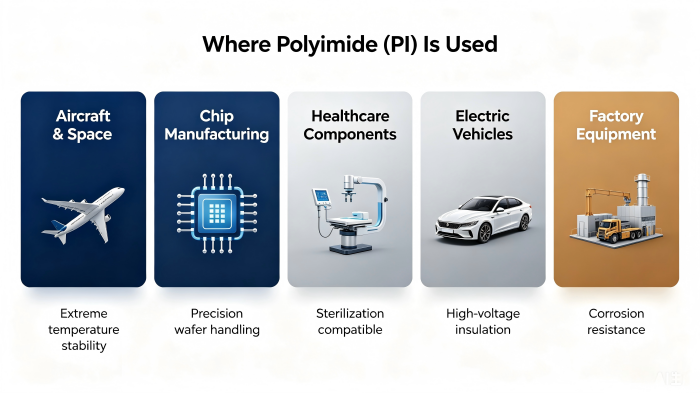
Dank seiner vielschichtigen Leistungsvorteile findet PI breite Anwendung in den wichtigsten High-End-Fertigungsbranchen. Es gilt als das Polymermaterial der Wahl für extreme Einsatzbedingungen.
| Anwendungsbereich | Typische Anwendungsbeispiele | Wesentliche Leistungsanforderungen |
|---|---|---|
| Luft- und Raumfahrt | Hochtemperatur-Bauteile, isolierende Folien für die Elektronik, Motorhalterungen | Dauerhafte Temperaturbeständigkeit > 300 °C, Formstabilität, geringe Ausgasung |
| Medizinische Industrie | Verpackungsfolien für Arzneimittel, autoklavierbare Komponenten für Medizinprodukte, Zuführschläuche | Biokompatibilität (USP Klasse VI, ISO 10993), Reinheit und Hitzebeständigkeit |
| Halbleiterfertigung | Wafer-Trays, Prüfkarten, Chip-Verpackungsunterlagen, Lithografiefolien | Geringe Feuchtigkeitsaufnahme, geringe Wärmeausdehnung, Beständigkeit gegen chemische Einflüsse und Plasmaätzen |
| Neue Energien & Automobilindustrie | Isolierfolien für EV-Batterien, Materialien zur Temperaturregelung von Sensormodulen, Isolationsschichten für elektrische Verbindungen | Elektrische Isolierung, Flammschutzklasse UL94 V-0, Wärmemanagement-Leistung |
| Industrielle Ausrüstung | Hochtemperatur-Gleitschienen, Dichtungen, korrosionsbeständige Pumpengehäuse und Ventilsitze | Verschleißfestigkeit, Kriechfestigkeit, Lösungsmittelbeständigkeit, lange Lebensdauer |
In Umgebungen mit starken Temperaturschwankungen, hohem Druck, Strahlung oder Mikrokontamination zersetzen sich herkömmliche Polymerwerkstoffe oft schnell. PI hingegen behält langfristig seine Formstabilität und zuverlässige Funktionalität bei.
Es ist mehr als nur ein technischer Kunststoff. Es ist eine strategische Materiallösung, die zukünftige technologische Herausforderungen bewältigt und einen unersetzlichen industriellen Wert besitzt.
5. Leitfaden zur Projektauswahl für PI-Materialien
Die Wahl des richtigen Werkstoffs ist für jedes Ingenieurprojekt von entscheidender Bedeutung. Für anspruchsvolle Anwendungen entscheiden sich Konstruktionsteams häufig für PI als ideale Lösung.
Um die beste Leistung und Kosteneffizienz zu erzielen, müssen Sie sorgfältig prüfen, ob PI Ihren spezifischen Anforderungen entspricht. Nachfolgend finden Sie die wichtigsten Faktoren, die Sie bei der Auswahl berücksichtigen sollten.
5.1 Leistungsanforderungen bewerten
Temperaturbeständigkeit: Wenn Ihre Anwendung in Umgebungen mit hohen Temperaturen betrieben wird, bietet PI einen entscheidenden Vorteil. Es bewältigt Dauertemperaturen von bis zu 260 °C ohne Leistungseinbußen.
Für Anwendungen, die eine noch höhere thermische Stabilität erfordern, ist PI fast immer die erste Wahl als Werkstoff.
Elektrische Isolierung: Bei Projekten mit elektronischen Bauteilen, die eine hohe Durchschlagfestigkeit erfordern, ist PI aufgrund seiner hervorragenden elektrischen Eigenschaften eine ausgezeichnete Wahl.
Mechanische Beanspruchung: Bei Bauteilen, die starken mechanischen Belastungen ausgesetzt sind, zeichnet sich PI durch hohe Zugfestigkeit und Formstabilität unter Belastung aus. Diese Eigenschaften machen es zu einer idealen Wahl für Strukturbauteile.
5.2 Betriebsumgebung berücksichtigen
Stark ätzende Chemikalien und Lösungsmittel: PI ist sehr beständig gegenüber Lösungsmitteln, Kraftstoffen und sauren Umgebungen. Wenn bei Ihrem Projekt Bauteile diesen Bedingungen ausgesetzt sind, ist PI möglicherweise die zuverlässigste Materialwahl.
Formstabilität: Wenn Bauteile unter thermischen und mechanischen Belastungen ihre exakte Form und Funktion beibehalten müssen, überzeugt PI durch herausragende Leistungsfähigkeit. Es weist eine minimale Wärmeausdehnung auf und bleibt auch unter Dauerbelastung stabil.
5.3 Auswahl nach Herstellungsverfahren
Bearbeitbarkeit: PI lässt sich mittels CNC-Bearbeitung, Spritzguss und Formpressen verarbeiten. Wählen Sie das Verfahren, das den Anforderungen Ihres Projekts am besten entspricht.
Bei komplexen Formen in großen Stückzahlen bietet das Spritzgießen eine hohe Effizienz. Bei kundenspezifischen Teilen in kleinen Stückzahlen und mit hoher Präzision bietet die CNC-Bearbeitung eine bessere Wirtschaftlichkeit.
Sonderanfertigungen: Wenn Ihr Projekt Sondermaße oder -formen erfordert, bietet PI flexible Fertigungsmöglichkeiten. Sie können problemlos einzigartige Einzelstücke mit engen Toleranzen herstellen.
5.4 Kosten und Leistung in Einklang bringen
PI bietet eine außergewöhnliche Leistung, ist jedoch teurer als herkömmliche Kunststoffe. Wenn Sie mit einem knappen Budget arbeiten, sollten Sie die Leistungsvorteile von PI gegen die Anschaffungskosten abwägen.
Allerdings bieten die leistungsstarken und langlebigen Komponenten von PI in der Regel über den gesamten Produktlebenszyklus hinweg einen hohen Mehrwert. Dank ihrer Zuverlässigkeit lassen sich Wartungs- und Austauschkosten langfristig senken.
6. Umwelteigenschaften und Einhaltung gesetzlicher Vorschriften
Im Vergleich zu vielen hochleistungsfähigen Thermoplasten zeichnet sich PI nicht nur durch seine Funktionalität aus, sondern auch durch eine umweltfreundliche Herstellung und die Einhaltung gesetzlicher Vorschriften.
PI lässt sich nicht wie herkömmliche Thermoplaste schmelzbasiert wiederaufbereiten. Seine extreme Langlebigkeit verlängert jedoch die Produktlebenszyklen erheblich und reduziert die Ressourcenverschwendung bereits an der Quelle.
- RoHS- und REACH-Zertifizierung: Die meisten handelsüblichen PI-Typen erfüllen die Anforderungen der EU-RoHS-Richtlinie und der REACH-Verordnung. Sie enthalten keine verbotenen Stoffe wie Blei, Quecksilber oder sechswertiges Chrom und entsprechen somit den Umweltgrenzwerten für Elektronik- und medizinische Anwendungen.
- Recyclingfähigkeit und Verarbeitung: Polyimid ist ein nicht schmelzbarer Duroplast oder ein teilkristalliner Thermoplast. Herkömmliche Schmelzrecyclingverfahren sind hierfür nicht geeignet. Dennoch können Teams das Material durch physikalisches Zerkleinern und Aufschüttung recyceln oder es mittels Hochtemperatur-Pyrolyse aufbereiten. PI-Abfälle müssen bei der Entsorgung zentral verwaltet werden, um schädliche Gasemissionen bei der Hochtemperaturverbrennung zu vermeiden.
- Lebenszykluswert: PI-Werkstoffe behalten ihre strukturelle Integrität und ihre elektrischen Eigenschaften über einen Zeitraum von mehr als 10 Jahren in Umgebungen mit hoher Hitze, hohem Druck und hoher Strahlung bei. Im Vergleich zu Metallen oder mehrschichtigen Verbundwerkstoffen tragen ihr geringes Gewicht und ihre Langlebigkeit dazu bei, dass Kunden ihre CO₂-Emissionen senken und Zertifizierungen für umweltfreundliches Design wie ISO 14001 und LEED erfüllen können.
Schlussfolgerung
Polyimid (PI) ist ein Hochleistungswerkstoff, der auch unter extremen Umgebungsbedingungen seine thermische Stabilität, elektrische Isolierfähigkeit und Maßhaltigkeit beibehält.
Es spielt eine entscheidende Rolle in der Luft- und Raumfahrt, der Halbleiterindustrie und anderen Schlüsselbranchen. Es bewältigt technische Herausforderungen wie hohe Hitze, starke elektrische Felder und starke Korrosion auf effektive Weise.
PartsMastery bietet präzise CNC-Bearbeitung für Sonderteile in allen wichtigen Branchen an. Wenn Sie in Ihrem Projekt Polyimid einsetzen möchten, senden Sie uns bitte Ihre Konstruktionsdateien und Materialanforderungen zu. Wir erarbeiten eine maßgeschneiderte Lösung, die genau auf Ihre Anforderungen zugeschnitten ist.