





Kundenspezifische China-Werkzeuge: Maßgeschneiderte Präzisionsfertigung nach Ihren genauen Spezifikationen
Jedes Produkt beginnt mit einem Werkzeug. Ganz gleich, ob Sie ein Gehäuse für ein medizinisches Gerät gießen, eine Kfz-Halterung stanzen oder einen Drohnenrahmen gießen, die Qualität Ihrer Produktionswerkzeuge bestimmt direkt die Qualität, Konsistenz und Kosten aller nachfolgenden Teile. Werkzeuge von der Stange passen selten zu einzigartigen Produktdesigns, und Kompromisse bei Geometrie, Material oder Oberflächenbeschaffenheit können zu teuren Nacharbeiten oder Produktionsverzögerungen führen. Aus diesem Grund wenden sich immer mehr Hersteller an kundenspezifische China-Werkzeuge-eine Lösung, die maßgeschneiderte Technik mit den Kosten- und Geschwindigkeitsvorteilen des chinesischen Produktionssystems von Weltrang kombiniert.
Kundenspezifischer Werkzeugbau bedeutet, dass jeder Aspekt der Form oder des Werkzeugs auf Ihre spezifische Teilegeometrie, Produktionsmenge, Materialauswahl und Qualitätsanforderungen abgestimmt ist. Von einer einzelnen Prototypenform bis hin zu einem hochvolumigen Produktionssystem mit mehreren Kavitäten haben sich die chinesischen Werkzeugspezialisten als zuverlässige Partner für kundenspezifische Projekte in den Bereichen Automobil, Medizin, Elektronik, Konsumgüter und Industrieausrüstung erwiesen.
Warum kundenspezifische Werkzeuge anstelle von Standardlösungen wählen?
Viele Käufer entscheiden sich zunächst für Standardformen oder generische Werkzeuge, um Zeit und Geld zu sparen. Standardlösungen sind jedoch mit versteckten Kosten verbunden:
-
Beeinträchtigte Teilegeometrie - Möglicherweise müssen Sie Ihr Produktdesign ändern, damit es in einen Standardformrahmen passt.
-
Ineffiziente Kühlung - Allgemeine Kühlkanäle führen oft zu längeren Zykluszeiten und Verzug.
-
Verkürzte Lebensdauer der Form - Stahl- oder Hohlraumkonstruktionen von der Stange halten dem von Ihnen benötigten Produktionsvolumen möglicherweise nicht stand.
-
Begrenzte Optionen für die Oberflächenbearbeitung - Standardwerkzeuge bieten selten spezielle Texturen oder Polierstufen.
Maßgeschneiderte China-Werkzeuge machen diese Kompromisse überflüssig. Jedes Merkmal - die Form des Hohlraums, die Position des Anschnitts, das Kühllayout, das Auswurfsystem und die Oberflächenbehandlung - wird speziell für Ihr Teil entwickelt. Das Ergebnis ist eine höhere Teilequalität, schnellere Zyklen, eine längere Werkzeuglebensdauer und langfristig niedrigere Kosten pro Teil.
Der Anpassungsprozess: Vom Konzept zur Produktion
Die Zusammenarbeit mit einem chinesischen Werkzeugbau-Partner für ein kundenspezifisches Projekt folgt in der Regel einem genau definierten technischen Prozess. Wenn Sie diese Schritte verstehen, können Sie effektiv planen und Überraschungen vermeiden.
1. Entwurfsprüfung und DFM (Design for Manufacturing)
Der erste und wichtigste Schritt ist eine gründliche Analyse Ihrer Teilekonstruktion. Ein erfahrener chinesischer Werkzeugbauingenieur wird Ihr 3D-CAD-Modell (STEP, IGES oder native SolidWorks/UG-Dateien) prüfen und einen DFM-Bericht erstellen. Dieser Bericht identifiziert potenzielle Probleme, wie z. B.:
-
Unzureichende Schräglagen
-
Ungleichmäßige Wandstärke
-
Schwer zu füllende Dünnschliffe
-
Mögliche Einfallstellen oder Schweißnähte
-
Platzierung der Tore und Anforderungen an die Entlüftung
In dieser Phase kann der Werkzeuglieferant Änderungen an Ihrem Teiledesign vorschlagen, die es formbarer machen, ohne seine Funktion zu verändern. Dieser kooperative Ansatz ist ein Markenzeichen professioneller kundenspezifischer China-Werkzeugdienstleistungen.
2. Werkzeugkonstruktion und Simulation
Sobald die Konstruktion des Teils abgeschlossen ist, erstellen die Werkzeugingenieure einen detaillierten Gussformentwurf mit moderner CAD-Software wie NX, Creo oder SolidWorks. Außerdem führen sie eine Fließanalyse durch, um zu simulieren, wie geschmolzener Kunststoff (oder Metall) den Hohlraum ausfüllt. Diese Simulation sagt voraus:
-
Füllmuster und Lufteinschlüsse
-
Temperaturverteilung
-
Abkühlzeit und Verzug
-
Optimale Dimensionierung von Anschnitt und Anguss
Die Anpassungen werden digital vorgenommen, bevor der Stahl geschnitten wird, was spätere wochenlange Versuche erspart.
3. Materialauswahl
Bei kundenspezifischen Werkzeugen können Sie genau den Stahl oder die Legierung wählen, die Ihren Produktionsanforderungen entspricht. Zu den gängigen Optionen gehören:
-
P20 - Vorgehärteter Allzweckstahl für mittlere Produktionsmengen (100k-500k Schüsse).
-
H13 - Hochharter, hitzebeständiger Stahl für Druckguss oder Hochtemperaturkunststoffe.
-
S136 (rostfrei) - Korrosionsbeständiger Stahl für medizinische oder lebensmittelberührte Teile.
-
NAK80 - Vorgehärteter Stahl mit ausgezeichneter Polierbarkeit für optische oder kosmetische Teile.
-
Aluminium - Für die Herstellung von Prototypen oder Kleinserien (unter 10.000 Aufnahmen).
Ihr chinesischer Partner empfiehlt Ihnen das kostengünstigste Material auf der Grundlage Ihres Jahresvolumens, des Teilematerials und der gewünschten Oberflächengüte.
4. Präzisionsbearbeitung und Fertigung
Nach der Genehmigung des Entwurfs beginnt das Werk mit der Bearbeitung. Seriöse kundenspezifische China Werkzeug Fabriken sind ausgestattet mit:
-
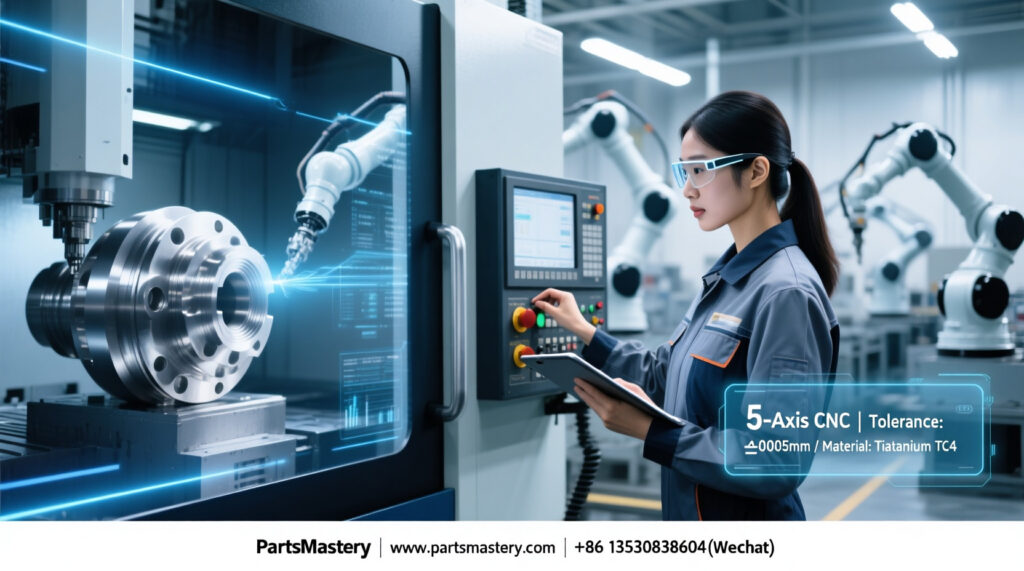
Hochgeschwindigkeits-CNC-Bearbeitungszentren (3-Achsen, 4-Achsen und 5-Achsen)
-
Senkerodieren und Drahterodieren (Elektroerosion) für komplexe Hohlräume und enge Ecken
-
Flachschleifmaschinen und Koordinatenschleifmaschinen für Präzisionspassungen
-
CMM (Koordinatenmessmaschine) für die In-Prozess-Kontrolle
Toleranzen von ±0,005 mm bis ±0,01 mm sind bei kritischen Abmessungen üblich. Der gesamte Prozess wird dokumentiert, und viele Lieferanten bieten Foto- oder Video-Updates zu jedem Schritt.
5. Oberflächenveredelung und Texturierung
Die Individualisierung erstreckt sich auch auf die Oberfläche der Formteile. Chinesische Werkzeugbaubetriebe bieten eine breite Palette von Oberflächenbehandlungen an:
-
Polieren - Von SPI A1 (Spiegelglanz) bis SPI C3 (mittlerer Steinglanz)
-
Texturierung - VDI 3400, Mold-Tech oder kundenspezifisches chemisches Ätzen (z. B. Leder-, Narben- oder matte Muster)
-
Beschichtung - TiN, CrN, DLC oder Nickel-PTFE für Verschleißfestigkeit oder Trenneigenschaften
6. Probenahme und Probeläufe
Vor dem Versand wird das kundenspezifische Werkzeug auf einer Spritzguss- oder Druckgussmaschine für einen Probelauf montiert. Das Werk stellt Musterteile her (in der Regel 20-50 Stück) und misst sie anhand Ihrer Zeichnung. Es wird ein vollständiger Bericht über die Erstmusterprüfung erstellt, der Maßangaben, Fotos und alle Beobachtungen enthält. Falls Anpassungen erforderlich sind, wird das Werkzeug geändert und erneut bemustert, bis es alle Spezifikationen erfüllt.
7. Dokumentation und Versand
Nach der Genehmigung liefert das Werk:
-
Endgültige Werkzeugzeichnungen (2D und 3D)
-
Materialzertifikate (Stahl und zugekaufte Komponenten)
-
Berichte über Wärmebehandlung und Härteprüfung
-
Musterteile und FAI-Bericht
-
Wartungshandbuch und Ersatzteilliste
Die Form wird dann in einer Kiste verpackt und per See- oder Luftfracht an Ihr Werk versandt.
Branchen, die von maßgeschneiderten Werkzeugen aus China profitieren
Die Flexibilität von Sonderwerkzeugen macht sie in praktisch jedem Fertigungsbereich wertvoll:
-
Automobilindustrie - Armaturenbrettkomponenten, Beleuchtungsgehäuse, Teile unter der Motorhaube und Innenverkleidungen. Kundenspezifische Formen für Aluminium- oder Magnesiumdruckguss.
-
Medizinische Geräte - Spritzenkörper, Formen für diagnostische Kartuschen, Griffe für chirurgische Instrumente (ISO 13485-zertifizierte Werkzeuge).
-
Unterhaltungselektronik - Smartphone-Gehäuse, Laptop-Rahmen, Gehäuse für tragbare Geräte und Formen für Steckverbinder mit engen Toleranzen.
-
Haushaltsgeräte - Kühlschrankablagen, Waschmaschinenteile, Kaffeemaschinenteile.
-
Industrielle Ausrüstung - Pumpengehäuse, Getriebedeckel, Gehäuse von Elektrowerkzeugen.
Kosten und Vorlaufzeit für kundenspezifische Werkzeuge
Einer der Hauptgründe, warum sich Unternehmen für maßgeschneiderte Werkzeuge in China entscheiden, ist die günstige Kostenstruktur. Eine kundenspezifische Form, die in Nordamerika oder Westeuropa $40.000-$80.000 kosten würde, kostet in China in der Regel zwischen $10.000 und $30.000, je nach Komplexität, Anzahl der Kavitäten und Stahlart. Die Vorlaufzeit für eine typische kundenspezifische Spritzgussform beträgt 4-8 Wochen. Bei einfacheren Werkzeugen (z. B. Prototypen oder Werkzeugen mit wenigen Kavitäten) können die Vorlaufzeiten sogar 2-3 Wochen betragen.
Diese Vorteile entstehen nicht durch Abstriche bei der Qualität. Sie ergeben sich aus niedrigeren Lohnkosten, einer integrierten Lieferkette (Stahl, Wärmebehandlung, Bearbeitung - alles vor Ort) und jahrzehntelanger Erfahrung mit kundenspezifischen Arbeiten in kleinen bis mittleren Stückzahlen.
Qualitätssicherung und Schutz des geistigen Eigentums
Bedenken hinsichtlich Qualität und geistigem Eigentum sind bei der Beschaffung von kundenspezifischen Werkzeugen aus China weit verbreitet. Etablierte chinesische Fabriken für kundenspezifische Werkzeuge arbeiten jedoch mit strengen Qualitätssystemen. Achten Sie auf ISO 9001:2015 und für Projekte in der Medizin- oder Automobilindustrie auf ISO 13485 oder IATF 16949. Viele verwenden auch digitale Prüfgeräte (CMM, optische Komparatoren, 3D-Scanner) und bieten eine vollständige Rückverfolgbarkeit.
Zum Schutz des geistigen Eigentums unterzeichnen seriöse Lieferanten Vertraulichkeitsvereinbarungen und Verträge über das Eigentum an den Werkzeugen, in denen eindeutig festgelegt ist, dass die Form Ihr Eigentum ist und nicht vervielfältigt wird. Einige Käufer lassen ihre Formenentwürfe auch beim chinesischen Amt für geistiges Eigentum registrieren oder verwenden Zeichnungen mit Wasserzeichen.
Warum eine Partnerschaft mit PartsMastery für kundenspezifische China-Werkzeuge?
Sich in der Landschaft von Tausenden von chinesischen Werkzeugherstellern zurechtzufinden, kann entmutigend sein, insbesondere bei kundenspezifischen Projekten, bei denen eine klare Kommunikation und technisches Fachwissen unerlässlich sind. PartsMastery vereinfacht den gesamten Prozess. Unser Team von Ingenieuren und Beschaffungsspezialisten arbeitet direkt mit Ihnen zusammen, um:
-
Überprüfen Sie Ihre Teilekonstruktion und DFM-Berichte
-
Wählen Sie die richtige Fabrik auf der Grundlage Ihrer Branche, Ihres Volumens und Ihres Budgets
-
Verwaltung des Werkzeugentwurfs, der Probenahme und des Genehmigungsverfahrens
-
Durchführung von Qualitätskontrollen (In-Prozess- und Endkontrolle)
-
Koordinierung der Versand- und Zollunterlagen
Wir stellen sicher, dass Ihr kundenspezifisches China-Werkzeugprojekt pünktlich, im Rahmen des Budgets und nach Ihren genauen Spezifikationen geliefert wird.
Schlussfolgerung
Maßgeschneiderte Werkzeuge sind kein Luxus, sondern eine Notwendigkeit für Produkte, die Präzision, Langlebigkeit und eine kostengünstige Massenproduktion erfordern. Chinas Werkzeugbau hat sich zu einem weltweit führenden Unternehmen entwickelt und bietet erstklassige Technik, fortschrittliche Bearbeitung und flexible Anpassung zu wettbewerbsfähigen Preisen. Wenn Sie mit einem erfahrenen Berater zusammenarbeiten, können Sie das volle Potenzial des kundenspezifischen Werkzeugbaus ausschöpfen, ohne die üblichen Kopfschmerzen.
Sind Sie bereit, Ihr individuelles Werkzeugprojekt zum Leben zu erwecken? Kontaktieren Sie PartsMastery heute.
📞 +86 13530838604 (WeChat)
🌐 https://partsmastery.com
Lassen Sie uns das perfekte Werkzeug für Ihr Produkt entwickeln.