








Plastic Molding Factory – High-Precision Manufacturing for Complex Components
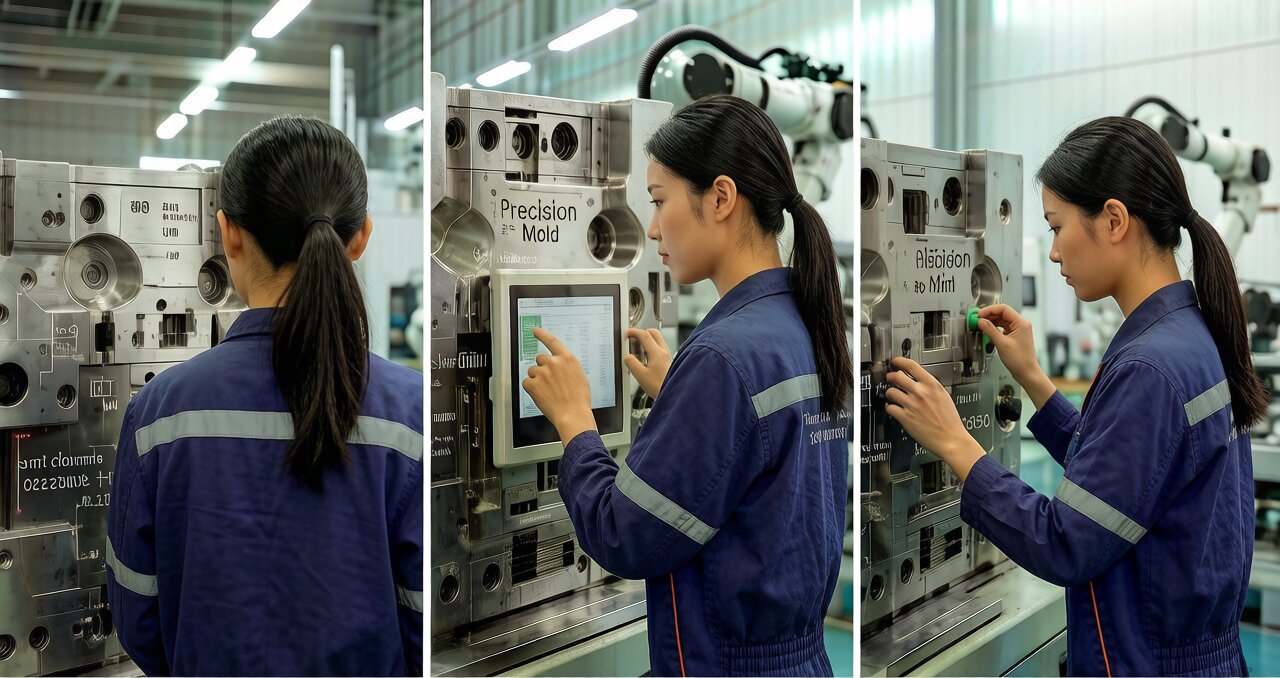
In the modern manufacturing landscape, the choice of a plastic molding factory can determine the success or failure of a product launch. From intricate medical device housings to durable automotive interior components, the quality, consistency, and cost-efficiency of molded plastic parts rely entirely on the expertise of the production partner behind them.
At PartsMastery, we understand that effective plastic molding goes far beyond simply injecting molten polymer into a steel cavity. It is a science of material behavior, thermal dynamics, and micron-level precision. This article explores what truly distinguishes a world-class plastic molding operation and why technical oversight matters more than ever.
The Core Technologies Defining Modern Plastic Molding
A professional plastic molding factory must master several complementary processes. Injection molding remains the most dominant method for high-volume production, capable of producing thousands of identical parts per day with tolerances as tight as ±0.01mm. However, the real value lies in knowing which process to apply to which geometry.
For parts requiring extreme structural integrity, insert molding integrates metal threads or contacts directly into the plastic component during the molding cycle, eliminating secondary assembly. Overmolding, on the other hand, bonds a soft-touch material (like TPE) onto a rigid substrate, creating ergonomic grips for power tools or waterproof seals for electronic enclosures.
The difference between an average plastic molding factory and a great one is not just machinery—it is the ability to simulate mold flow before cutting a single piece of steel. Advanced CAE (Computer-Aided Engineering) software predicts weld lines, air traps, and warpage, allowing engineers at PartsMastery to adjust gate locations or cooling channel designs proactively. This prevents costly mold modifications later.
Material Selection: The Unseen Driver of Performance
Many product failures trace back to a mismatch between material properties and application requirements. A truly capable plastic molding factory maintains an extensive portfolio of engineering-grade resins, including:
-
ABS: Excellent impact resistance and surface finish for consumer goods.
-
Polycarbonate (PC): High transparency and heat deflection temperature for lenses or shields.
-
Nylon (PA6, PA66): Exceptional wear resistance and lubricity for gears and bushings.
-
PEEK: High-performance polymer for aerospace or downhole oilfield components.
Beyond standard grades, a sophisticated partner can integrate glass fiber reinforcement, UV stabilizers, or flame-retardant additives without compromising cycle times. At PartsMastery, we work directly with material science suppliers to develop custom color matching and property-enhancing blends that meet specific regulatory standards such as RoHS, REACH, or UL94 V-0.
The Mold Tooling: Where Precision Begins
The mold itself is the heart of the operation. A poorly designed mold will produce rejects regardless of how modern the injection press is. Hardened tool steel (e.g., H13 or S136) is essential for production runs exceeding 100,000 cycles, while pre-hardened steels may suffice for prototyping or short runs. However, the true differentiator lies in cooling system design.
Uniform cooling reduces cycle time and prevents differential shrinkage—the primary cause of part warpage. A superior plastic molding factory implements conformal cooling channels using additive manufacturing (3D printed mold inserts) to follow the part’s contour. This advanced technique can slash cycle times by 30% while improving dimensional accuracy.
At PartsMastery, every mold undergoes a rigorous qualification protocol including first article inspection (FAI) using CMM (Coordinate Measuring Machine) verification. We document every critical dimension and surface finish requirement before releasing any production quantity.
Quality Assurance Beyond Visual Inspection
Cosmetic defects like sink marks or flash are obvious. But hidden defects—internal voids, molecular orientation issues, or residual stress—can cause premature failure in the field. A reliable plastic molding factory employs non-destructive testing methods including:
-
X-ray inspection to identify internal porosity.
-
Dimensional measurement systems with automated data logging.
-
Tensile and impact testing on molded test coupons from each batch.
Furthermore, process control is achieved through real-time monitoring of injection pressure, melt temperature, and clamping force. If any parameter drifts outside statistical limits, the system automatically rejects the affected parts. This level of traceability is non-negotiable for industries like medical devices or automotive safety systems.
Why Geographic Sourcing Is No Longer the Only Variable
For many years, purchasing managers focused heavily on unit price, often sourcing from regions with lower labor costs. However, total cost of ownership (TCO) now dominates procurement decisions. Factors such as shipping lead times, communication barriers, mold revision turnaround, and intellectual property protection frequently outweigh initial piece price advantages.
A responsive plastic molding factory like PartsMastery offers complete transparency. We provide DFM (Design for Manufacturability) feedback during the drawing phase, suggesting draft angles, wall thickness uniformity, and rib design to improve moldability. This collaborative approach prevents the common scenario where a customer pays for mold modifications after parts fail to eject properly.
Sustainability and Recycling in Plastic Molding
Environmental responsibility is no longer optional. Progressive factories implement closed-loop cooling systems to reduce water usage, and they regrind sprue, runner, and reject parts into production feedstocks where material properties allow. For customers with sustainability mandates, PartsMastery offers programs using post-industrial recycled (PIR) and post-consumer recycled (PCR) resins, as well as bio-based polymers like PLA or PHBH.
We also assist customers in reducing their carbon footprint by optimizing part design to use less material without sacrificing strength—for example, through rib-and-boss structures instead of solid walls.
Case Example: Solving a Critical Production Challenge
A medical device manufacturer recently approached PartsMastery with a problematic component: a transparent polycarbonate fluidic manifold requiring optical clarity and zero residual stress. Their previous plastic molding factory suffered from 18% reject rates due to clouding and micro-cracks.
Our engineering team conducted mold flow analysis and identified that the original gate location induced excessive shear heating. We redesigned the runner system, specified a slower injection speed profile, and implemented conformal cooling around the optical zone. The result: reject rate dropped to 1.2%, and cycle time decreased by 14%. The customer’s product launched on schedule with full regulatory approval.
Making the Right Choice for Your Project
When evaluating a plastic molding factory, request evidence of scientific molding practices. Ask for sample parts from a multi-cavity tool to verify consistency across cavities. Demand a clear quality control plan with statistical process control (SPC) data. And above all, look for a partner that asks probing questions about your product’s end-use environment—not one that simply quotes your CAD file without feedback.
PartsMastery combines decades of tooling experience, a modern fleet of all-electric injection molding machines (50 to 800 tons), and a commitment to transparent communication. Whether you need 1,000 pilot run parts or 1 million annual units, our process ensures dimensional accuracy, material integrity, and on-time delivery.
Ready to discuss your project? Contact us today to review your CAD drawings and production volume requirements. Our engineering team will respond within 24 hours with DFM recommendations and a competitive quotation.
PartsMastery
Precision plastic molding for critical applications
Phone / WeChat: +86 13530838604
Let’s build better parts, together.