







OEM Injection Molding Services – From Concept to Production-Ready Plastic Components
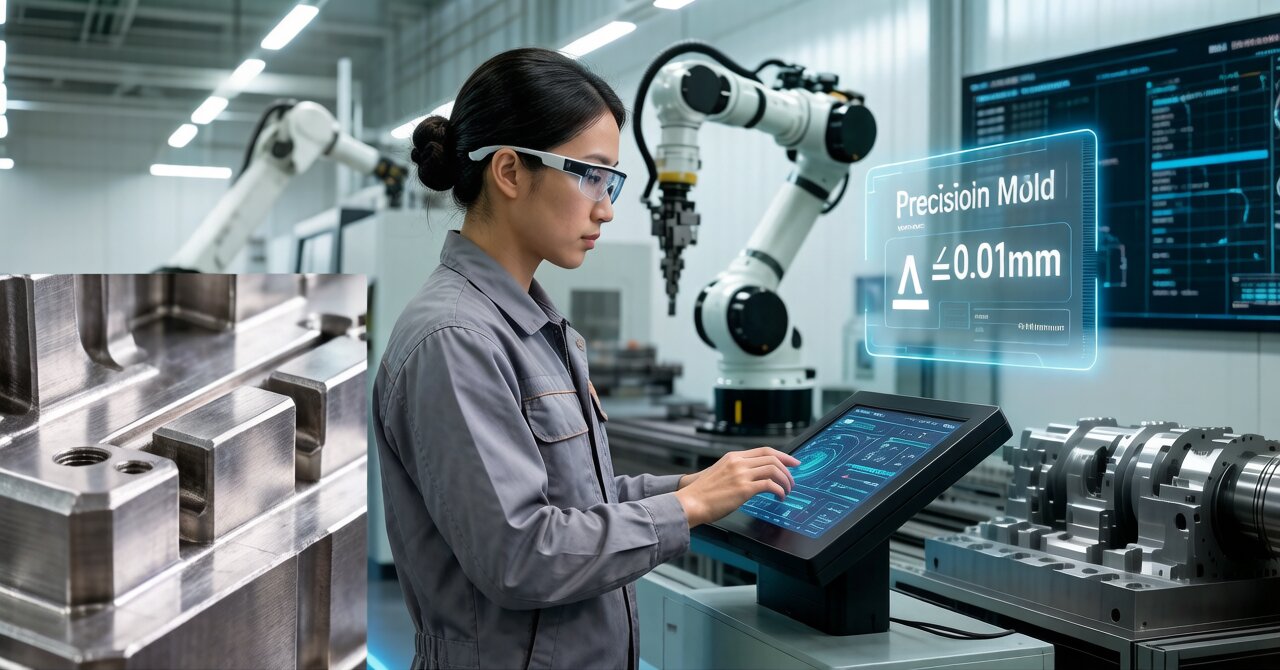
Original equipment manufacturers face a constant challenge: turning conceptual designs into physical products that meet exact specifications, cost targets, and delivery schedules. Unlike commodity part suppliers who offer only standard components, OEM injection molding services are designed specifically for companies that own their product designs and require complete control over materials, tolerances, and production processes.
At PartsMastery, we have spent years perfecting our approach to OEM collaboration. This article explains what distinguishes true OEM injection molding from generic manufacturing, how the process works from design through delivery, and why engineering integration matters more than machine capacity alone.
What Are OEM Injection Molding Services?
The term “OEM” (Original Equipment Manufacturer) refers to companies that produce components or products that are ultimately sold under another company’s brand. OEM injection molding services therefore encompass the entire ecosystem of support required to bring a customer’s proprietary design to market:
-
Design consultation and DFM analysis to ensure manufacturability.
-
Custom mold design and tooling construction tailored to your exact geometry.
-
Material selection and qualification including specialty resins and additives.
-
Process development and validation to achieve consistent quality.
-
Production scaling from pilot runs to high-volume manufacturing.
-
Quality assurance with full traceability and documentation.
-
Logistics and fulfillment including drop-shipping to your assembly line or end customers.
A provider of OEM injection molding services does not sell their own products. They serve as an extension of your manufacturing team, protecting your intellectual property while delivering components that meet your brand’s quality standards.
Why OEM Manufacturers Choose Custom Molding Over Catalog Parts
Many product designers initially consider off-the-shelf plastic components to save time and tooling investment. However, catalog parts impose severe limitations:
-
Fixed dimensions that may not fit your assembly envelope.
-
Standard materials that may not meet your performance requirements (heat resistance, chemical compatibility, flame rating).
-
Cosmetic constraints including gate marks, ejector pin witness lines, and color limitations.
-
No design ownership – competitors can purchase identical components.
OEM injection molding services eliminate these compromises. You own the design, the mold, and the process parameters. Your product differentiates on geometry, material performance, surface finish, and integrated features that catalog parts cannot provide.
The Complete OEM Injection Molding Workflow
A professional OEM injection molding services provider follows a disciplined, multi-phase process. Cutting corners at any stage leads to defects, delays, or field failures.
Phase 1: Design for Manufacturability (DFM) Review
Before any tooling investment, PartsMastery engineers analyze your 3D CAD model against fundamental molding principles. We examine:
-
Wall thickness uniformity: Variations cause differential shrinkage, sink marks, and warpage. Target variation under 25%.
-
Draft angles: Vertical surfaces need 0.5 to 2 degrees of taper for reliable ejection.
-
Radius at internal corners: Sharp corners create stress risers and impede material flow. Minimum radius 0.5mm.
-
Undercuts and side-actions: Features that prevent straight ejection add mold complexity and cost. We identify alternatives where possible.
-
Gate location impact: Determines flow path, weld line position, cosmetic appearance, and post-mold trimming.
Our DFM report includes specific recommendations with CAD sketches. Many OEM customers revise their designs based on this feedback, avoiding costly mold modifications later.
Phase 2: Material Engineering
OEM products often require specialized material properties that exceed standard resin datasheets. PartsMastery works with leading resin suppliers (Sabic, BASF, DuPont, Celanese, Covestro) to formulate compounds for:
-
High heat resistance (HDT above 150°C for under-hood automotive components).
-
Chemical resistance (fuels, solvents, disinfectants for medical or industrial applications).
-
Flame retardancy (UL94 V-0 or 5VA ratings for electronics enclosures).
-
UV stability (outdoor weathering for 5+ years without significant color change or property loss).
-
Wear resistance (PTFE or silicone lubricants for moving parts).
-
Electrical conductivity (carbon fiber or nanotube additives for ESD-safe components).
We provide full material certifications and can arrange third-party verification testing.
Phase 3: Custom Mold Design and Tooling
The mold is the most critical investment in an injection molding project. For OEM injection molding services, the mold must be designed for the specific production volume:
| Volume Range | Recommended Tool Steel | Expected Cavity Life | Relative Cost |
|---|---|---|---|
| Prototype / <5,000 | Aluminum (7075) | 5,000-10,000 shots | Low |
| Low volume (5k-50k) | P20 (pre-hardened) | 100,000-200,000 | Medium-low |
| Medium volume (50k-500k) | H13 or S136 (hardened) | 500,000-1,000,000 | Medium |
| High volume (>500k) | H13 with coating | 1,000,000-2,000,000 | High |
PartsMastery builds molds in-house using high-speed CNC, sinker and wire EDM, and precision surface grinding. We offer conformal cooling channels (3D-printed) for complex geometries, reducing cycle times by 20-35% compared to conventional cooling.
Phase 4: Process Development and Validation
Once the mold is complete, our process engineers establish a scientific molding recipe. This involves:
-
Mold flow analysis to verify filling patterns and pressure requirements.
-
Design of Experiments (DOE) to identify optimal parameters for injection pressure, velocity profile, melt temperature, mold temperature, and cooling time.
-
Process window definition – the range of parameters that produce acceptable parts.
-
Capability studies (Cpk) to verify that the process can hold tolerances consistently.
We provide full process documentation including set-up sheets, material drying instructions, and troubleshooting guides.
Phase 5: Production and Quality Assurance
OEM injection molding services require rigorous quality systems. PartsMastery operates under ISO 9001:2015 with documented procedures for:
-
Incoming material inspection: Resin lot verification, moisture content analysis.
-
In-process monitoring: Real-time data logging of injection pressure, melt temperature, cycle time, and part weight. Statistical Process Control (SPC) charts.
-
Dimensional inspection: First article inspection (FAI) per AS9102, in-process sampling per ANSI/ASQ Z1.4, CMM and optical comparator measurements.
-
Functional testing: As specified by customer – pressure decay, flow rate, pull force, electrical continuity, etc.
-
Traceability: Each production lot is marked with date, material lot, and cavity number.
Phase 6: Logistics and Fulfillment
A complete OEM injection molding services provider handles the supply chain so you don’t have to. PartsMastery offers:
-
Just-in-time (JIT) delivery synchronized with your assembly schedule.
-
Kanban systems with automated reorder points.
-
Warehousing and inventory management with weekly reporting.
-
Drop-shipping directly to your customers or distribution centers.
-
Custom packaging including anti-static bags, trays, or assembled kits.
Case Study: OEM Power Tool Component
A manufacturer of cordless power tools needed a complex battery housing with integrated living hinges, snap-fit latches, and a textured grip surface. The component was previously produced by a domestic OEM injection molding services provider at $1.42 per part, but the customer needed to reduce cost for a new product line.
PartsMastery conducted a full DFM review and identified three opportunities: (1) reduce wall thickness from 2.5mm to 2.0mm in non-critical areas, saving 18% material; (2) convert from cold runner to hot runner, eliminating runner scrap; (3) change from P20 to H13 steel with conformal cooling, reducing cycle time from 35 seconds to 22 seconds.
Results: New part price of $0.68 per part. Mold cost of $18,500 (versus $42,000 domestic). Annual savings of $148,000 at 200,000 units per year. The customer has since transferred six additional products to PartsMastery.
Quality Certifications and Compliance for OEM Customers
Depending on your industry, OEM injection molding services may require specific certifications. PartsMastery maintains or can support:
-
ISO 9001:2015 (standard quality management)
-
IATF 16949 (automotive – we can produce to this standard; facility certification in process)
-
ISO 13485 (medical devices – validated processes available)
-
UL certification (flame-rated enclosures – we maintain UL yellow card compliance)
-
RoHS and REACH compliance (restricted substances documentation)
-
Conflict minerals reporting (if required)
Intellectual Property Protection for OEMs
Your product design is your competitive advantage. PartsMastery protects OEM intellectual property through:
-
Mutual Non-Disclosure Agreement signed before any technical data is shared.
-
Secure file transfer and storage with access logs and expiration dates.
-
Mold ownership clause – the physical mold is your property, held on consignment or shipped to you.
-
No secondary market production – we never produce parts for other customers using your mold.
-
Employee confidentiality agreements covering all toolroom and production staff.
Start Your OEM Injection Molding Project
Whether you are launching a new product or optimizing an existing component, PartsMastery delivers OEM injection molding services that combine engineering excellence with manufacturing efficiency. Send your CAD file, material requirements, and annual volume estimate. Our team will respond with a DFM review and detailed quotation within 3 to 5 business days.
PartsMastery
OEM injection molding – your design, your mold, your production partner
Phone / WeChat: +86 13530838604
From concept to completion – mastery in every part.