








The Critical Principles of Injection Mold Design
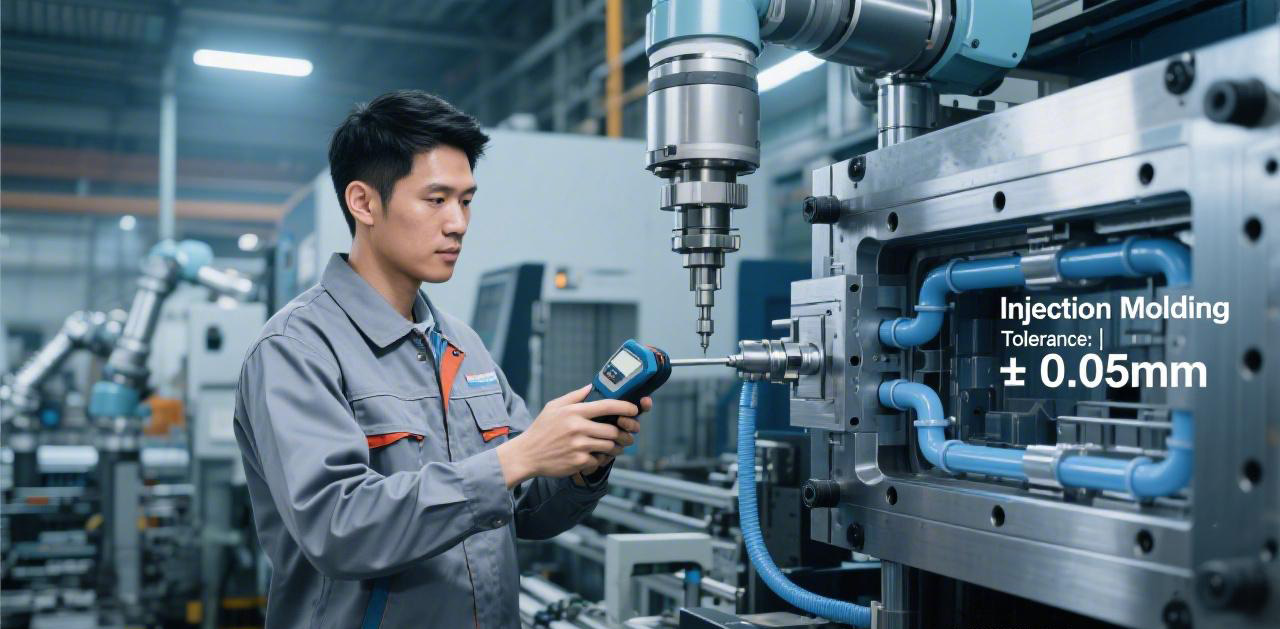
In the world of plastic manufacturing, the difference between a product that performs flawlessly and one that fails prematurely is often determined long before any material enters the barrel of an injection molding machine. That difference is injection mold design. The mold is not merely a container for molten plastic; it is a sophisticated system where physics, material science, and precision engineering converge. A well-executed design translates to faster cycle times, lower scrap rates, superior part quality, and extended tool longevity.
At PartsMastery, we recognize that injection mold design is the single most influential factor in the success of any manufacturing project. Whether you are developing a complex automotive component or a high-volume consumer good, the principles outlined here will help you understand what separates exceptional tooling from the ordinary.
The Foundation: Design for Manufacturability (DFM)
Before any steel is cut or any CAD model is finalized, the process of injection mold design must begin with a comprehensive Design for Manufacturability (DFM) analysis. DFM is the systematic evaluation of a part design to identify potential manufacturing challenges before they become costly problems.
A thorough DFM analysis addresses several critical questions:
-
Does the part geometry allow for proper material flow?
-
Are there sharp corners that could act as stress concentrators?
-
Will the part eject cleanly without deformation?
-
What is the optimal gate location to minimize weld lines and ensure uniform filling?
Skipping the DFM phase is one of the most common—and expensive—mistakes in tooling development. At PartsMastery, we treat DFM as an indispensable step, collaborating with clients to refine part geometry for optimal moldability while preserving the functional requirements of the final product.
Gate Design: The Gateway to Quality
The gate is the entry point through which molten plastic enters the cavity. In injection mold design, gate selection and placement are critical decisions that affect every aspect of the molding process.
Several gate types are commonly employed, each with distinct advantages:
-
Edge Gates: The simplest and most common type, located along the parting line. They are easy to machine and deburr but leave a visible vestige.
-
Submarine (Tunnel) Gates: Located below the parting line, these gates automatically separate from the part during ejection, eliminating secondary trimming operations.
-
Hot Tip Gates: Used in hot runner systems, these gates offer exceptional cosmetic quality and are ideal for high-volume production.
-
Fan Gates: Spread material over a wider area, ideal for large or thin-walled parts where uniform fill is critical.
-
Diaphragm Gates: Used for cylindrical parts like bottles or housings, ensuring concentric filling without weld lines.
Gate location is equally critical. Placing the gate at the thickest section of the part ensures that material flows from thick to thin, reducing internal stresses and preventing sink marks. Improper gate placement can result in weld lines at critical structural points, trapped air, or uneven packing that leads to warpage.
Thermal Management: The Cooling System
Perhaps no aspect of injection mold design has a greater impact on productivity than the cooling system. Cooling typically accounts for 60 to 80 percent of the total cycle time. A well-designed cooling system reduces cycle time, improves part quality, and extends mold life.
Traditional cooling relies on straight-line channels drilled through the mold plates. While effective for simple geometries, this approach often leaves hot spots in complex areas. This is where advanced conformal cooling has transformed the industry. By using additive manufacturing techniques, cooling channels can follow the exact contour of the cavity surface. The advantages are substantial:
-
Uniform temperature distribution eliminates hot spots
-
Cycle time reductions of 20 to 40 percent
-
Reduced warpage and residual stresses
-
Improved dimensional stability across production runs
At PartsMastery, we utilize advanced flow simulation software to model heat transfer during the design phase. This predictive capability allows us to optimize cooling layouts before manufacturing begins, ensuring that your tooling delivers maximum efficiency from the first shot.
Material Selection: The Steel Matters
The choice of material for injection mold design directly determines the tool’s lifespan, achievable surface finish, and compatibility with different resins. There is no universal “best” material—only the right material for the specific application.
For high-volume production exceeding one million cycles, hardened tool steels such as H13, S7, or Stavax are the standard. These materials are heat-treated to hardness levels above 50 HRC, providing exceptional wear resistance against abrasive fillers like glass fiber. For mid-volume production, P20 pre-hardened steel offers an excellent balance of machinability and durability. For prototyping or low-volume production, aluminum molds provide rapid turnaround and superior thermal conductivity at a lower initial investment.
Each material choice involves trade-offs between upfront cost, lead time, and long-term durability. Our team at PartsMastery works closely with clients to select the optimal material based on projected production volumes, resin characteristics, and quality requirements.
Draft Angles and Ejection Strategy
A fundamental principle of injection mold design is the incorporation of adequate draft—taper applied to vertical walls to facilitate part ejection. Without sufficient draft, the part shrinks onto the core, creating friction that can damage both the part and the mold during ejection.
General guidelines suggest a minimum of 1 to 2 degrees of draft for cosmetic surfaces and 0.5 degrees for textured surfaces, though more draft is always preferable. The ejection system itself—typically consisting of ejector pins, sleeves, or stripper plates—must be carefully positioned to apply uniform force without deforming the part.
Inadequate draft or poorly placed ejector pins are common causes of part deformation, surface marring, and premature tool wear. A thoughtful approach to ejection ensures clean, consistent part removal across millions of cycles.
Venting: The Overlooked Essential
Air trapped within the cavity during injection must escape. Without proper venting, trapped air compresses, heats to extreme temperatures, and causes burn marks, incomplete fills, and increased internal stresses. Venting is typically achieved through shallow channels—often just 0.0005 to 0.001 inches deep—machined along the parting line or around ejector pins.
Effective venting is particularly critical for high-speed molding, thin-wall applications, and materials with high flow rates. A well-vented mold produces cleaner parts, reduces cycle time, and minimizes the risk of tool damage from excessive pressure.
Simulation: Seeing the Future
Modern injection mold design relies heavily on computer-aided engineering (CAE) simulation tools such as Moldflow. These programs model the behavior of molten plastic as it fills, packs, and cools within the cavity. Simulation provides invaluable insights:
-
Prediction of weld line locations and severity
-
Visualization of air trap locations
-
Identification of high-shear zones that could degrade material
-
Optimization of gate locations and runner balance
-
Estimation of required clamp tonnage
By simulating the process before manufacturing, potential problems are identified and resolved in the digital realm—where changes are fast and inexpensive—rather than on the production floor, where they are costly and time-consuming.
The PartsMastery Approach
At PartsMastery, we view injection mold design as a holistic process that integrates part geometry, material behavior, production goals, and long-term maintenance considerations. Our approach is collaborative and transparent, involving clients at every stage from initial concept through final validation.
We combine decades of hands-on experience with advanced simulation and manufacturing technologies to deliver tooling solutions that perform reliably, cycle after cycle. Our commitment to precision, quality, and continuous improvement ensures that every mold we design is built for success.
Conclusion
The quality of your injection mold design determines the quality of your finished product, the efficiency of your production process, and the total cost of your manufacturing operation. It is not a detail to be delegated lightly—it is a strategic investment that demands expertise, attention, and a commitment to excellence.
With PartsMastery, you gain a partner who understands that exceptional tooling is the foundation of exceptional manufacturing. From DFM through production support, we deliver the precision, reliability, and value that your products deserve.
Ready to bring your next product to life with world-class tooling?
Contact PartsMastery today to begin the conversation.
📞 Phone / WeChat: +86 13530838604
📧 Email: shms0001@126.com
🌐 Website: www.partsmastery.com